
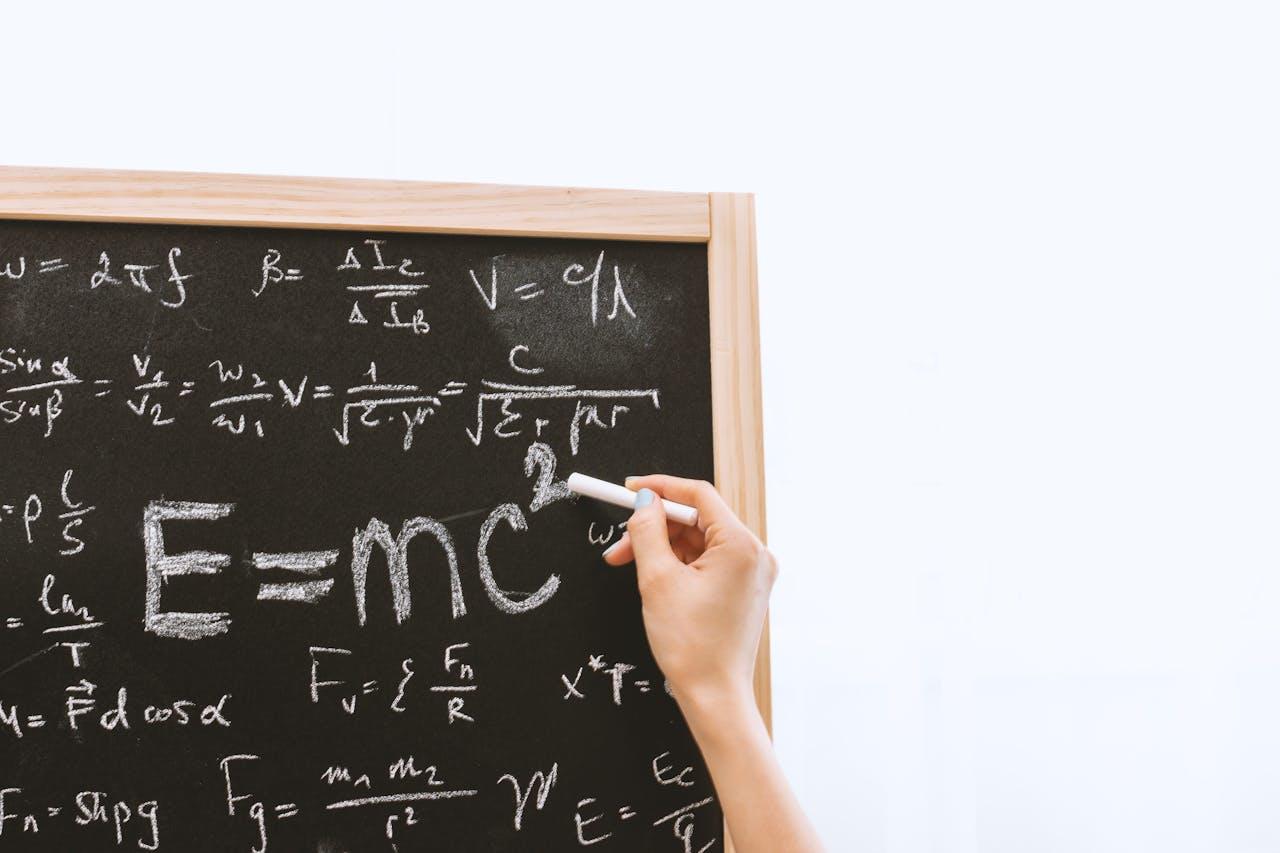

The Singapore-Cambridge GCE A-Level Physics curriculum is offered mainly at H1 and H2 levels. H1 covers core Physics concepts, while H2 explores them in greater mathematical and real depth. Pupils taking the 2026 examinations should check the latest SEAB/MOE curriculum for exact topics, studying outcomes and assessment requirements.


A Level Physics Syllabus 2026: Choosing Between H1 and H2 Physics
Choosing between H1 and H2 Physics depends on your maths skills, preferred depth of research and future university plans. H2 covers Physics in greater mathematical and experimental depth.
What H1 Physics Syllabus Covers 📘
- 📘 Builds a foundation in measurement, mechanics, waves, electricity, fields and modern physics.1
- 📊 Develops abilities in applying concepts and interpreting data.
- 🎓 Suits learners who want Physics without the full depth of H2.
- 🧭 May support broader pathways such as business, social sciences, selected health-related fields and general science, subject to university requirements.
What H2 Physics Syllabus 2026 covers🔬
- 🔬 Covers mechanics, thermal physics, oscillations, waves, electromagnetism and quantum/nuclear physics in greater depth.2
- 📐 Emphasises mathematical modelling, multi-step problem-solving and experimental analysis.
- 🎓 Suits learners considering engineering, physics or other quantitative science courses.
- 🚀 Best for pupils comfortable with analytical thinking, applying Physics to unfamiliar questions and linking multiple concepts.
H1 vs H2 Physics at a Glance 👀
| Area | H1 Physics | H2 Physics |
|---|---|---|
| Intended depth | Broad foundation in key Physics principles | More in-depth conceptual and mathematical study |
| Topic range | Core Physics concepts | Wider and deeper coverage of Physics topics |
| Mathematical modelling | Required | More extensive and complex |
| Problem solving | Application of core principles | Greater emphasis on multi-step and unfamiliar problems |
| Practical and data skills | Assessed within syllabus requirements | Greater sophistication in experimental analysis, planning and evaluation |
| Typical progression | General academic and scientific foundation | Preparation for engineering, physics and science-related pathways |
Which level of Physics are you taking?
GCE A Level Physics Syllabus: H1 and H2 Topics Content Explained
The overview below groups the curriculum into workable topic areas, making it easier to understand how the concepts connect.
Measurement, Physical Quantities and Data Handling 📏
Measurement abilities appear throughout Physics, especially in calculations, graphs and real work.
Key areas include:
When calculating acceleration from a velocity-time graph, learners must find the gradient and include the correct units. In this work, they should also consider whether uncertainty in timing or distance measurements affects the final result.
Mechanics and Motion 🚆
Mechanics explains how objects move and what causes their movement to change.
Learners commonly work with:
Everyday connection:
The acceleration and braking of an MRT train can be analysed using force, momentum and kinetic energy. Cycling or e-scooter stopping distances also show how forces affect motion. When working through such examples, check the direction of each force and the units in your calculation; this guide to common A-Level Physics mistakes explains where those steps can go wrong.
Thermal Physics, Oscillations and Wave 🌡️〰️
These themes are related through energy, but they are easier to revise as separate concept groups.
🔥 Thermal Physics
Thermal Physics focuses on how power is transferred and how matter behaves at the microscopic level.
Important areas include:
Learners should be able to move between particle-level explanations and measurable quantities such as pressure, temperature and volume.
🌊 Oscillations and Waves
Wave point require learners to understand both mathematical relationships and physical behaviour.
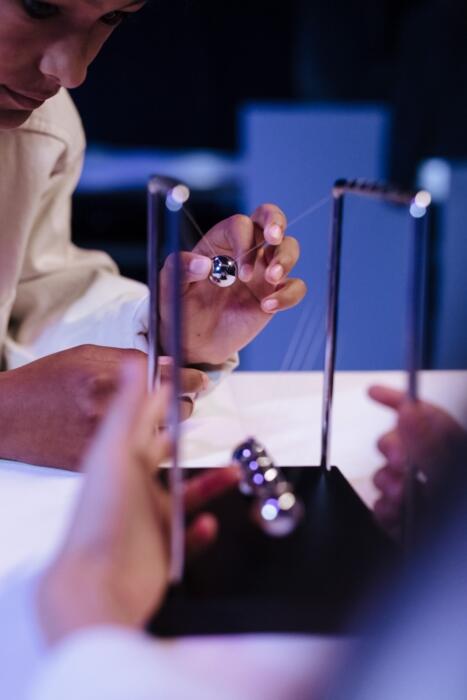
Core ideas include:
- Simple harmonic motion.
- Wavelength, frequency and wave speed.
- Phase relationships.
- Interference.
- Standing waves.
- Electromagnetic waves.
- Damping and resonance.
- Wavefronts and rays.
- Reflection and refraction of waves.
Useful applications include:
The important skill is not only identifying the application, but explaining which Physics principle makes it work.
Electricity, Magnetism and Electromagnetic Induction ⚡
Electricity and magnetism combine equations, field ideas and circuit reasoning.
Core issues include:
Magnetism and induction may include:
- Magnetic fields.
- Forces on moving charges.
- Forces on current-carrying conductors.
- Electromagnetic induction.
- Capacitors where required.
Real-world contexts can include charging devices, transformers and power transmission.
Formula memorisation alone is not enough. A-Level Physics query often test assumptions, interpretation, modelling and unfamiliar applications.
Quantum, Nuclear and Modern Physics ⚛️
Modern Physics introduces ideas that are less intuitive than mechanics or electricity, so learners need both conceptual understanding and careful utilisation of the equations.
Themes can include:
Real-world applications may involve:
- Radiation treatment.
- Radiation safety.
- Smoke detectors.
- Nuclear power production.
Three Ways Physics Questions Test You 🧠
Learners should learn to distinguish between three different task types:
- Describe - state what happens or identify a physical relationship.
- Calculate - choose the correct equation.
- Explain - justify the result using Physics principles, evidence or model limitations.
What Is Usually More Demanding at H2? 🎯
H2 Physics generally requires greater depth rather than simply more memorisation.
Learners are often expected to:
🔗 Link several themes within one problem.
📐 Work with more mathematical modelling.
🧮 Carry out longer multi-step calculations.
📊 Interpret unfamiliar experimental data.
🔬 Evaluate workable methods and limitations.
✍️ Work with more precise scientific explanations.
GCE A Level Physics Topic Checklist ✅
| Topic area | H1 Physics | H2 Physics |
|---|---|---|
| Measurement, quantities and uncertainty | ✅ | ✅ |
| Core mechanics | ✅ | ✅ |
| Circular motion | — | ✅ |
| Gravitational fields | — | ✅ |
| Thermal physics | — | ✅ |
| Oscillations and waves | — | ✅ |
| Electricity and circuits | ✅ | ✅ |
| Electric and magnetic fields | ✅ | ✅ |
| Capacitors | — | ✅ |
| Electromagnetic induction | — | ✅ |
| Quantum physics | — | ✅ |
| Nuclear physics | ✅ | ✅ |
Before finalising a revision timetable, learners should compare each topic area with the official curriculum for their examination year and level to make sure all required studying outcomes are covered.
GCE A-Level Physics Assessment and Practical Skills 🧪
Studying the curriculum is only one part of preparing for GCE A-Level Physics. Assessment also tests whether learners can apply Physics principles, analyse information and work confidently with experimental data.
Understanding the A-Level Physics examination grading system can help students plan their revision and exam strategy more effectively.
What Abilities Are Assessed? 🎯
The assessment covers several skills, from explaining principles to evaluating experimental methods.4
explain physical principles using accurate scientific language.
work with familiar concepts in both routine and unfamiliar situations.
select equations, rearrange relationships and calculate accurately.
analyse graphs, tables, diagrams and experimental results.
identify assumptions, uncertainties and limitations, then suggest realistic improvements.
Practical and Planning Skills 🔬
Real Physics involves more than following instructions. Learners should understand how to design, carry out and evaluate an investigation.
Importantabilities include:
In an experiment investigating how pendulum period changes with length, a strong response does not simply say “repeat the experiment”. It explains what measurement should be repeated, why taking an average improves reliability and how timing uncertainty could be reduced.
Check the Official Syllabus for 2026 Assessment Details 📘
Test structure, component arrangements, durations and weightings can change between curriculum versions. Pupils should therefore verify the details for their own cohort rather than relying on older analysis guides.
For the latest information:
- ✅ Check the SEAB page for 2026 GCE A-Level syllabuses examined for school candidates.
- 🏫 Ask your school’s Physics department about preparation and school-based arrangements.
- 📄 Work with the curriculum document for your exact H1 or H2 subject code.
JC1 to JC2 Physics Working Timeline 🗓️
JC1 📘
Build the foundation
Learn core Physics concepts, practise calculations regularly and develop basic skills.
Early JC2 🔗
Connect the topics
Combine ideas from different chapters, strengthen data analysis and practise clear scientific explanations.
Later JC2 🎯
Refine exam skills
Attempt timed questions, review weaknesses and revise recurring mistakes before the examinations.
How to Score Well in A-Level Physics 🎯
Scoring well in A-Level Physics requires more than memorising equations. An effective routine combines concept understanding, targeted question practice, error analysis and regular exposure to unfamiliar situations.
Understand Physics Concepts Before Memorising Formulas 🧠
For every equation, learn four things:
For example, instead of treating (F = ma) as an isolated formula, identify the forces, choose a positive direction and calculate the resultant force first.
In H1 Physics 8867 Specimen Test 1 (2026), Question 9, a link between train wagons breaks and learners must determine the locomotive's acceleration. A good approach is to redraw the system after the break and identify which forces now act on it before applying Newton's second law.³
Utilise a Topic-Based Revision System 🔄
Try this five-step revision cycle:
- 📘 Check the curriculum studying outcomes.
- ✏️ Review the concept and worked examples.
- 📝 Complete targeted topical questions.
- 🔍 Categorise mistakes.
- 🔁 Reattempt similar sums several days later.
“Things must be learned only to be unlearned again or, more likely, to be corrected.”
- Richard P. Feynman, The Feynman Lectures on Physics
Keep a simple error log:
| Error type | Example |
|---|---|
| Units | Forgot to convert cm to m |
| Vectors | Used the wrong direction |
| Graphs | Did not explain what the gradient represents |
| Practical | Ignored uncertainty or gave a vague improvement |
This is useful because small details can decide a question. H1 Physics 8867 Specimen Test 1 (2026), Sums 1 and 4, for example, test precision, accuracy and percentage uncertainty.
Understanding the common mistakes to avoid can help students see where marks are often lost and improve their exam technique.
Practise Data-Based and Unfamiliar Sums 📊
Use a mixed question set to practise:
- 🌍 New contexts.
- 📈 Graphs, diagrams and experimental data.
- 🔗 Several themes in one problem.
- 💬 “Explain”, “suggest” and “justify” commands.
- 🔬 Evaluation of evidence or methods.
Regenerative braking in an electric vehicle can aids learners connect kinetic energy, electromagnetic induction and power transfer in one real situation.
Use Reliable Research Tools 🧰
Choose sources that match the current Singapore A-Level Physics curriculum rather than relying on unofficial predicted query or unverified notes.
- 📘 Official Physics syllabus: Check the exact 2026 H1 Physics 8867 syllabus or 2026 H2 Physics 9478 syllabus for studying outcomes, motive and assessment requirements. 2026 H1 Physics 8867 syllabus | 2026 H2 Physics 9478 syllabus
- 🏫 School notes and tutorials: Utilise the lecture notes, tutorials and revision materials supplied by your own JC, as these can be aligned with what has been taught in class.
- 📝 Past-year questions: Utilise legitimate copies obtained through your school or SEAB-authorised publishers. SEAB provides a specific list of authorised distributors for GCE-Level past-year question papers. SEAB - Distributors of Past Years' Question Papers
- 🧮 Scientific calculator: Practise consistently with a calculator permitted for the A-Level examinations. SEAB - Approved Calculators
- 🗂️ Flashcards: Utilise them for formulas, definitions and key relationships, but combine them with worked problems.
- 💻 Online studying resources: Learners can also Utilise Singapore Student Studying Space sources for revision. SLS - Access Self-Study Resources
- 🎥 Educational videos: Work wiith short demonstrations to visualise difficult concepts such as standing waves, fields or electromagnetic induction.
For extra practice, notes and analysis tools, explore these A-Level Physics revision materials to strengthen your preparation.
Start by identifying the topics and skills your level requires. Then use marked practice to decide which concept or method needs attention in your next study session.
| Key Point | What It Means |
|---|---|
| 📘 H1 vs H2 | H1 provides a broad foundation, while H2 covers Physics in greater mathematical and experimental depth. |
| 🧠 Assessment focus | A-Level Physics tests understanding, application and reasoning, not only formula memorisation. |
| 🔬 Practical skills | Students need skills in measurement, uncertainty, graphing, data analysis and experimental evaluation. |
| 🔗 H2 challenge | H2 requires students to connect concepts, interpret unfamiliar data and solve multi-step problems. |
| 🎯 Effective revision | Strong preparation combines concept learning, topical practice, error tracking and reliable resources. |
References
- Singapore Examinations and Assessment Board. GCE A-Level H1 Physics 8867 Syllabus, 2026. 2026, https://isomer-user-content.by.gov.sg/334/5c46d2b1-04d9-4dd4-af88-9a5538140f56/8867_y26_sy.pdf.
- Singapore Examinations and Assessment Board. GCE A-Level H2 Physics 9478 Syllabus, 2026. 2026, https://isomer-user-content.by.gov.sg/334/2dc32e71-8fb4-4272-9262-f21be46fbaeb/9478_y26_sy.pdf.
- Singapore Examinations and Assessment Board. H1 Physics 8867 Specimen Paper 1, 2026. 2026, https://isomer-user-content.by.gov.sg/334/44c9b8ed-4f9c-45ce-9414-20710d03994b/8867_y26_sp_1.pdf.
- Singapore Examinations and Assessment Board. H1 Physics 8867 Specimen Paper 2, 2026. 2026, https://isomer-user-content.by.gov.sg/334/85538536-4dc6-415c-9258-321b36030277/8867_y26_sp_2.pdf.
- Singapore Examinations and Assessment Board. H2 Physics 9478 Specimen Paper 2, 2026. 2026, https://isomer-user-content.by.gov.sg/334/1429263d-c5bf-44a9-a9cf-674a5fdf28f1/9478_y26_sp_2.pdf
- Singapore Examinations and Assessment Board. “2026 GCE Advanced Level Syllabuses Examined for School Candidates.” Singapore Examinations and Assessment Board, 28 Aug. 2026, https://www.seab.gov.sg/gce-a-level/a-level-syllabuses-examined-for-school-candidates-2026/.
- Singapore Examinations and Assessment Board. “Distributors of Past Years’ Question Papers.” Singapore Examinations and Assessment Board, 11 May 2026, https://www.seab.gov.sg/distributors-of-past-years-question-papers/.
- Singapore Examinations and Assessment Board. “Approved Calculators.” Singapore Examinations and Assessment Board, 9 Apr. 2026, https://www.seab.gov.sg/approved-calculators/.
- Ministry of Education, Singapore. “(A1) Access Self-assessment Resources.” Singapore Student Learning Space (SLS) Info-Site, 20 May 2026, https://www.learning.moe.edu.sg/students/student-user-guide/discover/access-self-study-resources/.
Summarise with AI:
Did you like this article? Leave a rating!

 Loading...


