


Fencing is often described as physical chess. The main reason for this is that it is a sport that not only relies on physical prowess but also mental agility. Most people might not know this but fencing has its roots all the way from ancient combat traditions. It is what it is now thanks to the evolution it went through to become a modern Olympic sport. Fencing is known and loved by audiences and enthusiasts all over the world for its elegance and intensity. In this article, we will introduce the world of fencing to you as well as its history. We will also be looking at some of its techniques, rules and benefits briefly.


The History of Fencing
Fencing comes from the ancient art of swordsmanship. Swordsmanship initially came about for combat and self-defence purposes. If you look at historical records, swordsmanship existed in ancient civilisations such as Greek, Roman and even Egyptian civilisation. Although fencing comes from this, it is a lot different now than what it used to be.
The fencing that we are all familiar with began to take shape during the Renaissance in Europe. It was during the 15th and 16th centuries that fencing started to evolve from mere battlefield combat. It slowly became a structured duelling that not only emphasised skills but also technique.
The sword used in fencing is called a rapier and it is way more lighter than an actual sword. The main reason the rapier was developed in such a way is to allow the fencers to have a more precise movement. This allows for the sports to be more refined.
The first few fencing schools were established in a couple of countries. These were in Italy, Spain and France. Each of these countries contributed to their unique fencing methodologies and styles.
This sport was so popular that by the 19th century, fencing had established itself as a competitive sport and by 1896, it was included in the first-ever modern Olympic game. Today, fencing continues to captivate audiences and athletes the same from all over the world. It continues to honour its rich history while adapting to the changes and advancements in technology. This sport has become more accessible to people and welcomes participants from all ages.
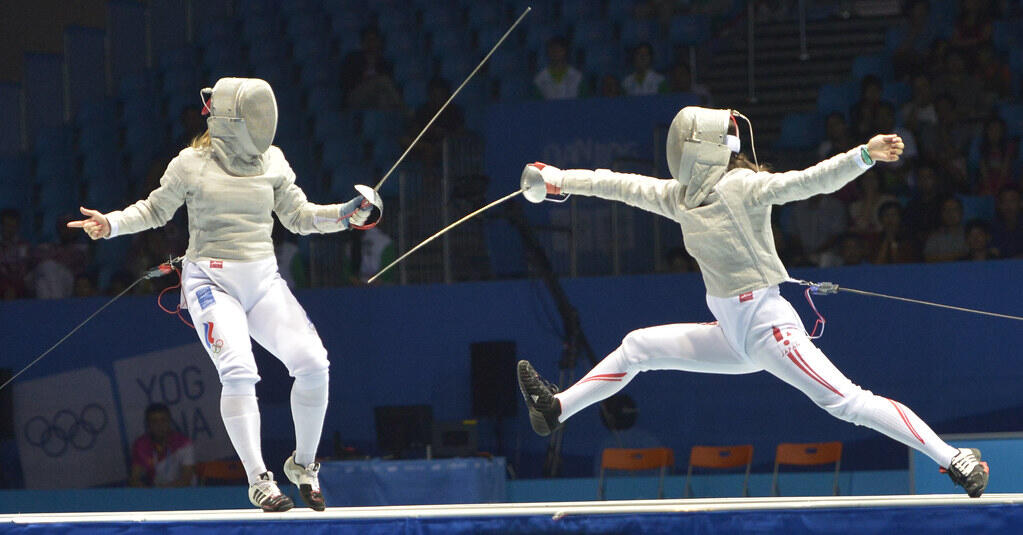
Fencing Equipment: Tools of the Trade
Fencing is a sport that needs specialised equipment. These equipment are not only there to enhance your performance but also designed to keep you safe. We have listed some of the essential equipment you must have if you are looking to start learning fencing.
Weapons
There are three types of fencing weapons. Each of these weapons is different. Let us look at them briefly below.
Foil
This is the lightest weapon in fencing and it has a flexible blade. When using this weapon, points are scored when the tip of the foil touches the opponent’s torso.
Epee
This is a weapon that is heavier than the foil. Points are scored when the tip of the epee touches any part of the opponent’s body.
Sabre
This is the last type of fencing weapon available. It is a cutting and thrusting weapon. Points are scored when the edge or the point of the sabre touches your opponent's upper body.
Protective Gear
When it comes to fencing, protective gear is extremely important. We have listed some of the important protective gear that you should have for fencing.
Mask
The fencing mask covers the entire head. For visibility, the face part is equipped with a mesh screen. This mask protects the athlete's face and head.
Jacket
The next protective equipment that you should have is a jacket. The jacket is a padded garment that not only covers the torso but also the arms of the athlete.
Gloves
Gloves are worn only on the weapon hand. This is to ensure that you will have a proper grip on the weapon while ensuring that your fingers and hands are protected.
Breeches
Last but not least are the breeches. The breeches are knee-length pants that are designed mainly to protect the legs.
In fencing, you will get points when your weapon touches your opponent's body. Therefore every part of the athlete's body is covered in protective gear to ensure that they are safe and not hurt.
Others Essentials
Other than weapons and protective gear, there are also other essentials that fencers should have. One example is body cords. These body cords are connected from their weapons to the scoring systems. This is to help with the scoring of the sport. Another essential will be proper shoes that are designed for fencing. This is to ensure that they have proper and optimal movement when participating in fencing.
Another essential, especially for women is chest protectors. These are optional for men but mandatory for women fencers as they offer an extra layer of safety for them.
All of the equipment we have mentioned above goes through vigorous and special international testing standards. This is to ensure that every athlete that participates in fencing is properly protected.
Fundamental Techniques and Movements
When it comes to fencing, it is important to have fundamental techniques and movements mastered. In order to be successful, you must know some of these. For your ease, we have listed some of the foundational elements that you should master as a fencer.
Stance
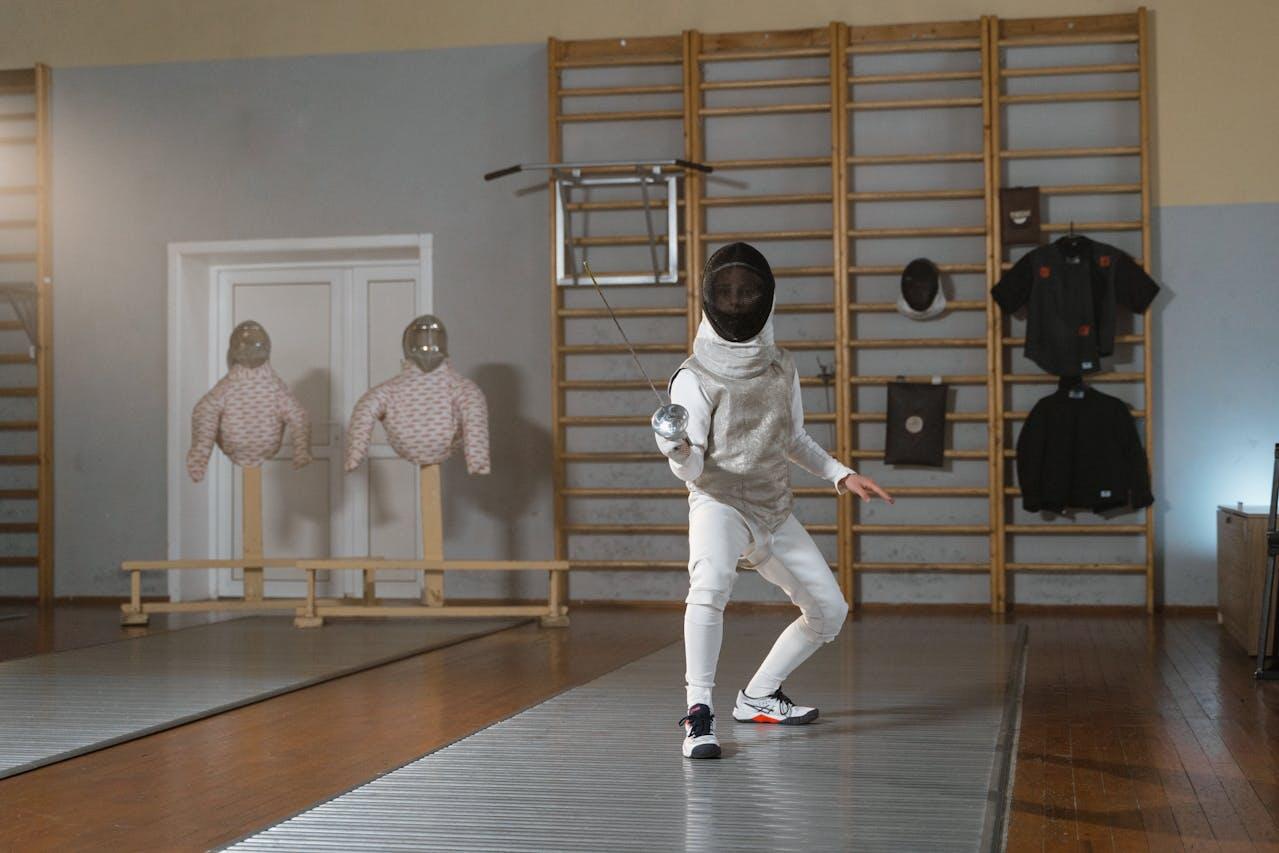
When it comes to fencing. One of the basic and most crucial techniques you should know is the proper fencing stance. A fencer always stands sideways to their opponent. Their feet should be shoulder-width apart while keeping their knees bent. One hand should be placed behind their back for balance while the other hand, the weapon hand will be extended.
Footwork
When it comes to fencing, footwork is very important. Movement and footwork techniques are vital to ensure that you successfully master this sport. We have listed some of the footwork movements that are important in fencing.
Advance
As the name suggests, this movement is when the fencer moves forward to close the distance between themselves and their opponents.
Retreat
As its name suggests, this is essentially stepping backwards. This foot movement is used especially to evade an attack from your opponent.
Lunge
A lunge is a sudden movement forward. This movement is used to extend your weapon’s reach. When it comes to fencing movements, the lunge is one of its iconic movements. This movement not only requires a lot of strength but also precision.
Flèche
This is a running attack in fencing. In this technique, the fencer moves front in a quick and darting motion. This is to take the opponents by surprise.
Attacks
When it comes to almost all games, attacks are offensive actions that aim to help you score points. This is the same for fencing. When it comes to this sport, attacks are usually thrusts and cuts and albeit simple, they involve ways to deceive the opponents.
Parries
The opposite of attacks is parry. This is a defensive technique in fencing. Essentially a parry is used to block or deflect an opponent's attack. One common parry that is used a lot is lateral movements. This helps a fencer redirect their opponent's blade away from the target area.
Riposte
In the world of fencing, the riposte is a counterattack. This counterattack is often always used after a successful parry. This is a very important technique and skill that not only combines defence but also an offence in a single quick motion.
A fencer will spend years of their training simply practising and honing these techniques and movements. They not only help emphasise precision but also adaptability and timing which is essential and crucial to each fencer. Practising these not only helps them build the necessary skills but also their endurance.
Rules and Scoring in Fencing
Each sport has its own names for their matches and in fencing, they are known as bouts. These bouts are governed by a fixed set of rules that not only ensure the safety of the fencers but also ensure there is fair play.
As we have mentioned earlier in this article, there are three main weapons when it comes to fencing and they are unique from each other.
Foil
When it comes to the foil, a fencer will obtain scores when they hit their opponent's torso with the tip of the foil. They will only get a point if the attacks are initiated with the proper right-of-way count. This weapon has a limited target area which makes its strategy an essential part when it comes to this weapon. Fencers must be precise and deliberate when they use this in order to successfully get points.
Epee
When an epee is used, any contact of the tip with the opponent's body scores a point. Unlike the foil, there is no concept of priority. It is simply straightforward and intense.
Sabre
When the sabre is used, points are granted to fencers when they strike their opponent's upper body with the edge of the tip. It is pretty straightforward. When it comes to sabre both, speed and aggression are key. This makes them a very interesting and thrilling spectacle to watch.
If you are interested in learning how to fence, one of the best places you can go to is Superprof. We have a group of skilled and experienced fencing coaches who can not only help you learn this sport but also master and appreciate it.
Summarise with AI:
Did you like this article? Leave a rating!

 Loading...