

Fencing is a very popular sport requiring precision, speed and strategy and has various benefits. For fencers to participate effectively in this sport, they need to have specialised equipment to keep them safe. These equipment are not only regulated but also meet a stringent standard for safety purposes. On top of keeping the fencers safe while competing, this equipment also ensures that they perform their best during this sport.
In this article, we will look at some of the important gears that are used in fencing. We have grouped them into four separate categories so that it will be easier for those of you who are looking to pick fencing up.


Weapons
Fencing has its roots in swordfights and therefore comes as no surprise that it involves weapons. In fencing, three unique weapons have their own distinctive rules. Let us look at these in more detail below.
Foil
The foil is a lightweight weapon used for thrusting due to its flexible blade. When using this weapon, a fencer scores points when the tip of the blade hits the opponent on the torso. The torso is the specific area targeted by this weapon. Since fencing is a very fast-paced sport, a millisecond can differentiate a winner and a loser. The tips of the foil feature a spring-loaded button designed to ensure that a valid touch is recognised for scoring. This weapon first came out as a training weapon which emphasised precision and control but it is now one of the three main weapons in fencing.
Epee
The epee has a very similar design to the foil. The main difference can be seen especially in its weight. Both the foil and the epee are types of swords used for stabbing. However, when you use an epee, you can score points by hitting any part of your opponent's body. This is vital because this will mean a different strategy needs to be employed when the epee is used. Like the foil, the epee has a spring-loaded tip. If you look at the epee, it is more similar to a historical duelling sword. Therefore it focuses more on accuracy and realistic combat scenarios.
Sabre
The sabre is totally different from the first two weapons mentioned above. The sabre is a weapon crafted for both cutting and thrusting. A fencer scores points by making contact with their opponent's upper body while using this weapon. Unlike the other two weapons, you can score points with both the edge and the tip of the blade. The blade of the sabre is slightly curved and this is mainly to facilitate slashing motions.
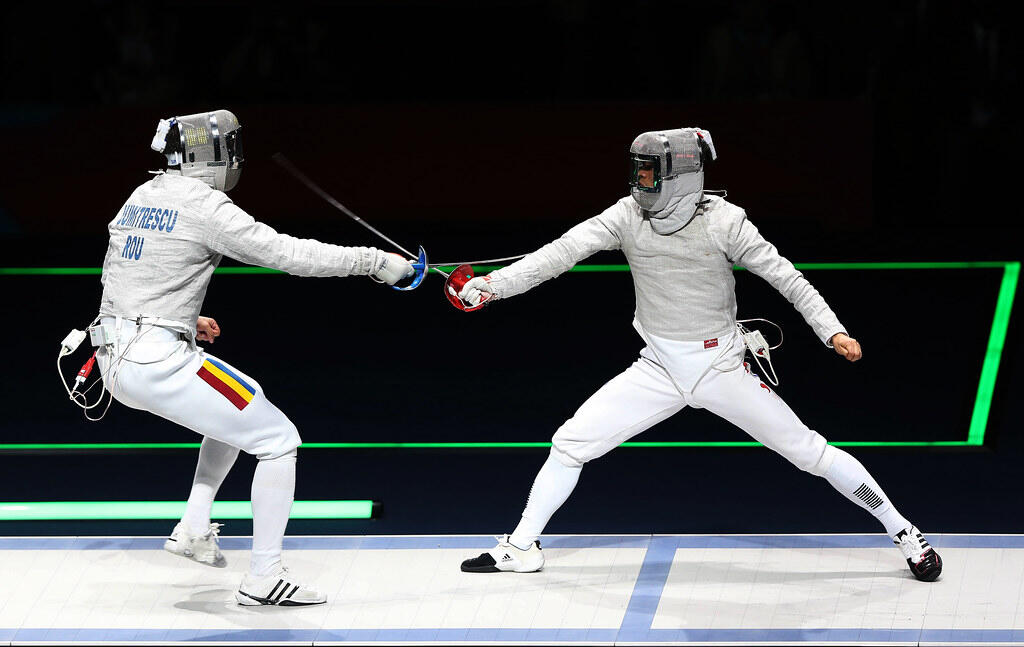
In fencing, each of these weapons has very specific rules and techniques that go with it. This is why a fencer's choice of weapon is central to their identity. Typically, each fencer specialises in a specific weapon, and their training is customised accordingly. This is mainly because the demands of their training as well as their equipment are catered towards a specific weapon. In order to master a single weapon, a fencer dedicated years of their time. As they progress, they will slowly develop their own individual and unique style that reflects their weapon of choice’s characteristics.
Protective Gear
When it comes to fencing, safety comes first. As we have mentioned earlier, fencing comes from sword fights so it can be extremely dangerous. In order to keep fencers safe and to minimise injury, protective gear that is designed specifically for fencing is worn.
Every piece of gear is tested rigorously to ensure that it withstands the impact of the weapon. In this section, let us look at some of the protective gear and what they do.
Mask
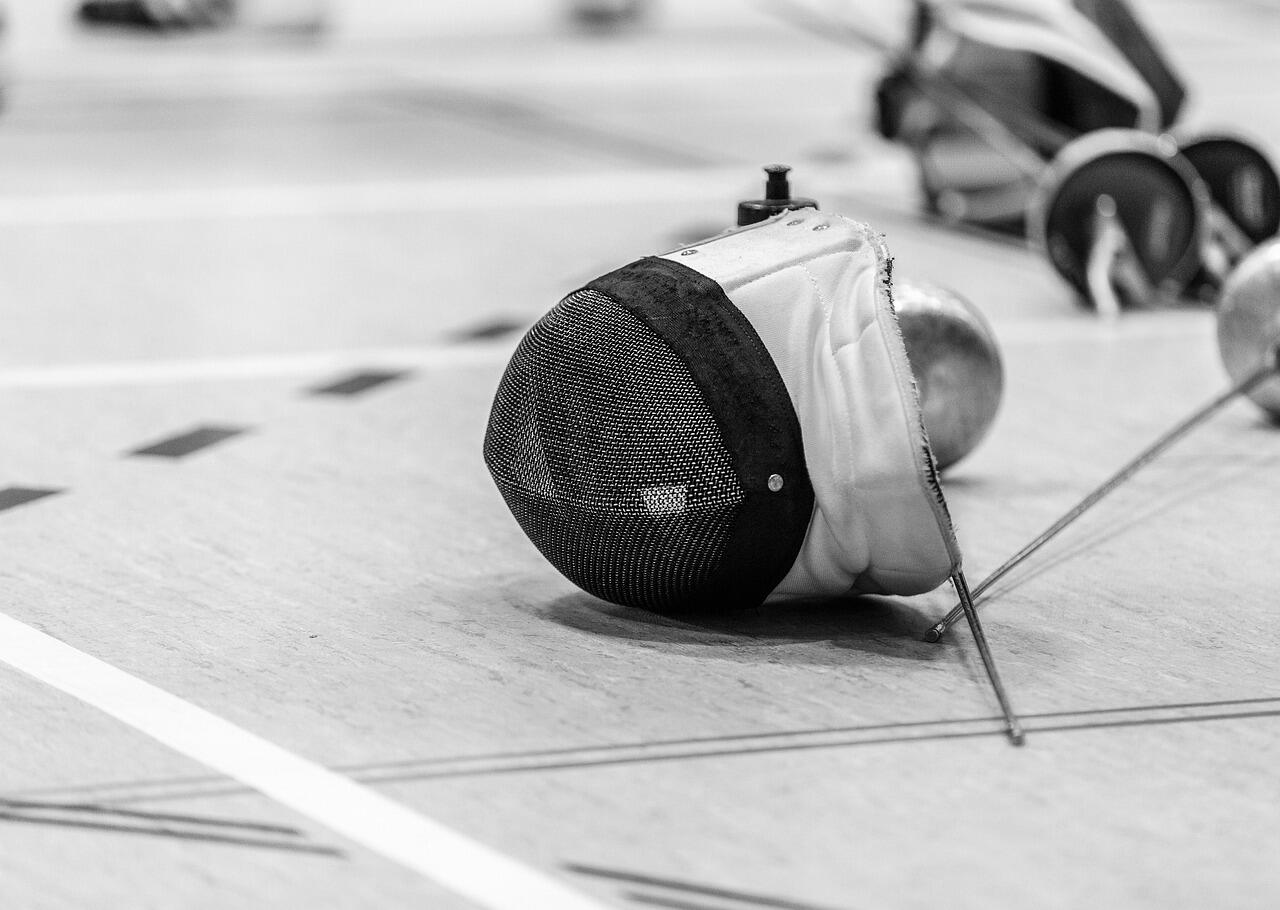
The fencing mask is pivotal to keeping the face and head safe during the sport. The head mask is made of a strong metal mesh that has a padding. This ensures that the head and throat are protected while ensuring that the fencers are also comfortable which is why it also has padding. The masks used in fencing are specific which means, that when different weapons are used, there are different types of masks worn by the fencers. On top of these masks, there is also an advanced mask used by fencers. For this kind of mask, the main difference lies in the removable lining of the mask. This makes maintenance easier as well as enhances hygiene.
Chest Protector
A chest protector is worn underneath the fencing jacket. A chest protector is a rigid shield. It not only provides additional protection to the torso section of the fencer but also absorbs impact when hit by the fencing weapons.
Unlike the mask, which is compulsory for all fencers, the chest protector is mandatory for female fencers but optional for male fencers. This chest protector is tailored specifically to ensure that it fits snugly on the fencer’s body. This not only ensures the freedom of movement for the fencers but also protects them as designed.
Gloves
Fencing gloves are worn to provide protection for fencers' hands as well as wrists while making sure that they have a firm grip on their weapons. Over the years, fencing gloves have gone through various modifications with the latest modern gloves that use a special moisture-wicking material that keeps the hands dry even after prolonged use.
Plastron
Another piece of equipment that all fencers should have on them during bouts is a plastron. Plastron is an underarm protector that is worn beneath the jacket. It not only helps by reducing the impact of the force of the fencing weapons but it also adds additional padding that is ergonomic. This equipment is not only comfortable to be worn but also ensures the fencers can move freely and does not restrict their movements.
When it comes to fencing gears, it not only keeps the fencers protected but also helps them feel confident and focus on their techniques. As technology progresses, so do the protective gears.
Are you new to fencing? Click here to learn more about the world of fencing!
Clothing
When it comes to fencing clothing, three main factors are looked at; comfort, flexibility and protection. On top of these, it must meet the standards set by FIE which is the Federation Internationale d’Escrime. In this section, let us look at some of the clothing you will need and use during bouts.
Fencing Jacket
Fencing jackets are specially made with puncture-resistant fabric. This jacket covers the entire support body and includes a high collar to protect the neck as well. Although this piece of clothing is mainly to protect the fencers, it is tailored to allow movements. On top of this, it has ventilation panels that help cool down the athletes during long bouts.
Breeches
Breeches are another piece of clothing that is used by fencers. Similar to the fencing jacket, the breeches are made of durable material. The only difference is that it is especially for the waist, which is all the way to just below the knees. It is secured with braces and is there to provide essential protection to the legs.
Socks
Socks are worn by fencers to cover up their lower legs. They are long and ensure that no skin is exposed. In order to help and facilitate fencers during bouts, the material that the socks are made of is breathable. This is to prevent the fencers from overheating.
Lame
Lame is another piece of clothing that is used. This clothing is worn over the jacket and facilitates registering valid touches for scoring purposes. The lame is a conductive material that is meticulously maintained. This is important to ensure consistency during performances.

Footwear
When it comes to fencing shoes, there are plenty to choose from but in order to perfect your technique and avoid injuries there are a few factors you should choose from.
Design
Fencing will require you to move about a lot therefore fencing shoes need to be lightweight. The shoes must be made of non-slip soles. This is important to ensure that you have traction on the piste. These days, you will be able to find specialised insoles that provide additional arch support on top of all that is mentioned above.
Cushioning
In order to maintain comfort while ensuring protection, enhanced cushioning is essential in the shoes you pick. You should choose one that has cushioning specifically in the heel and the forefoot. This kind of shoes will help especially when you lunge and change your directions rapidly. Choosing a shoe with superior shock absorption.
Durability
It is pertinent for you to shoes a pair of shoes that is durable. This ensures that it will last through the rigorous training and bouts that you will experience as a fencer. Look for shoes that have reinforced stitching as well as abrasion-resistant panels. These will ensure that the shoes will have a long lifespan.
On top of these, there are also other equipment such as the body chord, scoring equipment, bags and spare equipment that you can look into to enhance your experience in this rigorous sport.
If you are looking to start your journey in fencing, you should head over to our platform and find someone who can not only help you appreciate this sport but also guide and mentor you throughout this journey.
Our platform has not only highly skilled but experienced fencers who can help you learn all the necessary fencing techniques that can help you master this fast-paced sport.
Summarise with AI:
Did you like this article? Leave a rating!

 Loading...