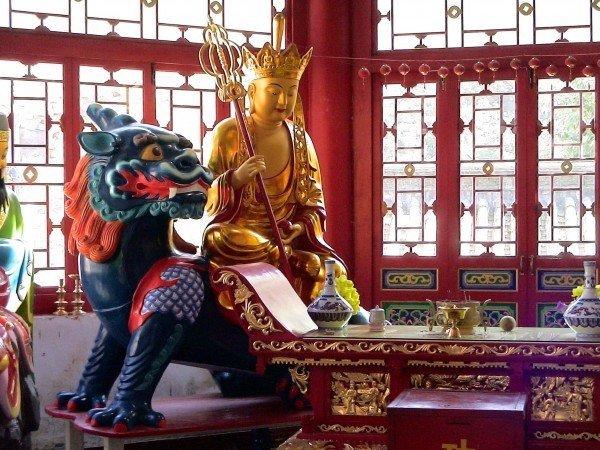

China is often thought of as a country with no religion. That's not true; the Chinese people are fully religious, just not in the way that we are. In fact, they may be more religious than we are if you count every god, goddess and all the deities in their pantheon.
Chinese gods are nothing like the omniscient, omnipotent God revered in Abrahamic religions. They are highly pluralistic and specialised, with each god governing a specific aspect of Chinese life. While each god has particular powers or the license to grant certain favours, no god or goddess has wide-ranging powers.
Key Takeaways
- Chinese mythology has a vast array of gods and deities, who govern every aspect of the Chinese way of life.
- Creation myths include Pangu, who formed the world from a primordial egg, and Nuwa, the mother-goddess who created humans.
- Supreme deities like the Jade Emperor, Shangdi, and the Three Pure Ones govern the world and play key roles in maintaining moral order.
- Gods of wealth, like Caishen, are worshipped for prosperity, while gods of death, like Yanluo Wang, oversee the afterlife.
- The Eight Immortals represent wisdom, magical powers, and immortality.
- Buddhist deities like Avalokiteśvara, the Four Heavenly Kings, and the Eighteen Arhats have been incorporated into Chinese mythology.


Taoist, Buddhist, and Folk Deities in Chinese Mythology
Ancient texts mention figures like Huangdi, the Yellow Emperor, and Pangu, who created the world. Other important figures include Xiwangmu, Mother of the Big Dipper, and the Queen Mother West. In addition, Chinese people also pray to specialised gods, such as Caishen, the Chinese god of wealth, or Guanyin, the Chinese goddess of mercy, and follow Chinese folk religion practices and traditional Chinese medicine.
Chinese gods in mythology come from three main sources:
Creation Myths
- Pangu
- Nuwa
- Fuxi
- Jing Wei
Religion/Folklore
- Taoism
- Buddhism
- Folktales
Prehistoric Kings
- Yellow Emperor
- Flame Emperor
- Yu the Great
- King Shun
Chinese religious belief is shaped by Taoism, Buddhism, and Confucianism, which together continue to influence the Chinese way of life.
Taoism features a rich pantheon of deities who embody the key Taoist principles and are worshipped by people for protection, blessings, and spiritual guidance. Buddhism, which has a profound influence on the Chinese way of living, was introduced to China around the 1st century CE and adds another layer to Chinese religious life.
Buddhism in China was influenced by both Taoism and Confucianism, and many Buddhist deities were adapted to fit Chinese culture, given Chinese names and roles that aligned with local Chinese culture. The most famous example is that of Avalokiteśvara, who became Guanyin, the god of mercy.
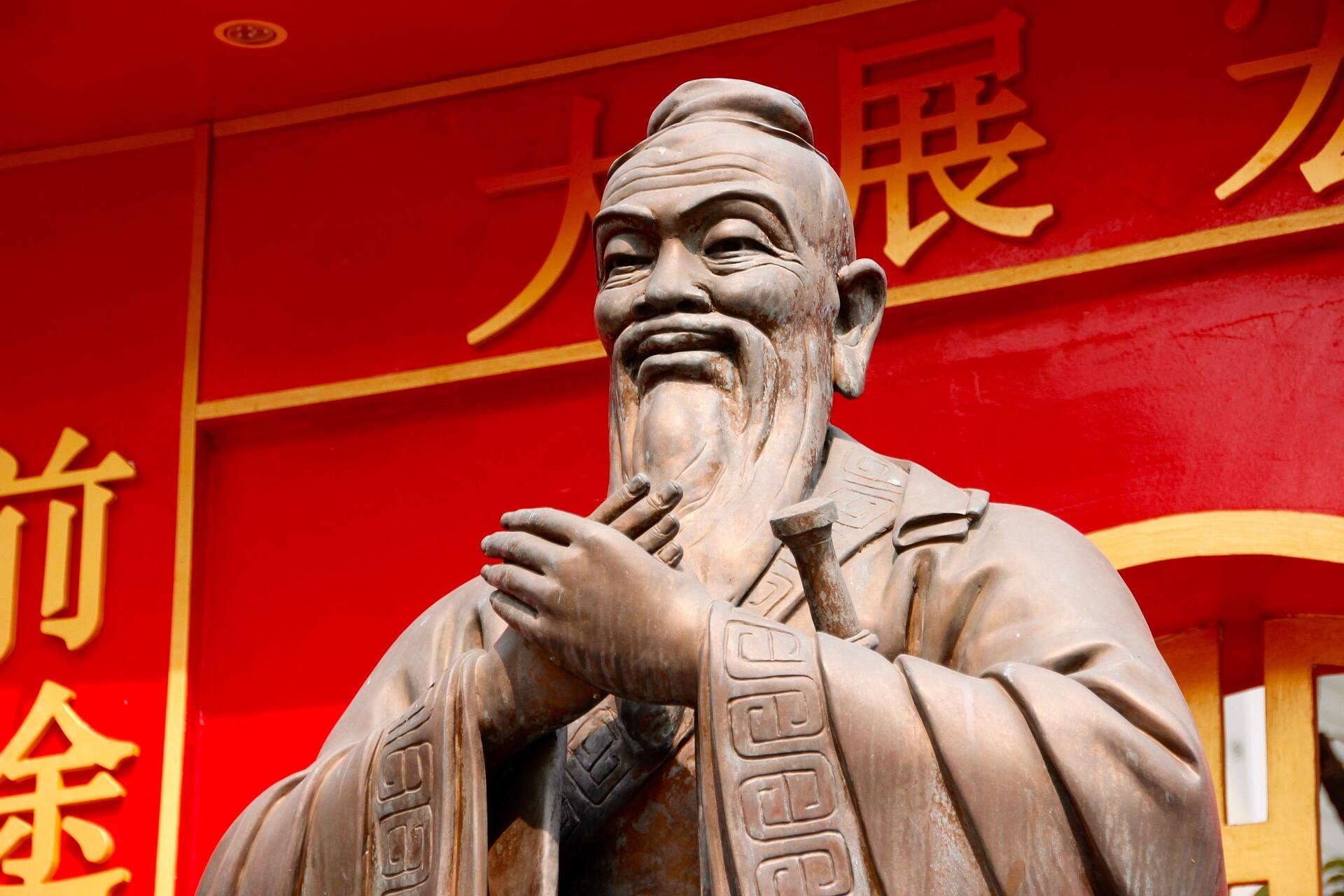
When it comes to Confucius, though holding equal footing in China's mythology, he is not worshipped for favours. Instead, when people worship Confucius or light incense at his statue, they are venerating that great sage. In some Confucian temples, they even let you bang a gong - usually if you donate first.
The pantheon of Chinese gods is huge. Read on to know more about them.
Creation and Primordial Deities
In creation myths, Chinese gods play a vital role in the formation of society. They are linked with the creation of the world, the maintenance of law and order, and the protection of humanity.
Pangu (盘古)
Now we meet the first corporeal creature in the pantheon of Chinese gods. Even more interesting is that certain aspects of his story parallel passages in the book of Genesis. In the beginning, there was a formless and primordial nothing. From this nothingness emerged an egg. For 18,000 years, it remained dormant until Yin and Yang, those duelling energy forces, were balanced.
Once there was harmony, Pangu emerged from the egg. Then, with his giant axe, he set about creating the world.
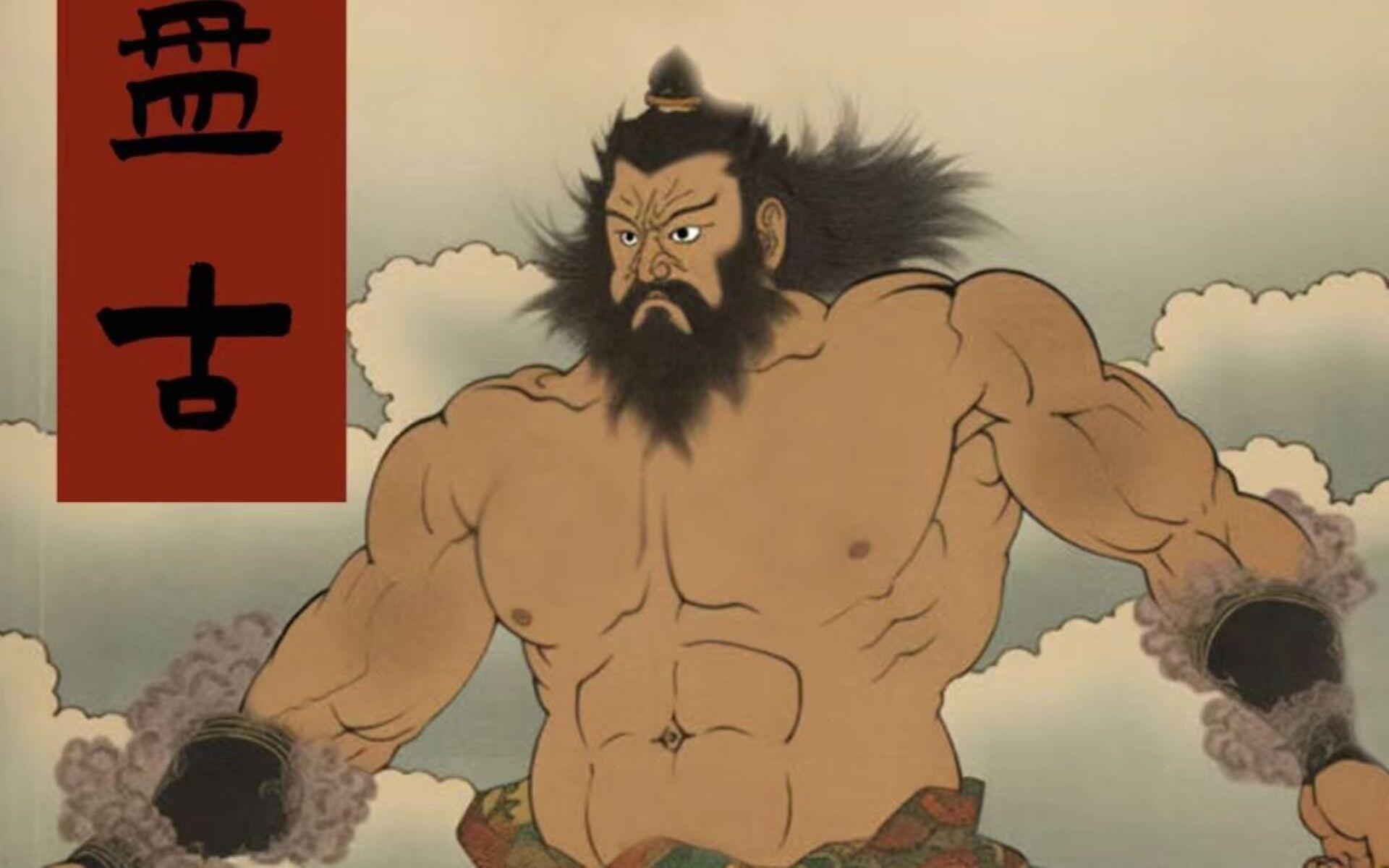
One mighty swing sent the heavy Yin into freefall; it became the earth. Yang, now free of the heavy weight of Yin, floated skyward. Pangu took up his station between them to keep them in their proper place.
After another 18,000 years had passed, Pangu met his end.
However, even in death, his body continued to fashion the universe. His:
- final breath turned into winds and clouds
- voice into thunder
- left eye the sun and right eye the moon
- flesh into fertile farmlands
- bones turned into precious gems
- hair and beard became stars of the Milky Way
- limbs transformed into mountains
- blood into flowing rivers
- sweat into rainwater
Nuwa (女娲)
The mother-goddess Nuwa is credited with creating the human race. She was so lonely that she moulded yellow earth into human form, creating for herself a family of dolls. Realising that she could populate the entire world but was unable to form each one, she raked the yellow earth with a string, creating more people.
As the story goes, those people she moulded became the nobles because they were created by the mother-goddess's hands.
Nuwa also gets credit for repairing the Pillars of Heaven.
Heaven could no longer cover all of the earth, and Earth could no longer hold up Heaven because the pillars were broken.
Disaster spread everywhere. Wild beasts roamed freely and attacked children, while torrential rains flooded valleys and settlements.
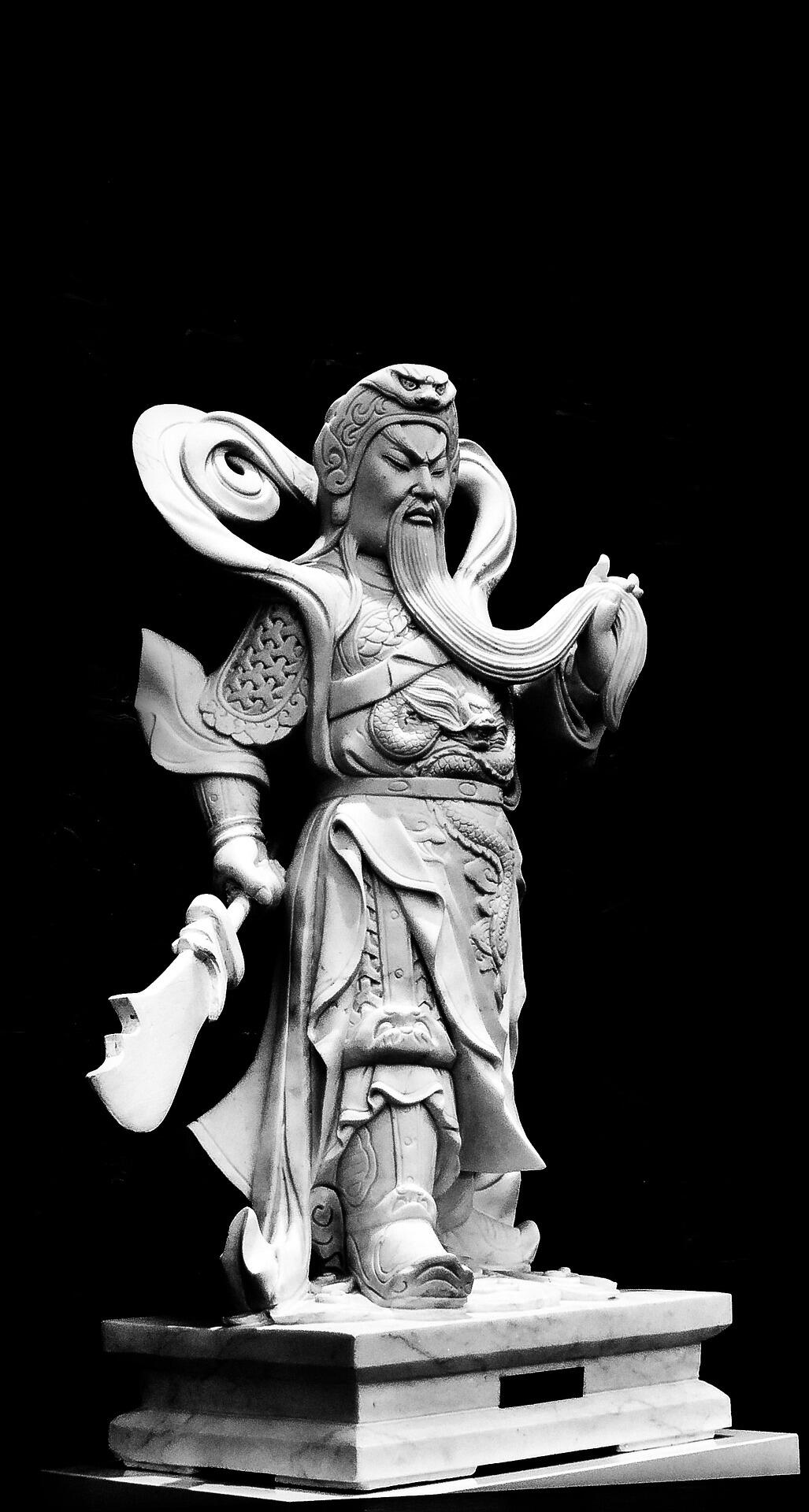
To restore order, Nuwa took action.
She first patched the broken sky, sealing the cracks in Heaven itself. Then, to replace the shattered pillars, she cut off the legs of a giant turtle and used them to prop up the sky once more.
Even then, danger remained.
A black dragon was terrorising the people of Ji, so Nuwa slew it. Finally, she built dams to control the floods, allowing the land to recover and life to continue.
Supreme Deities
Shangdi (上帝) and Tian (天)
If any of China's gods could be called a creator, it would be Shang Di. He makes his first appearance in literature around 700 BC, though stories involving him date much further back - specifically, to the Shang dynasty (ca. 1760 - 1050 BCE). His name is commonly translated as "Above Emperor" or "Supreme Emperor."
There are no drawings of him, but written texts describe him with human characteristics. He is portrayed as a compassionate male who is emotional, intellectual and just. However, unlike other gods, no great feats are attributed to him. He fought no wars, led no people: instead, he is a supreme moral authority presiding over the order of the universe.
Tian
Tian is a god who rules over lesser gods and human beings. In direct contrast with Shang Di, Tian takes no human form. Literally translated, Tian refers to “heaven” while Shang Di refers to the Supreme Ancestor. Over time, at some point in ancient history during the Zhou dynasty, the line separating Shang Di and Tian blurred to the point that referring to Tian implied the celestial father. For a time, they were both worshipped as a single entity; thus, the inspiration for the Temple of Heaven in Beijing.
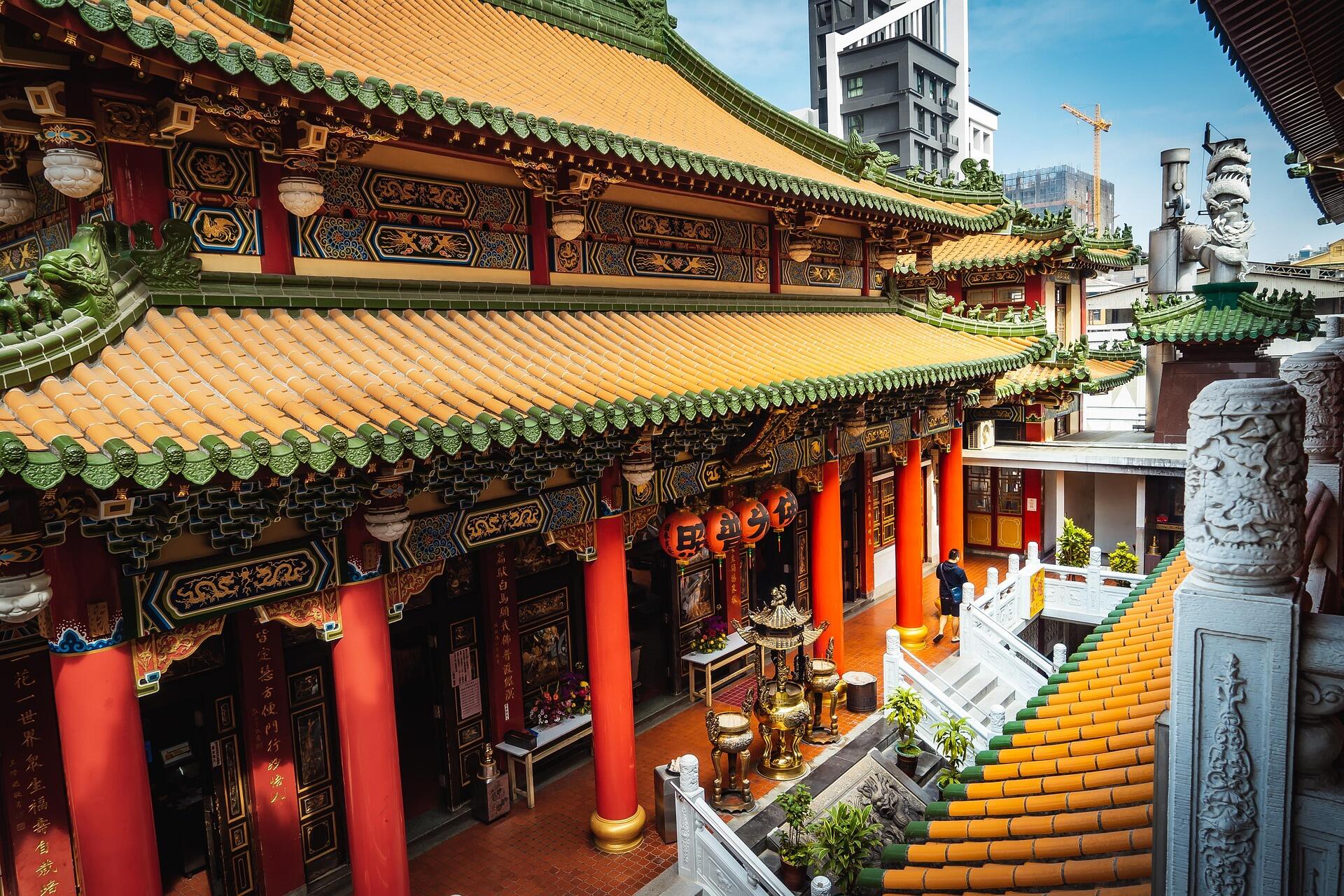
Jade Emperor(玉皇)Yu Huang
The Jade Emperor is a god of the Tao belief system who works under the Three Pure Ones. He's the ruler of heaven and earth, as well as the official deity of the human emperors. Because he is one of the most important gods, his court is full of gods and goddesses.
According to mythology, when the Jade Emperor was born, a brilliant light filled the sky and spread across the heavens and the earth. The light was calm and represented the harmony of yin and yang.
It is also believed that he attained Golden Immortality after 1,550 kalpas, with each kalpa lasting for 129,600 years.
He is regarded as a just and benevolent ruler. From a young age, he devoted himself to helping the poor and the needy and showed compassion even toward animals. When his father died, he ascended the throne and ruled with kindness and fairness. Though merciful—even toward demons—he was also a formidable leader and a skilled strategist, who was extremely capable of maintaining order and justice.
To know why Chinese mythology is so important in everyday life, you have to understand the large role the Jade Emperor plays in their creation myths.
Deities of Wealth and Prosperity
Caishen (财神)
Caishen is the god of money and is widely worshipped by people seeking wealth and prosperity. He is frequently depicted as riding a black tiger carrying a golden rod. On New Year’s Eve, families eat dumplings and stay up till midnight to welcome the God of Wealth. families using firecrackers, incense, and traditional offerings.
“Gong Ying Cai Shen Dao Wo Jiu” (恭迎财神到我家) is a Mandarin phrase meaning “Respectfully welcoming the God of Wealth into my home.” It is a popular festive greeting, especially during the Chinese New Year celebrations, inviting the God of Wealth into one's home.
He appears in 2 major forms:
- Civil God of Wealth - The civil form is represented by Bi Gan, who was a loyal official from the Shang Dynasty who lost his life when trying to reform his tyrannical ruler. He is deified as a symbol of virtuous wealth.
- Martial God of Wealth - The martial form, Zhao Gongming, is a Taoist warrior deity. He is shown riding a black tiger and wielding a staff. He drives away negative energy and protects the wealth of people.
Deities of Longevity and Health
Shouxing (寿星)
Shouxing (longevity) - Known as the “Old Man of the South Pole,” he is said to preside over longevity. Along with Fuxing and Luxing, together, they are referred to as Sanxing and are often depicted as three bearded sages.
According to legend, Shouxing’s mother carried him in her womb for 10 years, and when he was born, he appeared as an old man. Modern depictions show him with a rounded forehead, holding a peach in his hand symbolising immortality.
Deities of Death and the Afterlife
Yanluo Wang (阎罗王)
A prominent figure in Chinese mythology, Yan (Yánwáng 閻王), also known as King Yanluo, is the god of death and the ruler of Diyu (地獄 earth prison) or the underworld. He is often portrayed wearing a traditional judge’s robe and holding a tablet to record the deceased's deeds, emphasising his fair and impartial nature. He is shown with an angry red face and a long beard, symbolising authority.
In carrying out his duties in the underworld:
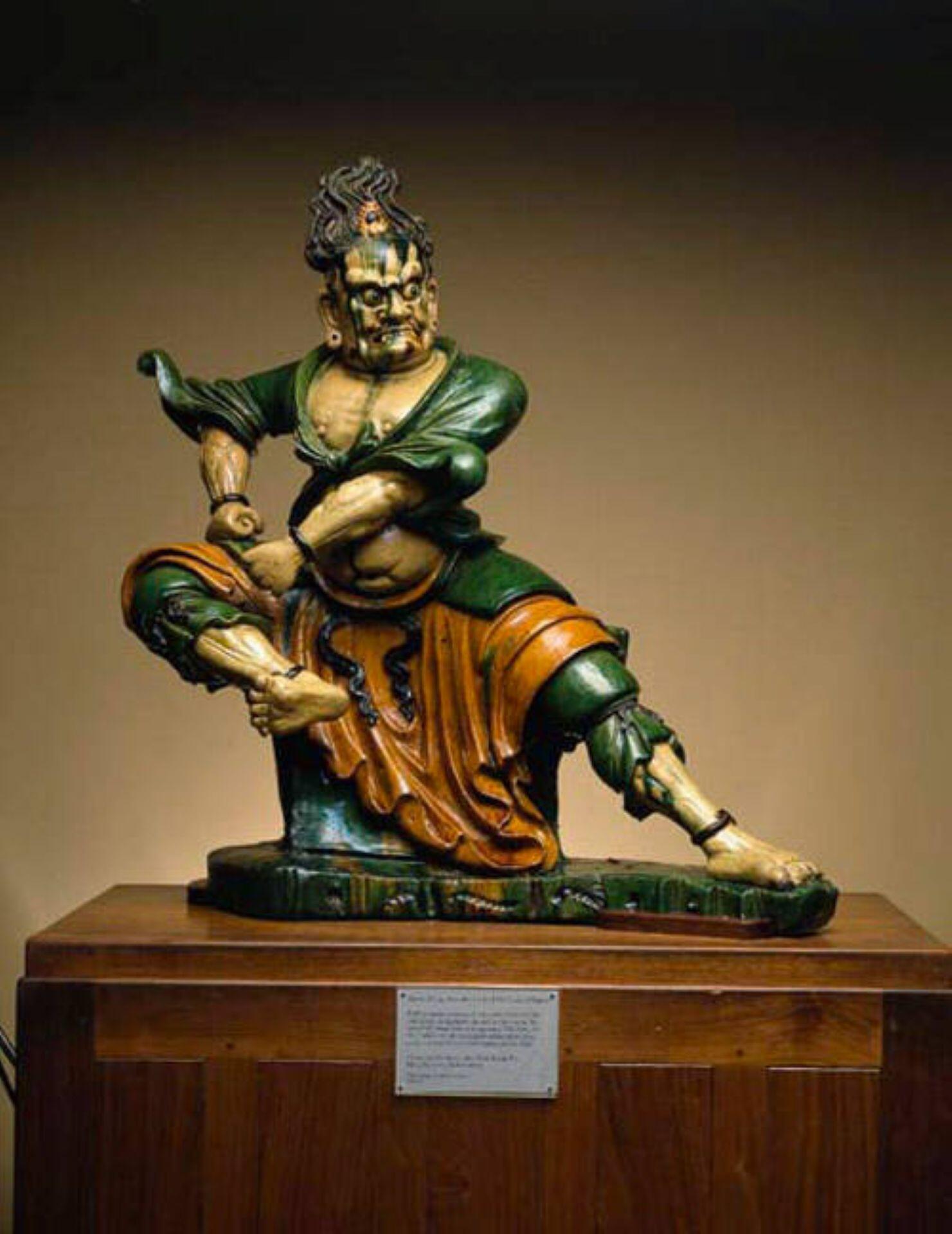
- He is assisted by a group of officials.
- These assistants examine the actions of the dead and accordingly dole out reward or punishment.
- The underworld is shown as highly organised, reflecting the administrative structure of ancient China.
- Souls move through different levels according to their actions in life.
Deities of the Eight Immortals
The Eight Immortals
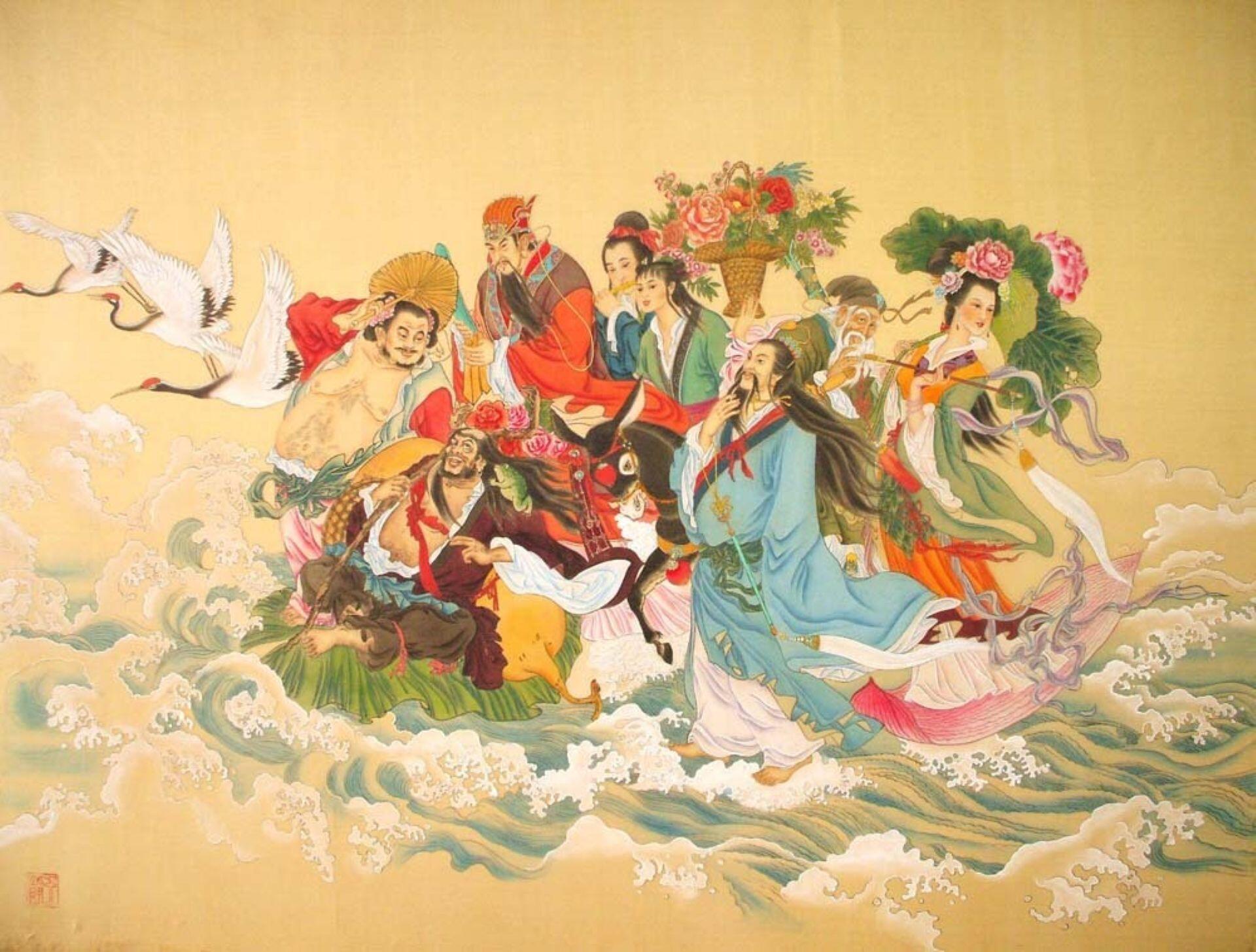
The Eight Immortals are a group of legendary figures said to have achieved immortality and are renowned for their wisdom and magical powers. It is believed that the Eight Immortals came into existence during the Song Dynasty or the Tang Dynasty and attained immortality during that time.
The Eight Immortals have immense powers with the ability to:
- Shape-shift into various objects and beings
- Maintain ageless bodies
- Mastery of qi
- Heal the sick and injured
- Predict future events
Deities of the Sea and Water
Dragon King
Long Wang, or the Dragon King, is a powerful deity in Chinese mythology who is the god of the sea and weather and controls rain and water bodies. It was believed that the Dragon King lived underwater in a huge palace, where he and his brothers feasted on precious jewels. He is a divine figure, often depicted wearing a crown and a robe.
Key traits of the Dragon King:
- The Dragon King, along with the Four Dragons, ruled over the oceans and rivers. People pray to him for favourable weather and good harvests.
- He can appear in both human and dragon forms.
- His birthday falls on the thirteenth day of the sixth lunar moon.
- He appears in famous Chinese literature like Journey to the West, the Lotus Sutra, and the Investiture of the Gods.
In the famous 16th-century Chinese novel Journey to the West, the Monkey King Sun Wukong travels to the East Sea in search of a powerful weapon.
He plunges into the sea and enters the Dragon King’s underwater palace, where he tries out several weapons.
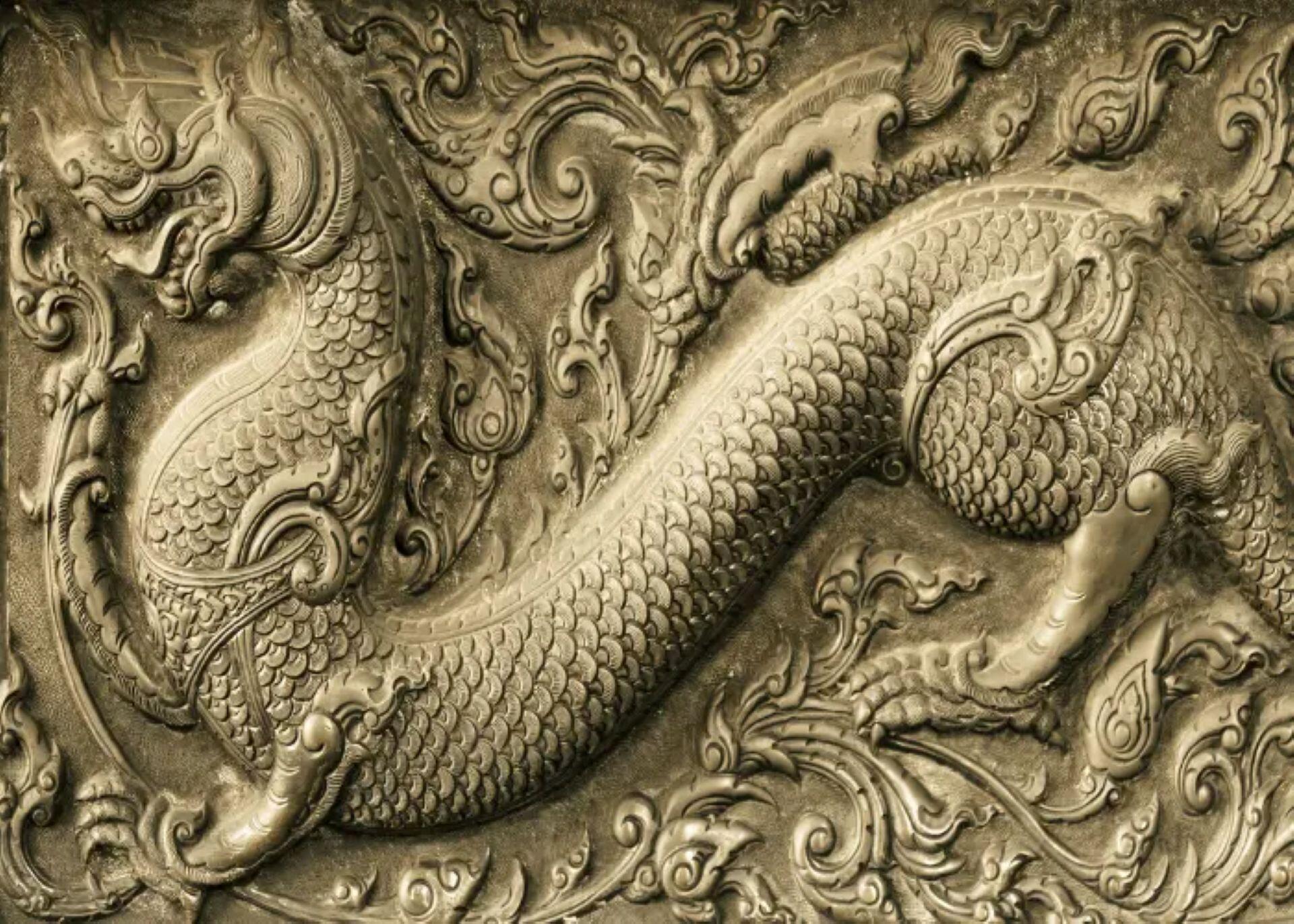
Not satisfied with anything, eventually, the Dragon King gifts him the Ruyi Jingu Bang, a magical staff that can change size. This later became Wukong’s signature weapon.
Deities of Compassion and Mercy
Guanyin (观音)
The Chinese figure Guanyin means “Perceiver of all Sounds,” and is often depicted as a female in Chinese mythology. She is one of the most revered Chinese deities and is believed to be a representation and adaptation of Bodhisattva Avalokiteśvara, a male form.
Guanyin is represented in a white flowing robe, holding a water jar in the right hand containing water, wisdom, and compassion, while in the left hand she is seen holding a willow branch to sprinkle the divine water on devotees.
Like a speck of dust, ephemeral is the body, So is the doctrine ephemeral, like a speck of dust. Only when all sentient beings and the world attain emptiness Will [Guanyin]’s all-compassionate heart rest.
Wen Fong, Beyond Representation: Chinese Paintings and Calligraphy, 8th–14th Century, p. 362.
A Buddhist legend presents her as promising not to rest until all sentient beings have been freed of suffering. Because of her compassionate nature, she is depicted with a thousand arms and a thousand eyes to attend to people quickly who need her help.
Deities of the Kitchen and Hearth
Zao Jun (灶君)
Zao Jun (灶君), also known as the stove god, although a minor deity in Chinese mythology, is a commonly worshipped god. Zao Jun watches over the hearth and family and is said to reside in the stove area of a house.
It is believed that Zao Jun returns to heaven before the Chinese New Year to report on the status of families to the Jade Emperor. To encourage a favourable account, families typically offer sweet treats before sending him off to ensure they receive a positive report.
Before he became a god, Zao Jun lived a troubled life. He left his faithful wife for a much younger woman, and as a result of his sins, he suffered and went blind. It was only with his wife’s generosity that he attained redemption and became a god.
In traditional Chinese households, when a branch of a family shifts out to set up a new household, they take coals from the main family's kitchen to light their own, symbolising the transfer of protection of the Kitchen God to the new home.
Even today, you can find paper posters of Zao Jun and his wife in many Chinese kitchens, highlighting his role in the household.
Deities of Natural Phenomena
Lei Gong (雷公)
Lei Gong is the “God of Thunder” in Chinese mythology. According to legend, Lei Gong was born a human, and his name was Lei Zu. He was a skilled blacksmith. One day, when he was working with his tools, he was struck by a bolt of lightning and became the God of Thunder. He is tasked with punishing evil people and demons with his hammer.
Dianmu (电母)
Dianmu is the wife of Lei Gong and, like him, is the goddess of lightning. As per legend, Dianmu was once a mortal who used to live with her mother. Her simple act of discarding rice husks was misinterpreted by the thunder god Leigong as wastefulness. In anger, he struck her down.
Not too happy with this action, the Jade Emperor brought Dianmu to life and made her a goddess. He then asked Leigong to marry her. Ever since then, Dianmu sends her light ahead of her husband’s thunderbolts to ensure they do not strike the innocent.
This explains why lightning always precedes thunder.
Deities of Agriculture and Harvest
Shennong (神农)
In Chinese mythology, Shennong is the second of the mythical emperors and is believed to have been born with the head of a bull and the body of a man. Known as the “Divine Farmer”, he is credited with:
- inventing the cart and plow
- teaching people how to clear the land with fire
- yoking the horse
- taming the ox
He is also regarded as the father of traditional herbal medicines and is known to have created a detailed catalogue of 365 species of medicinal plants.
Guardian Deities
Four Heavenly Kings (Sì Dàtiānwáng)
The Four Heavenly Kings in Chinese mythology are Buddhist guardian deities who protect the world from evil. Together, they guard the four directions, with each one depicted in Chinese temples in armour and distinct attributes representing the four cardinal directions.
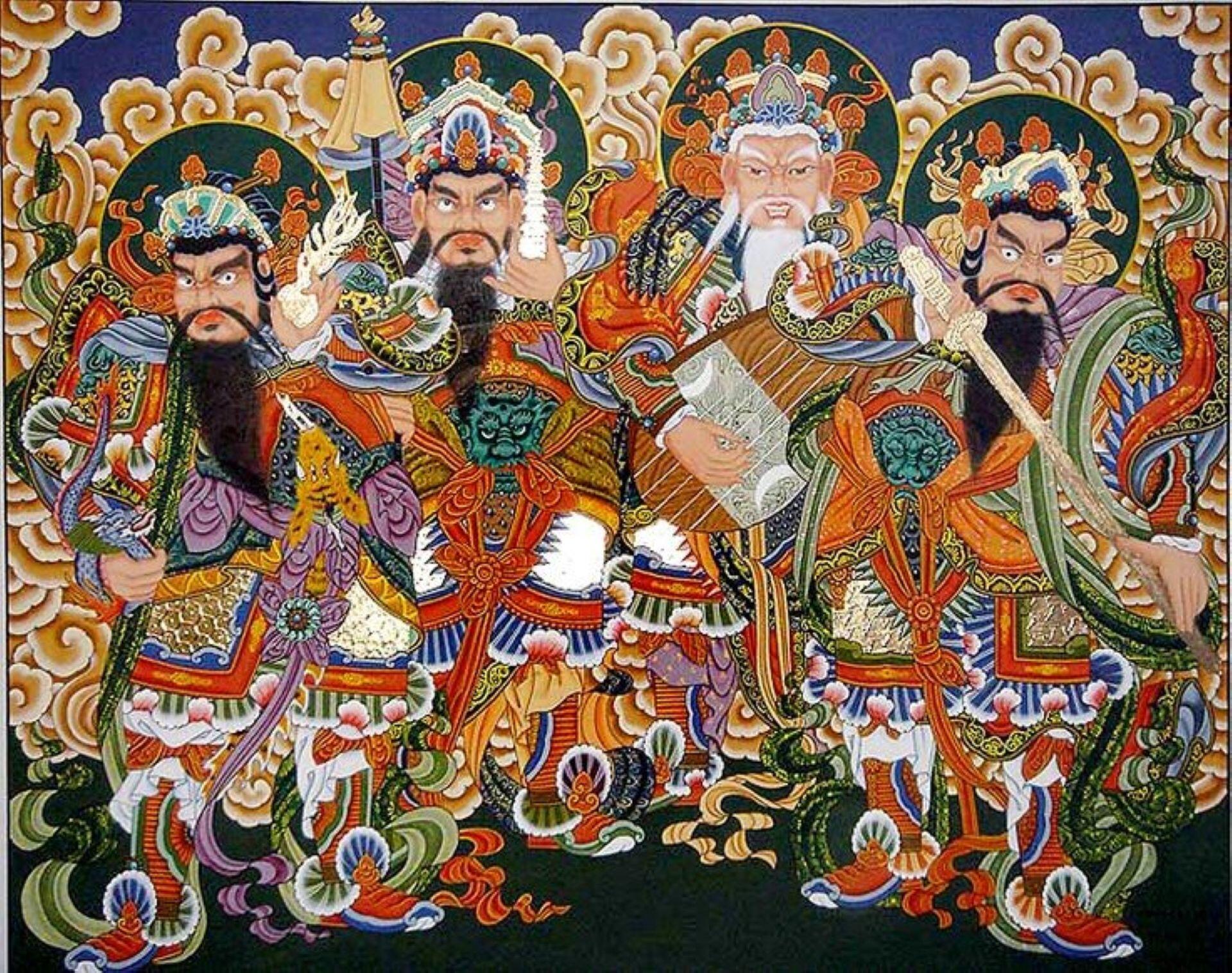
They are:
- Dhṛtarāṣṭra (East): His name means supporting the country and is seen carrying a pipa that symbolises inner calm and peace. He advocates the “Middle Path” of Buddhism.
- Virūpākṣa (West): He is the guardian of the sky, shown with a dragon/snake in one hand and a pearl in the other, symbolising constant change as well as the eternal nature of things. He is shown with a third eye on his forehead.
- Vaiśravaṇa (North): He is the most knowledgeable among the 4 kings and carries an umbrella to protect people from worldly filth so they can maintain a pure heart.
- Virūḍhaka South): He is the Ruler of the wind and is associated with the colour cyan. His weapon of choice is the sword, and he protects the Buddhist teachings from being violated.
Conclusion
The human experience is richer and more profound for our belief in our kings, gods and mythologies. Nowhere is that more evident than in China, which has a god for everything from justice (Gao Yao) to sitting exams (Kui Xing); from Gong Gong, the Water God, to Tu Di Gong, God of the earth.
Each deity, whether it's Pangu, Guanyin, or a heavenly ruler like the Jade Emperor, has a particular role to play in offering guidance to human souls. In a way, they represent an orderly and interconnected way of life. Understanding Chinese mythology is therefore not only learning about ancient stories, but also understanding how religion and culture intertwine together to reshape Chinese perspectives.
Summarise with AI:
Enjoyed this article? Leave a rating!

 Loading...