
Most people believe that China is an irreligious society - that its people have no gods to worship and have no concept of worship, which appears to be a misrepresentation of Chinese culture, Chinese mythology, and mythical creatures. That's true, but only in the sense that we define worship.
They don't have a day set aside for divine contemplation, and while there are temples aplenty all across China, they generally don't hold services or mass. The people don't generally congregate for religious reasons, and there is nothing akin to Christian fellowship. There is a belief, though. Lots of it.
Key Takeaways
- Despite being seen as irreligious, Chinese mythology continues to influence the daily customs and traditions of Chinese people.
- Mythical creatures like the qilin, phoenixes, and Sun Wukong represent ideas like power and harmony.
- Creation deities like Pangu, Guanyin, and the Jade Emperor symbolise the origins of the world and maintenance of order.
- Lesser beings like taotie, yaoguai, and Zhulong showcase connections between humans and spirits.
- Symbols from Chinese mythology play an important role in architecture and artwork.


The Pantheon of Chinese Mythical Creatures
Influential emperors are worshipped, as are exemplary citizens and one's ancestors. Alongside them are an assortment of deities, dragons, monkeys and creatures with human heads or human faces. Many of these creatures are described in texts such as the Shan Hai Jing, Classic Mountains Seas, or Guideways Mountains Seas. Legendary beings like the Chinese phoenix, Fenghuang, also appear frequently.
The 12 animals of the zodiac are not any kind of deity, but they play a significant role in Chinese mythology. China also has its own version of heaven and an underworld, populated by demons capable of rising to torment living beings. In comparison to Chinese demons, Western demons seem rather tame.
Given below is an overview of the emergence of mythical creatures in Chinese mythology.
(c. 5000–2000 BCE)
Prehistoric & Neolithic Period
Emergence of Dragon (Long) and Phoenix prototype
(c. 2100–256 BCE)
Xia–Shang–Zhou Periods
Emergence of Fenghuang, Qilin, Black Tortoise, and Taotie
(221 BCE–220 CE)
Qin–Han Dynasties
Azure Dragon, White Tiger, Vermilion Bird, Black Tortoise, Immortal Beasts, and Huli Jing
(220–907 CE)
Six Dynasties–Tang Dynasty
Dragon Kings, Yaoguai, and Pixui
(1368–1644)
Ming dynasty
Sun Wukong (Monkey King), White Bone Spirit
🤩 Which Chinese mythical creature fascinates you the most?
Dragons in Chinese Mythology
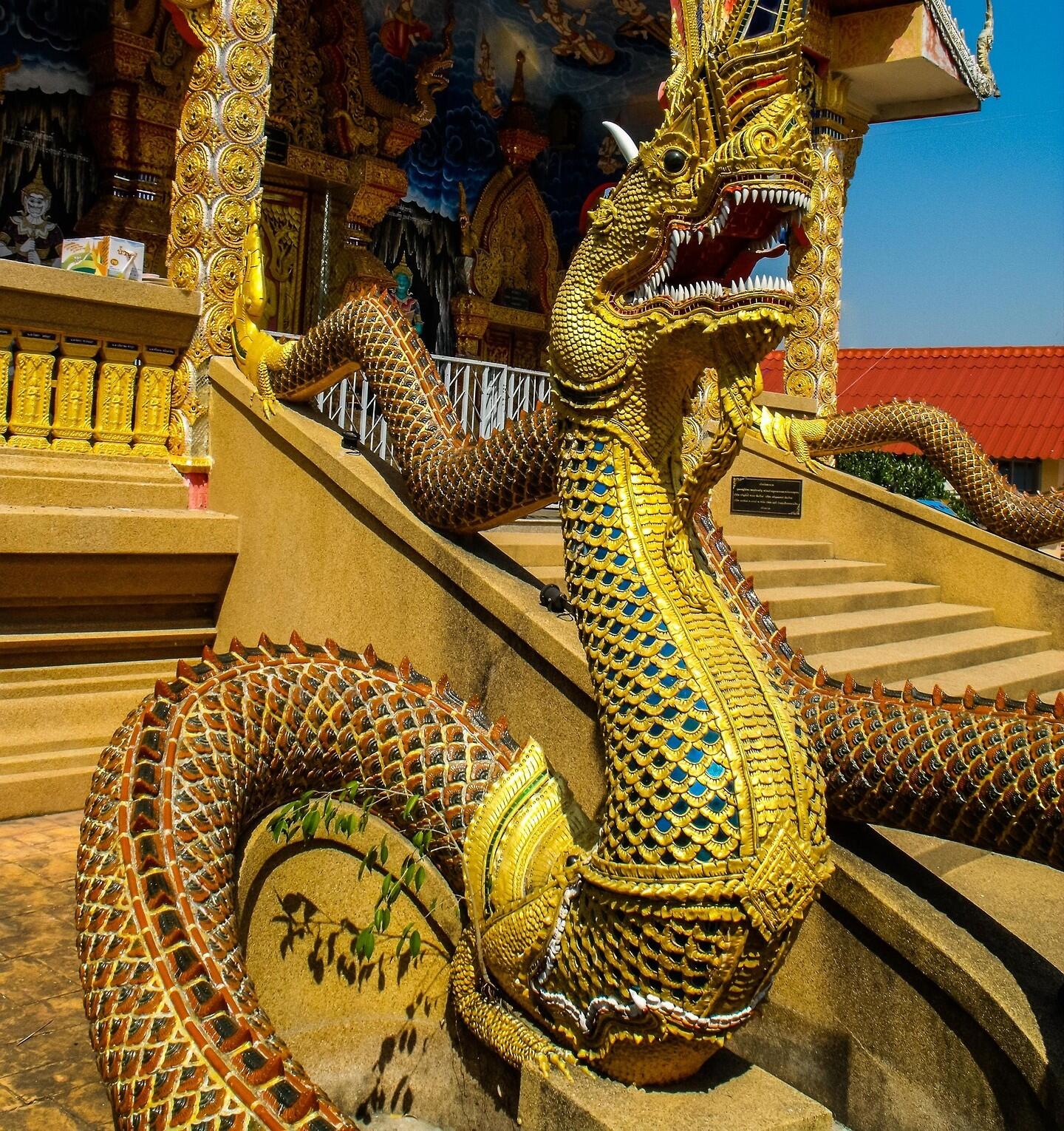
In ancient Chinese mythology, dragons carry a lot of positive connotations: they were powerful rainmakers and regarded as a harbinger of good fortune. Unlike the fire-breathing dragons of Western stories, in Chinese culture, dragons are associated with water. During the Han dynasty (202 B.C.–220 A.D.), people moulded clay dragons and prayed for rainfall. Over time, these local customs blended with the Buddhist idea of the Dragon King, who came to be worshipped as the God of Water.
Dragons have horns like a deer, a muzzle like a camel, eyes like a demon, a body like a snake, a belly like a crab, scales like a carp, claws like a hawk, legs like a tiger, and ears like an ox.
Unknown Han dynasty writer, compiled in a Song dynasty text called the Erya Yi 爾雅翼
Dragons are often associated with:
- Good health
- Business fortunes
- Bountiful harvests
In “The Four Dragons” story, there once lived four dragons—the Long, Yellow, Black, and Pearl—in the Eastern Sea when no rivers or lakes existed. Kind-hearted as they were, when they saw the people suffering from drought, they begged the Jade Emperor to send rain, but he did nothing.
Committed to helping the people, the dragons themselves drew water from the sea and created rain. This angered the Jade Emperor, who imprisoned them beneath four mountains forever.
Undeterred, the dragons transformed into China’s four great rivers: Heilongjiang, Huanghe, Changjiang, and Zhujiang.
The Chinese Phoenix (Fenghuang): The Emblem of Harmony
Like dragons, the Chinese Phoenix (Fenghuang) is a powerful symbol in Chinese mythology. Often represented as the female or the yin counterpart of the dragon or yang, the phoenix is known for creating balance and harmony, especially when both are paired together. Its appearance is regarded as a sign of extremely good fortune, which finds mention in a wide array of Chinese idioms.
According to the Shuowen jiezi, the chinese phoenix fenghuang has the body of a bird, breast of a goose, the hindquarters of a stag, the neck of a snake, the tail of a fish, the forehead of a fowl, the down of a duck, the marks of a dragon, the back of a tortoise, the face of a swallow, and the beak of a cock.
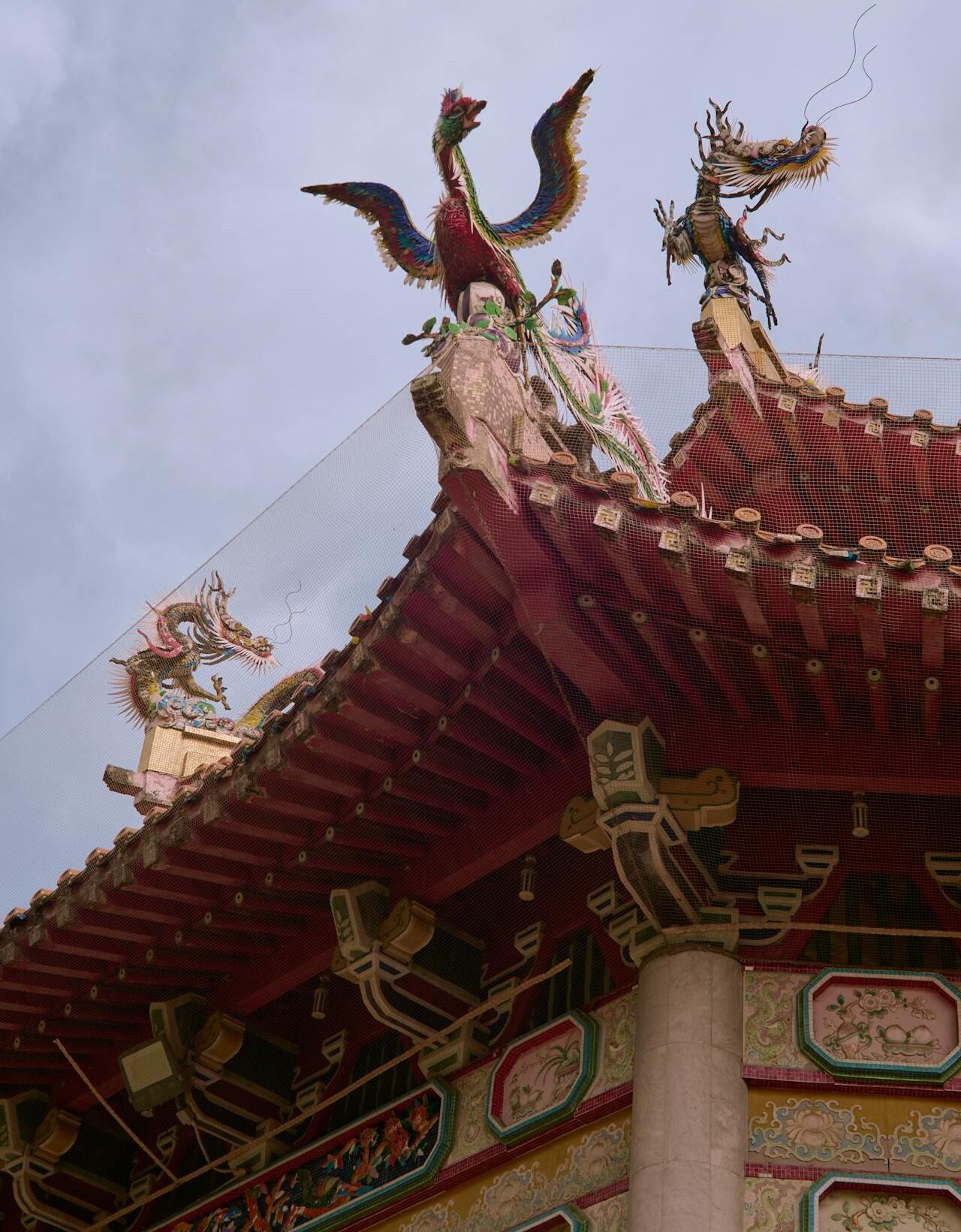
In Chinese tradition, the sighting of the Fèng Huáng at the birth of an emperor signifies that the child would become a virtuous ruler. Apart from this, the Phoenix is also known to announce the arrival of great sages and serves as a messenger between heaven and earth.
rén zhōng lóng fèng, meaning "a giant among men" and someone who is highly talented, like a phoenix or dragon
Lóng fèng chéng xiáng (龍鳳呈祥) means "the dragon and phoenix present auspiciousness," symbolising perfect harmony and extremely good fortune
Qilin: The Auspicious Unicorn
The Qilin, often called the Chinese unicorn, is a mythical creature with a unique appearance. It is depicted with a single horn on its forehead, a yellow belly, and a multicoloured back. Its body is similar to that of a deer, while its tail is like an ox's. Some descriptions also include the Qilin being covered in fish scales or flames.
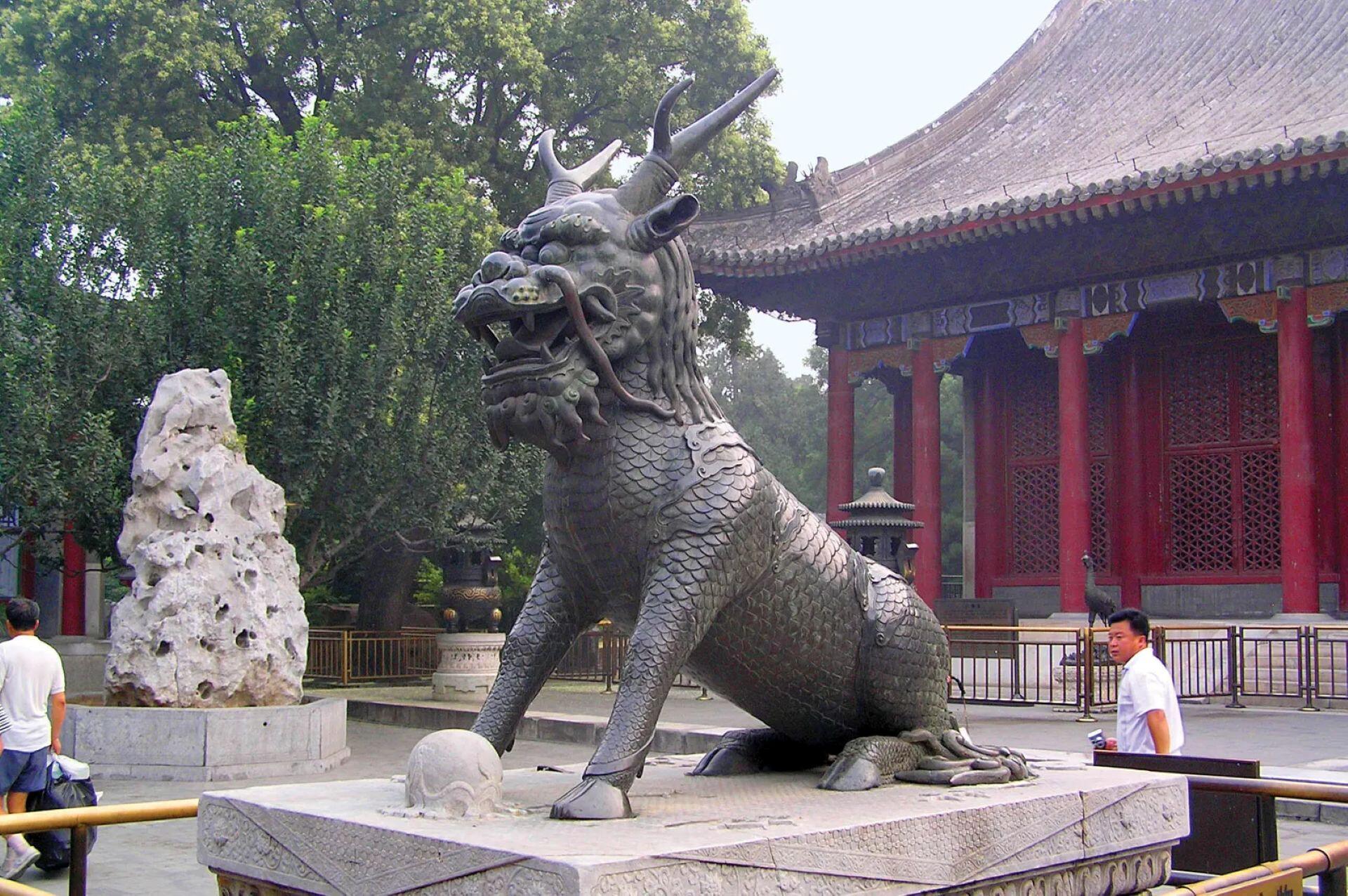
The Qilin is a symbol of good fortune, prosperity, and wisdom. It is highly revered as a symbol of cultural pride and frequently appears in Chinese festivals and other cultural events.
It is believed that the Qilin lives in the heavens and is rarely seen by humans. But when it is seen, it is believed to signify the birth or death of an important ruler or sage. According to legend, the first Qilin was seen in the garden of the legendary Yellow Emperor, Huangdi, in 2697 BCE. A Qilin also reportedly appeared before the birth of the great philosopher Confucius.
In Chinese mythology, it is believed that a qilin appeared in Confucius's mother's dream the day before he was born, giving rise to the legend of ‘Qilin delivering a child.’ As a result, people pray to the Qilin when seeking blessings for an offspring.
The White Tiger (Baihu)
In Chinese mythology, the White Tiger, known as Baihu, is an important mythical creature and is one of the Four Auspicious Beasts of Feng Shui, alongside the Vermilion Bird (Zhuque), Azure Dragon (Qinglong and Black Tortoise (Xuanwu). Together, they symbolise the four cardinal directions.
Typically depicted with blue flames, the Baihu has the unique ability to shape-shift into human form and this power is said to be a sacred gift bestowed by Huanglong (the Yellow Dragon). This is what elevates the White Tiger to a near-divine being.
The Monkey King (Sun Wukong): Trickster and Hero
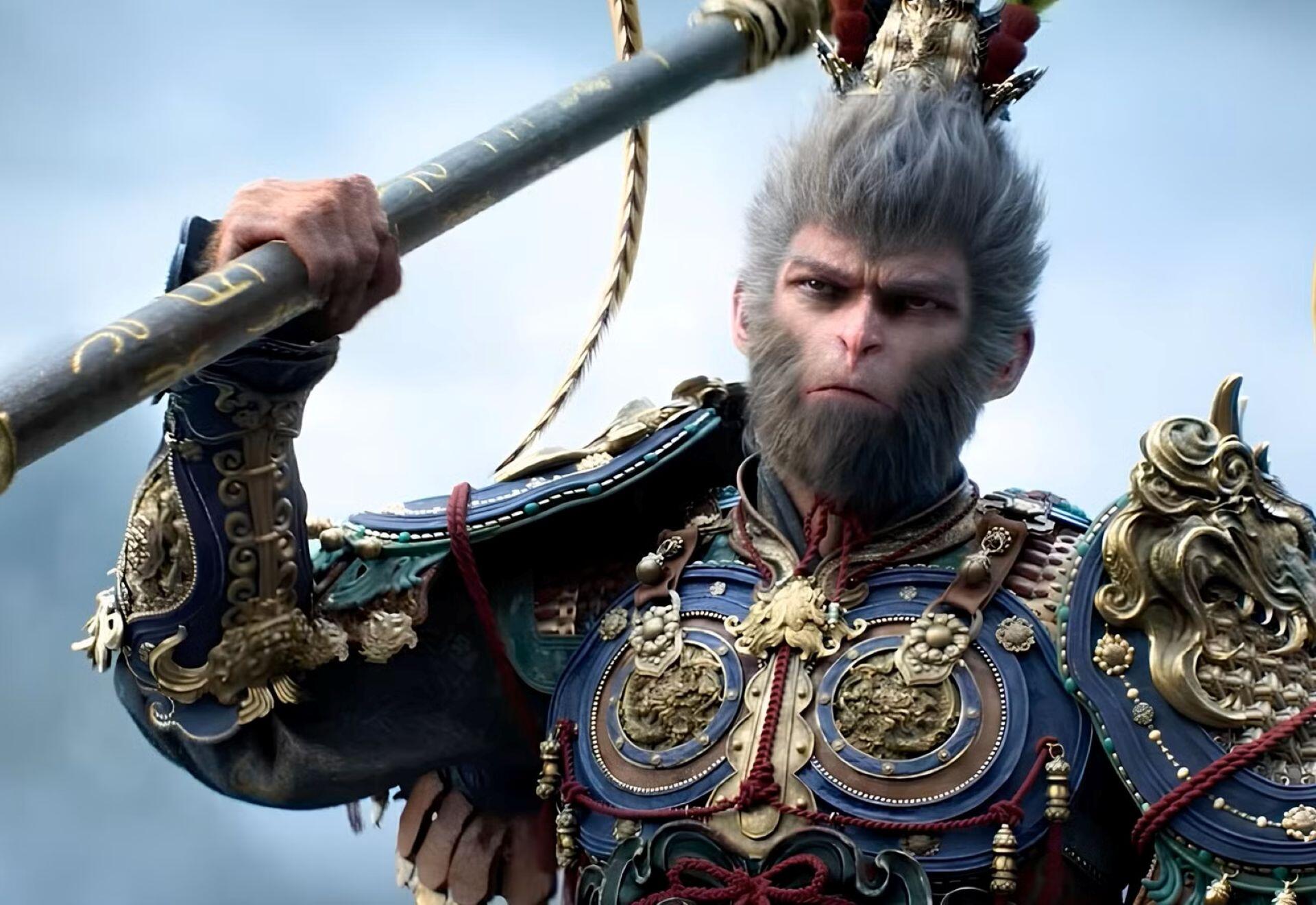
Sun Wukong (孫悟空) or the Monkey God makes his first appearance in the Chinese classic Journey to the West. In Chinese mythology, he is a trickster god who rebelled against Heaven, much like Satan in Western mythology. However, he eventually achieved redemption and became a saint.
Legend has it that the Monkey King was born from a rock. Long ago, the energies of heaven and earth, along with the light of the sun and moon, joined together to impregnate a boulder situated atop the Mountain of Flowers and Fruit (Huaguo shan, 花果山), an island in the Buddhist disc world system. The stone gestates for countless ages, after which it hatches a stone egg from which emerges the stone monkey.

I came out of stone. There was a magic stone on the Mountain of Flowers and Fruit. When its time came, it burst open and I came out.
Monkey King to the Patriarch
The Monkey King’s key exploits are.
- Mastering immortality, magic, and 72 Transformations from Patriarch Subodhi.
- Stealing the Ruyi Jingu Bang from the Dragon King.
- Rewriting the Book of Life and Death, defying the underworld.
- Declaring himself the Great Sage Equal to Heaven.
- Creating clones of himself to fight the Jade Emperor’s soldiers.
- Eating the Peaches of Immortality and the Jade Emperor’s wines.
- Subdued by the Buddha under Five Elements Mountain.
- Achieving Buddhahood as the Victorious Fighting Buddha.
Enjoy the Monkey King's exploits in the audio-visual presentation below.
| Creature | Defining Features | Symbolism and Significance |
|---|---|---|
| Dragon (Long) | Composite body; associated with water, rain, rivers | Life-giving power, prosperity, good fortune, imperial authority |
| Phoenix (Fenghuang) | Sacred composite bird | Harmony, virtue, peace; omen of wise rulers and sages |
| Qilin | Deer-like body; single horn; gentle nature | Wisdom, benevolence, prosperity; appears during times of great virtue |
| White Tiger (Bai Hu) | Fierce white celestial tiger; guardian of the West | Justice, protection, military power; wards off evil |
| Monkey King (Sun Wukong) | Stone-born monkey; magic staff; transformations | Intelligence, rebellion, perseverance; journey toward enlightenment |
Mythical Deities and Divine Beings in Chinese Mythology
Nezha
Nezha (pronounced Nuh-ja) is a famous deity in Chinese mythology and is believed to be the patron saint of young adults. Tracing his origin to the Indian deity Nalakuvara, Nezha represents identity, free will, and self-determination.
His popularity is immense, with a film made on him shattering multiple global box office records and raking in over US$1 billion (S$1.34 billion) in China in just one week. It has also entered the top 10 highest-grossing films of all time, outperforming Inside Out 2 (2024).
Nezha’s birth: Nezha was born to General Li Jing and his wife, Lady Yin, who had been childless for long. Finally, after many years, Lady Yin became pregnant. However, it was an extraordinary pregnancy as she carried the child for three years and six months in her womb before giving birth to a glowing ball of flesh. Fearing it was a demon, Li Jing struck it with his sword—upon which the ball split open and Nezha emerged as a fully formed boy endowed with divine powers.
🐉 What do Chinese mythical creatures mean to you?
Guanyin: The Goddess of Mercy
Guanyin is one of the most venerated deities in Chinese temples. Her name in Chinese translates to, “She who always observes or pays attention to sounds.” In Chinese mythology, she is often represented as standing atop a dragon, flanked by either 2 children or 2 warriors.
Good son, if any of the limitless myriads of innumerable living beings who are undergoing all kinds of suffering hear of Avalokiteshvara Bodhisattva, and recite his name single-mindedly, Avalokiteshvara Bodhisattva will immediately hear their voices and rescue them.
Buddha to Akshayamati
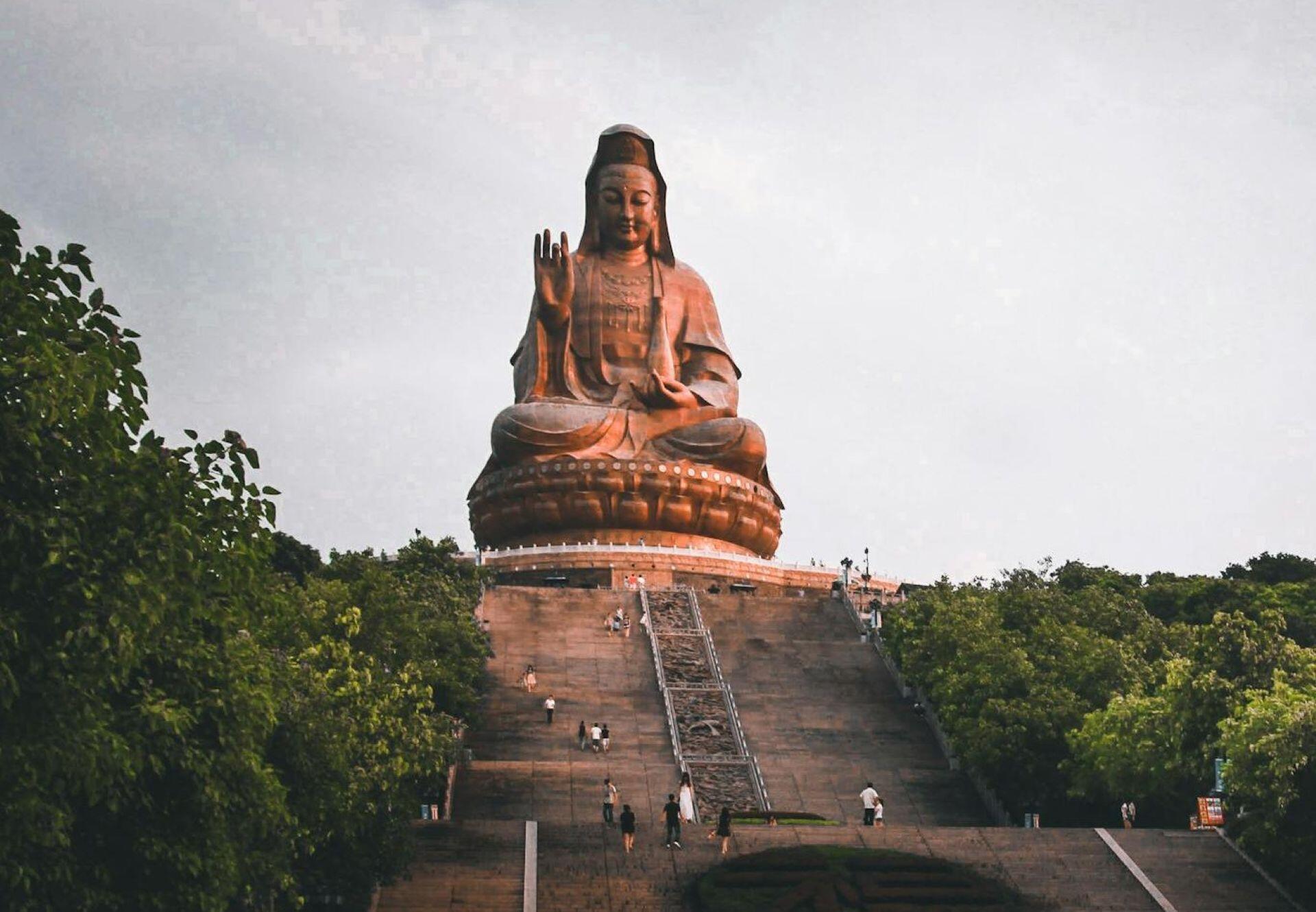
Known as “the thousand-arms, thousand-eyes" Bodhisattva, Guan Yin is also sometimes depicted with a thousand arms and multiple heads, hands, and eyes. This form of hers represents a caring mother who reaches out in all directions to help her suffering children.
She is worshipped for several other reasons, including:
- comforting the troubled and the sick
- protecting seafarers and travellers
- caring for souls in the underworld
- blessing barren women with children
Guanyin was originally worshipped as a male deity till the 8th century. Over time, there was a gender reversal, and the deity began to be widely worshipped as a female figure in China.
The Jade Emperor: Ruler of Heaven
The Jade Emperor (Yuhuang or Yudi) is a powerful king in Chinese mythology. Revered as the Heavenly Grandfather and the Supreme God, he is portrayed as a kind and respectable old man. In Chinese art, he is depicted sitting on a throne in full imperial regalia with long hair and moustaches.
The ninth day of the first lunar month is traditionally celebrated as his birthday. On this day, temples hold ceremonies and families set up an altar table at home to honour the Jade Emperor during the Chinese New Year.
The top tier contains offerings for the Jade Emperor and includes six vegetarian dishes, cakes, noodles, fruits, unripe betel, vegetable bowls, and three glasses of tea, all decorated with red paper. The two lower tiers hold the five sacrificial offerings along with wine, presented to the deities who attend the Jade Emperor.
After the preparations are done, the family kneels and offers prayers to the Jade Emperor and wishes him a long life.
Help the sick and all who suffer, protect the hermits against serpents and tigers, navigators against the fury of the waves, peaceable men against robbers and brigands!
Drive far from us all contagion, caterpillars, and grasshoppers. Preserve us from drought, flood, and fire, from tyranny and captivity.
Deliver from the hells those who are tormented there... Enlighten all men with the doctrine that saves. Rebirth that which is dead, and let become green again that which is dried up.
Lesser-Known Mythical Creatures and Their Stories
In addition to the prominent deities, Chinese mythology also has a there are a host of lesser-known mythical creatures. Let us explore a few of them.
Taotie: The Gluttonous Beast
The Taotie is a fierce mythical creature known for its huge, bulging eyes, heavy eyebrows, sharp teeth and notorious claws. The Taotie is famous for its gluttonous nature and is usually shown as a beast that is always eating.
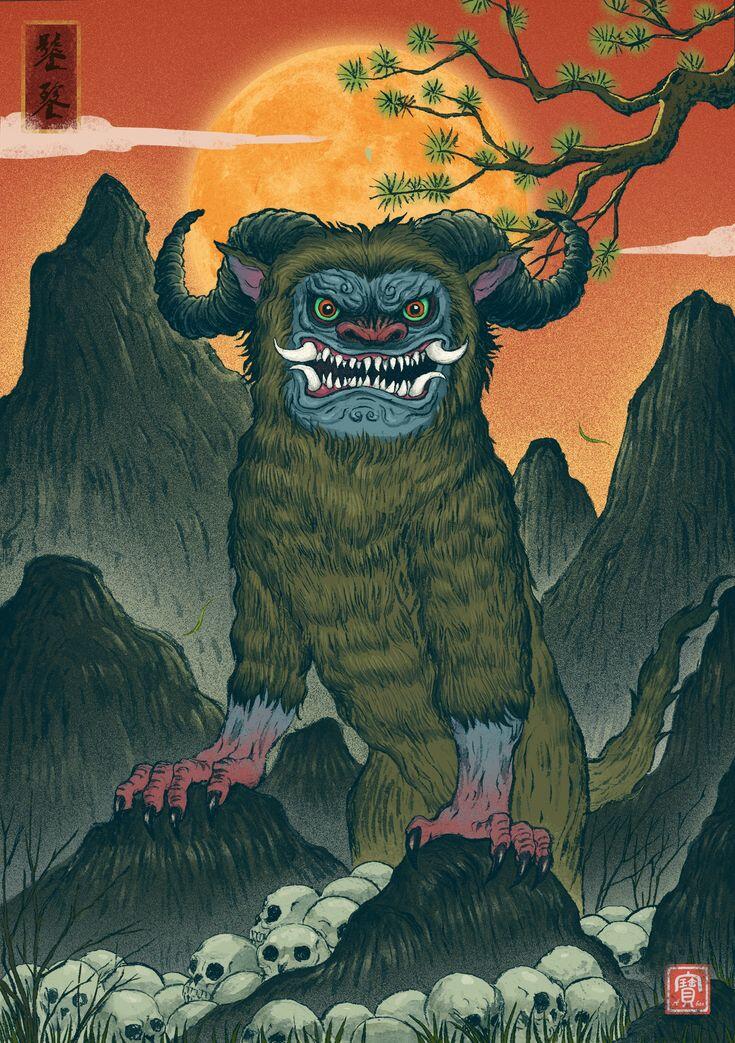
The Taotie was often depicted on bronze sculptures and is one of the “Four Evils” in Chinese stories. It is one of the earliest monstrous forms found in Chinese art. On bronze sculptures, it is often represented by two round, bulging eyes, a gaping mouth with no lower jaw, and heavy eyebrows.
There are several theories regarding what taoties represent:
- Taoties may represent the animal helpers of male and female shamans and aid communication between the living and the dead
- Some theories suggest taoties are a depiction of masks and are worn to symbolise ancestor worship
- Still others suggest taoties may represent older beliefs in spirits and nature deities, and mankind’s attempt to connect to the spirit world
Yaoguai: Spirits and Demons
The term "Yaoguai" combines “妖” (yāo), meaning demon and “怪” (guài), meaning unusual entity. In early Chinese mythology, yaoguai were regarded as malevolent spirits, often foxes or snakes who had achieved a certain level of spiritual cultivation.
While Daoism views yaoguai as beings formed from the imbalance of natural energies (qi), Buddhism takes a more lenient view and sees them as beings suffering from bad karma.
It is believed that Daoist spells and Buddhist rituals can help ward off the evil influences of a yaoguai.
Despite their fearsome exterior and reputation, the main goal of a yaoguai is not destruction but to attain immortality.
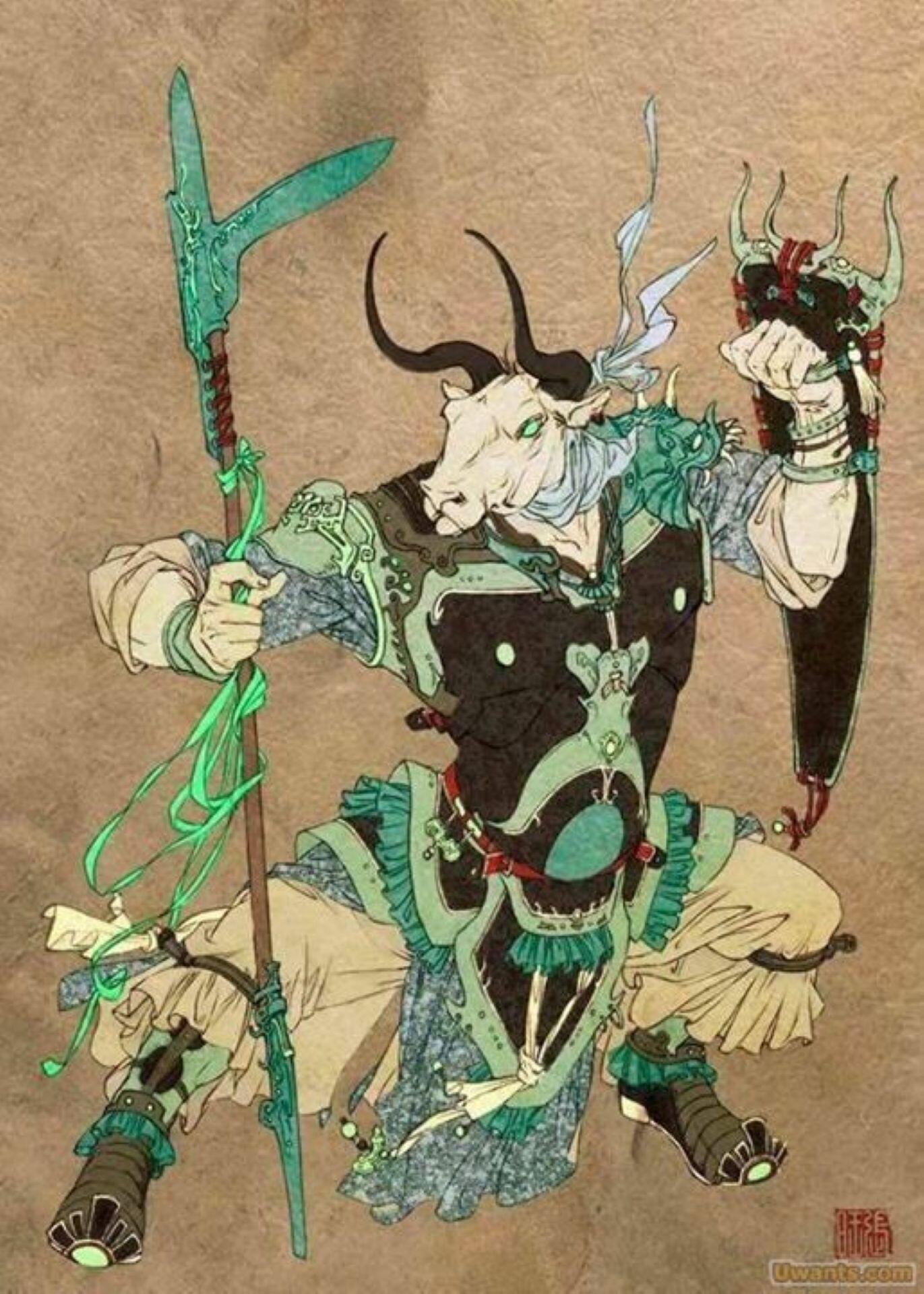
Famous Yaoguai in Chinese mythology:
[table “my_101552” not found /]Zhulong: The Torch Dragon
Zhulong is a god in Chinese mythology who controls day and night. It is believed that when Zhulong opens his eyes, it is day, and when he closes them, night falls upon mankind. Further, when he exhales, it is winter, and when he inhales, it is summer.
He is a huge god with a human face and a dragon's body. It is said his body is 1000 ri long and that his eyes glow like beams. It is believed that Zhulong could be the aurora borealis, as the ancient Chinese name for the northern lights was “red spirit,” and from a distance, the aurora would have appeared to them as a massive red dragon stretching for kilometres across the sky.
To learn more about Chinese gods, read our comprehensive article on gods in Chinese mythology.
The Influence of Mythical Creatures on Modern Culture
Chinese mythology is not just restricted to the past. Instead, they play an important part in modern culture, with ancient myths being revitalised and reinterpreted to suit modern sensibilities. The mythical creatures of yore often make appearances in games, animation, films, and fashion in a new form, appealing to audiences both old and new.
Traditional Architecture and Art
Ornate carvings depicting Chinese mythology are a key part of Chinese temples and buildings. For instance:
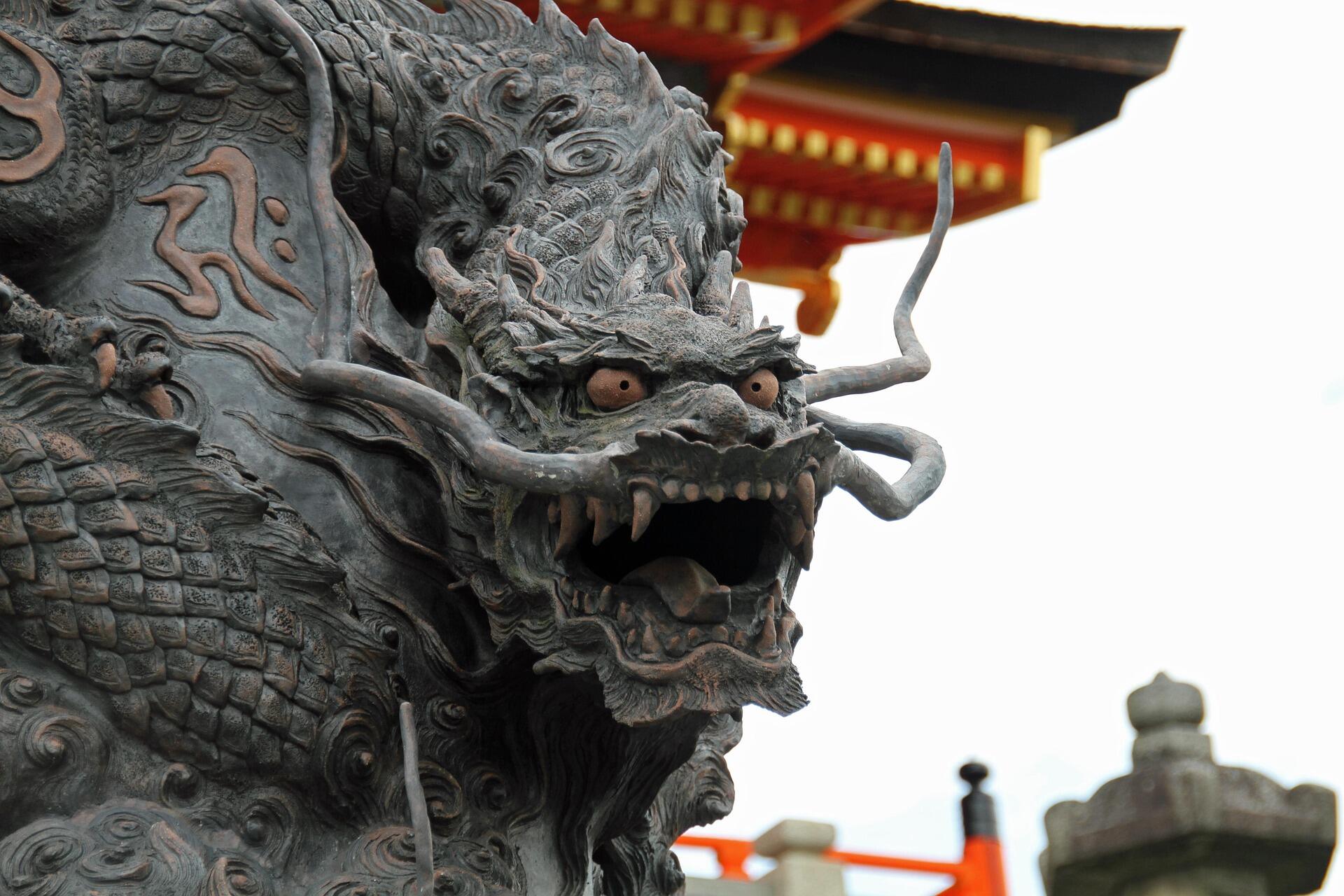
- Dragon pillars are found in government buildings and represent power
- Stone lions (Shi) are usually placed at the entrances of banks, hotels, and restaurants for protection
- Roof ridge guardians like Chiwen and Procession of Beasts (Zou Shou) protect buildings from dangers
- Turtle-borne steles (Bixi) are large stone sculptures and serve as commemorative tablets at temples and other significant historical locations
Popular Culture
Chinese mythology is experiencing a powerful revival with traditional symbols like the White Snake, dragons, nine-tailed foxes, or jiangshi being reinterpreted in dramas and films.
Films like Ne Zha 2 and Black Myth: Wukong demonstrate how retold myths can capture worldwide attention, turning ancient heroes into contemporary cultural icons.
Similarly, video games like Genshin Impact, Black Myth: Wukong, and Gujian are introducing international audiences to mythical characters like qilin, yinglong, and taotie. Yanluo Wang is another popular figure in video games and is often portrayed as a judge of the dead.
Fashion brands have incorporated the dragon, phoenix, and lingzhi mushrooms into clothing lines.
Wrap Up
The human experience is richer and more profound because of our belief in Chinese mythologies and the mythical creatures we encounter. Nowhere is that more evident than in China, where mythical creatures like the dragons, signifying imperial power and harmony, phoenixes, representing renewal and virtue, and qilin, embodying prosperity and moral righteousness, have shaped the cultural fabric for centuries.
Each mythical creature, whether it's the dragon, the quilin, or the phoenix or the heavenly ruler like the Jade Emperor, has a particular role to play in offering guidance to humans. Together, they represent an orderly and interconnected way of Chinese folk society.
Moreover, these creatures are not just relics of the past but make their appearance in festivals, architecture, and popular media, demonstrating their relevance even today.
Summarise with AI:
Enjoyed this article? Leave a rating!

 Loading...