

Given the rising cost of education and overall inflation, not everyone can afford to pay the fees to attend university. University financial aid plays an important role in helping students, ensuring their financial condition doesn’t prove to be a hindrance in their search for quality education. It creates an inclusive system where students pursue their academic goals based on merit, irrespective of their financial capacity.
In Singapore, students can benefit from a wide range of financial assistance available, such as scholarships, loans, grants and bursaries. Depending on their financial needs, they can opt for options that suit their needs best.
If you are wondering how to apply for a scholarship in Singapore or how to apply for a tuition grant in Singapore, then don’t worry. This article will guide you through everything and help answer all your doubts.
Before we go in-depth into the article, here is a quick summary answering your question of "how to apply for financial aid in Singapore."
Determine which financial assistance schemes you qualify for based on your academic level and financial situation.
Prepare the necessary documents such as academic transcripts, income statements, and identification proofs.
Apply through the respective institutions' portals within the specified deadlines.
Check your email for application outcomes and follow any additional instructions provided.


💱Understanding Financial Aid Options in Singapore
| Feature | Bursary | Loan | Scholarship |
|---|---|---|---|
| What it is | Financial aid given mainly based on financial need | Money borrowed to pay for studies | Financial award given based on academic merit talent or leadership |
| Repayment | No repayment required | Repayment required | No repayment required |
| Main purpose | Help lower-income students afford education | Help students finance tuition and living costs | Reward outstanding students and support studies |
| Selection basis | Household income and financial situation | Eligibility and repayment conditions | Academic results achievements leadership portfolio |
| Typical coverage | Partial tuition fees living allowance school expenses | Tuition fees and sometimes living expenses | Full or partial tuition allowance overseas programmes |
| Amount given | Usually moderate | Depends on approved loan amount | Often large and may cover full education |
| Competition level | Moderate | Easier approval if eligible | Highly competitive |
| Who usually qualifies | Students from lower or middle income families | Students needing financial support | High performing students |
| Examples in Singapore | MOE Higher Education Bursary | MOE Tuition Fee Loan Study Loan | PSC Scholarship NUS Merit Scholarship |
🎓Scholarships
A scholarship is a form of financial aid awarded to a student in recognition of their excellence in a particular field. It often covers tuition fees, living allowances, or both, ensuring financial constraints do not hinder meritorious students from achieving their academic and career goals.
The scholarship has eased my family's financial burden--and given me the means to spend more time on things taht matetr to me at NUS. Being a scholar also motivates me to work hard and uphold the standard expected of all NUS Scholars.
Nadia Farhana Bte Mohamed Salahuddin
In Singapore, several types of scholarships are available for deserving students.
Government Scholarships
1️⃣ MOE-AU Scholarship
The MOE-AU (Ministry of Education-Autonomous University) Scholarship is a fully-funded scholarship by Singapore’s MOE. It is given to deserving Singaporean citizens (and Permanent Residents) students who want to pursue a long-term academic career at a local Autonomous University (AU) like NUS, NTU, SUTD, or SMU.
To be eligible for a full-term scholarship, you:
✅must be a Singapore citizen or a Permanent Resident (PR)
✅should have a strong interest in studying at one of the local universities in Singapore
✅should have completed their pre-university final examination
2️⃣ Singapore Industry Scholarship (SgIS)
SgIS is an undergraduate scholarship that helps Singaporean students with financial aid who are keen to contribute to the nation’s strategic sectors. It is the only multi-industry scholarship that has a direct partnership with the Ministry of Education (MOE).
To date, over 196 students have received the SGIS scholarships. As part of the SgIS Scholars' Development and Engagement Programme, students get:
✅Internship opportunities at sponsoring organisations
✅Attend forums and interact with industry thought leaders
✅Participate in social activities and learn to give back to society
Here is a video explaining SGIS.
SgIS is a multi-industry scholarship in collaboration with the Singapore Government, providing scholarships to Singapore Citizens at various levels of their university studies both locally and abroad. This multi-industry gateway allows DeClout Group to engage, onboard and groom scholars from multiple disciplines, who can thereafter be valuable talent additions to our portfolio of companies.
Human Resource Director at DeClout, Ms Clarin Soh
University scholarships
University scholarships in Singapore are offered by several leading Singaporean universities to meritorious and deserving candidates. These scholarships cover tuition fees, living allowances and other miscellaneous expenses.
Here is an overview of the scholarships offered by the top 6 universities in Singapore.
| University | Scholarship Name | Eligible Applicants | Coverage |
|---|---|---|---|
| National University of Singapore | NUS International Undergraduate Scholarship | International undergraduate students | Tuition fees + living allowance |
| National University of Singapore | Science & Technology Undergraduate Scholarship | Outstanding Asian students | Full tuition + allowance |
| National University of Singapore | ASEAN Undergraduate Scholarship | ASEAN students | Tuition + accommodation support |
| Nanyang Technological University | Nanyang Scholarship | International undergraduate students | Full tuition + living allowance |
| Nanyang Technological University | ASEAN Undergraduate Scholarship (NTU) | ASEAN students | Tuition + hostel support |
| Singapore Institute of Technology | SIT ASEAN Undergraduate Scholarship | ASEAN students | Tuition support + stipend |

Bursaries
A bursary is a financial assistance provided to students who cannot afford tuition fees and other educational expenses. It is provided to ensure a child’s academic future is not limited by their financial situation.1
In Singapore, bursaries are divided into two categories:
Government bursaries
Government bursaries are exclusively available to Singapore Citizen students from lower- and middle-income families. These bursaries provide financial aid to students studying in MOE-subsidised full-time and part-time Nitec, Higher Nitec, diploma and undergraduate courses at publicly funded post-secondary education institutions.
The government bursaries range from S$1,350 to over S$26,000, depending on one’s household income and chosen field of study.
Here is an overview of the different bursaries and the financial support available.
Student Category
- Nitec and Higher Nitec students
- Diploma students
- Undergraduate students (non-Medicine/Dentistry)
- NUS Medicine/Dentistry students
- NTU Medicine students
Financial Support (Bursaries)
- up to $1,850 per annum
- up to $3,050 per annum
- bursaries of up to $6,300 per annum
- up to $22,200 per annum
- up to $26,100 per annum
Private bursaries
Apart from the government, private universities also offer bursaries to deserving but financially weak students. Some examples of private donor-funded bursaries are:
Sing Lun Bursary: The Sing Lun Bursary is a private bursary established through a donation by Mr Patrick Lee. It supports financially disadvantaged students to be able to pursue a full-time undergraduate degree at the Singapore Institute of Technology (SIT).
Lee Foundation Bursary: The Lee Foundation Bursary provides financial aid to deserving undergraduates pursuing full-time degree programmes at the Singapore Institute of Technology (SIT). It is funded by the Lee Foundation and was established in 1952 by philanthropist Tan Sri Dato Dr Lee Kong Chian.
Loans
Another option for students to apply for financial aid is to take an education loan. These loans usually fall into three categories:
✅ Government-subsidised loans
✅CPF Education Schemes
✅Bank loans
Government loans
The Ministry of Education(MOE) provides comprehensive loans for deserving students who need additional monetary help to fund their studies.
Higher Education Student Loan (HESL): This is going to replace the older MOE Tuition Fee Loan and Study Loan from 1 July 2026. It is available to polytechnic students and students in autonomous universities and helps cover a portion of their tuition fees.
It has 2 components:
- Base Provision: Covers up to 90% of subsidised tuition fees for eligible citizens, PRs and international students
- Means-tested Balance Fee Coverage: Covers the remaining 10% for eligible Singapore Citizens only.
HESL also includes an optional living allowance loan of up to ($4,100) per academic year.
Before you opt for a loan, check the maximum amount you can borrow, the interest rate, repayment terms, and tenure fees. Weigh them against your financial circumstances, educational goals, and expected repayment capabilities to find the one that best suits you.
Loan Repayment
✅The maximum repayment period for the HESL is 10 years.
✅Once you graduate, you can either repay the HESL amount in full or make partial payments.
CPF Education Loan Scheme
Under the CPF Education Scheme, students can use their CPF savings or their spouses' or parents’ CPF accounts to cover up to 100% of tuition fees. However, the scheme does not apply to students pursuing a second undergraduate degree.
Repayment:
✅Repayment includes both the principal and accrued interest.
✅Interest starts accruing from the date the loan amount is withdrawn.
✅Repayment only starts one year after the student graduates or leaves the course, whichever comes earlier.
✅The loan has to be fully repaid in 12 years.
Step-by-Step Guide to Applying for Financial Aid
Determine Your Eligibility
Before you apply for a loan or a scholarship, you need to follow some important steps.
📌First, review the eligibility requirements carefully. While most universities consider common factors like household income, academic performance, etc, some institutions may have additional requirements to approve loans/scholarships. Make sure you meet these additional criteria before applying for one.
📌Also, keep your supporting documents handy. These may include income certificates, academic transcripts, and identification proofs.
Lorem ipsum dolor sit amet, consectetur adipiscing elit. Aenean diam dolor, accumsan sed rutrum vel, dapibus et leo.
Prepare Necessary Documentation
Applicants to universities in Singapore typically require identification proofs, academic transcripts, detailed financial statements, including income, expenses, and mortgage statements, and other relevant information as specified by the universities you are applying to.
Tips for organising and verifying documents
Application to universities in Singapore is not a single-step process. It usually involves multiple rounds of document submission: university applications, visa/student pass processing, accommodations, scholarships and financial verification.
Each stage requires you to submit multiple documents and, in some cases, you might need to submit them more than once. It is therefore essential that you keep your documents organised to save yourself from last-minute stress and confusion.
Keep your physical copies in a dedicated folder and have a backup set of documents for safety. Your physical folder should have the following documents:
✅Passport & ID
✅Transcripts
✅Academic certificates
✅Test scores (IELTS/TOEFL)
✅SOP & Resume
✅Recommendation letters
✅Financial documents
✅Applications
✅Visa documents (for international students)
✅Receipts and confirmations
In addition, don't forget to keep a soft copy of all documents with you.
Beginning university is an exciting step, and freshman orientation programmes play an important role in that transition.
🧪Application Process
| University | Application Window | Interview Period | Expected Results / Offers | Acceptance Deadline |
|---|---|---|---|---|
| NUS | Dec 2025 – 19 Mar 2026 | Mar – Apr 2026 | Most offers by 3rd week of May 2026; international applicants by July | 25 May 2026 (1st window) / 16 Jun 2026 (2nd window) |
| NTU | Varies by qualification; most close 19 Mar 2026 | Mar – Apr 2026 | Offers mainly released Apr – May 2026 | 25 May / 16 Jun 2026 |
| SMU | 17 Nov 2025 – 19 Mar 2026 | Jan – Jul 2026 | Rolling offers Feb – Jul 2026 | 25 May / 16 Jun 2026 |
| SIT | 8 Jan – 19 Mar 2026 | Feb – May 2026 | Offers mainly Apr – May 2026 | May – Jun 2026 via JAP |
| SUTD | 2 Jan – 2 Mar 2026 | By end Apr 2026 | Outcomes by mid-May 2026 | Usually within JAP windows |
| SUSS | 19 Nov 2025 – 19 Mar 2026 | 8 Jan – 11 Jun 2026 | Offers released Feb – Jul 2026 | 25 May / 16 Jun 2026 |
National University of Singapore (NUS)
December to February: Applicants create an account on the NUS admission portal and submit an online application via the Application Portal. Upload your required documents, pay your application fees and submit your application form.
Application windows vary by qualification type:
✅International Qualifications: 3 December to 23 February
✅IB Diploma: 17 December to 23 February
✅Polytechnic Diploma: 17 December to 4 February
✅Singapore-Cambridge GCE A-Level: 26 February to 19 March
March to May: Shortlisted applicants may be invited for interviews, aptitude-based assessments, or technical tests
April to July: Admission outcomes are released through the Applicant Portal.
- Most applicants receive outcomes by the 3rd week of May
- IB applicants taking May examinations may receive outcomes by the 3rd week of July 2026.
May to June: Successful applicants must accept their offer through the Joint Acceptance Portal (JAP).
June to August: Selected candidates receive registration instructions and other onboarding materials. They complete registration, orientation, and apply for tuition fee loan or online student finance if any, before Semester 1 begins in August.
NUS has two official acceptance windows during which selected candidates have to accept their admission offers:
Window 1: 2 January – 25 May 2026
Window 2: 1 June – 16 June 2026
Nanyang Technological University (NTU)
✅December to March: Candidates can fill out and submit the application form online via the NTU Admissions Portal
✅March to April: Shortlisted applicants are invited for interviews, tests, or portfolio reviews
✅April to June: Admission results are released on a rolling basis, with the majority of offers issued during this period
✅May to June: Successful applicants accept offers through the Joint Acceptance Portal (JAP) within the official acceptance windows
✅June to July: Students complete enrolment steps such as housing application, financial aid
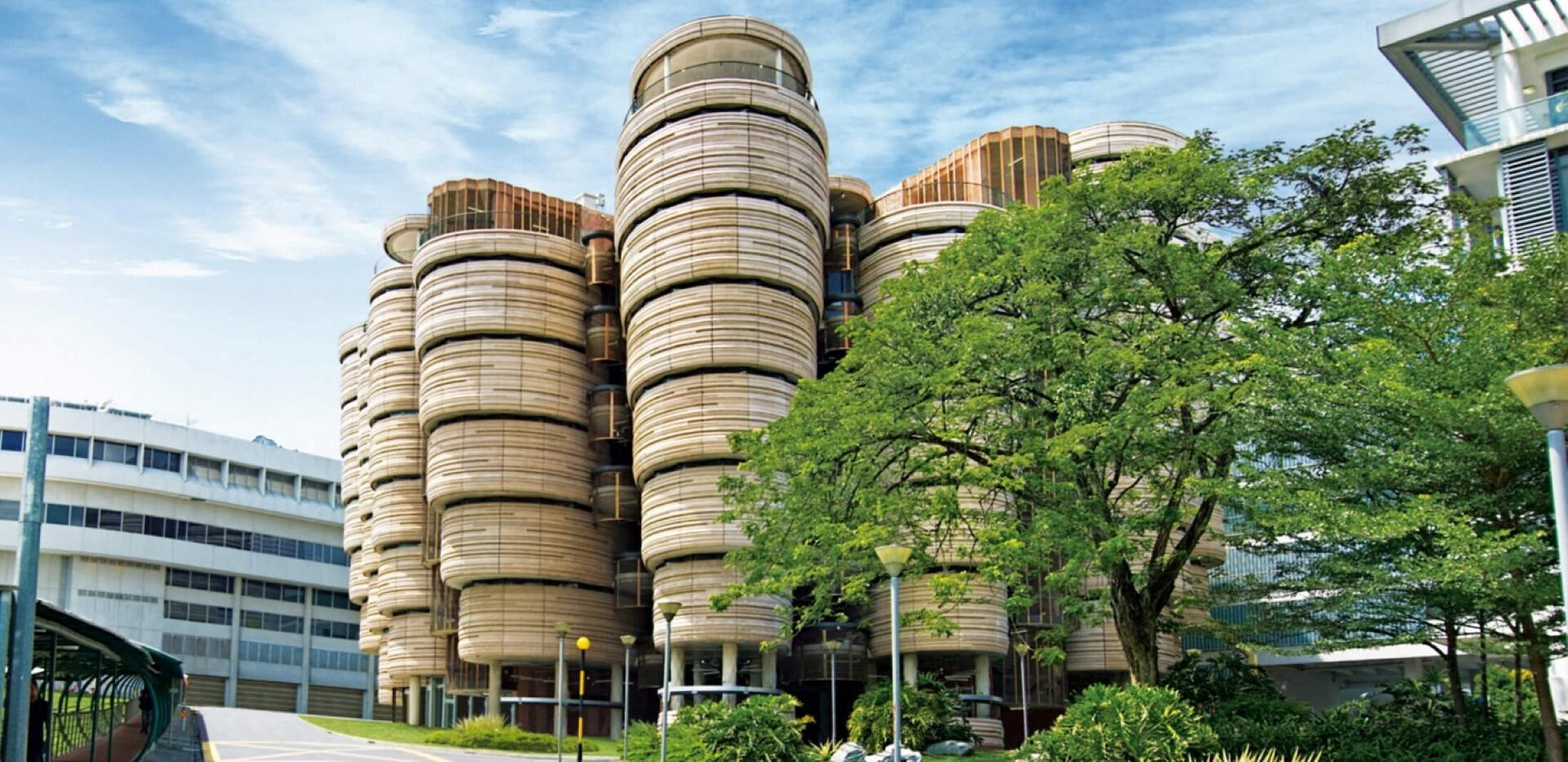
Singapore Institute of Technology (SIT)
Mid-January to Mid-March: Applicants submit their online applications and make the required application payment.
February to May: The university calls shortlisted candidates for interviews.
For certain degree programmes, students may also be required to submit an essay and sit for technical tests
April to May: Successful candidates receive their offer letters via email.
✅Candidates who are potential recipients of SIT scholarships may also receive scholarship interview invitations.
May to June: Successful candidates who accept the offer must do so through the Joint Acceptance Portal before the specified deadline.
✅Once the offer has been accepted, SIT will send the e-matriculation package in June.
Want to learn more about the admission process for universities in Singapore? For more information, read this comprehensive guide to Singaporean universities.
Tips for a Successful Application
Begin Early
Begin your application process early so you have enough time to prepare your academic documents, write your SOPs, or check out the requirements for how to apply for a scholarship in Singapore or how to apply for a tuition grant in Singapore. Doing this in advance will help you fix any issues if they arise.
If you miss the application deadline, don't panic. First, check whether the application window is still open; if yes, then email the admissions team immediately.
If the deadline has already passed, you may have to wait for the next application cycle.
Provide accurate information
Ensure all the details you submit to the admission committee, like your academic records, personal info, and achievements, are correct and up to date. Remember that even a small discrepancy in these information can get your application rejected.
Check eligibility
When applying for undergraduate courses at Singaporean universities like NUS, NTU, SMU or SUTD, carefully review the eligibility requirements for your chosen course, as different programs will have different grade requirements.
Also, when you apply for a scholarship in Singapore or want to know how to apply for a tuition grant in Singapore, check the requirements carefully.
Being a recipient of the Diana Koh Scholarship at SMU has truly transformed my educational journey. The scholarship provided essential financial stability throughout my pursuit of the MSA, enriching my academic experience. Equipped with the skills acquired, this would open doors to numerous job opportunities and has enhanced my capabilities at work.
Chern Cheng, student at SMU
Write an awesome personal statement
A personal statement can make or break your selection to a particular university. When writing your personal statement for a university application, tuition grant or a scholarship, ensure you have included the following points2:
- explain why you chose the particular course
- what motivates you to choose it, and how it aligns with your goals
- the relevance of your academic qualifications with respect to the course you are choosing
- key achievements and awards
- qualities that make you worthy of admission
Starting university soon? You might need these uni essentials.

Additional Resources
Phone: +65 6516 6666
Address: 21 Lower Kent Ridge Road, Singapore 119077
Website: https://www.nus.edu.sg/contact
Phone: +65 6592 1189
Email: eng_enquiries@singaporetech.edu.sg
Address: 1 Punggol Coast Rd, Singapore 828608
Website: https://www.singaporetech.edu.sg/engineering/contact-us
Phone: (+65) 6791 1744 and (+65) 6790 6766 for scholarship enquiries
Address: 50 Nanyang Avenue, Singapore 639798
Website: https://www.ntu.edu.sg/about-us/contact-us
Phone: +65 6303 6600
Email: enquiry@sutd.edu.sg
Address: 8 Somapah Road, Singapore 487372
Website: https://www.sutd.edu.sg/
Now that you are planning to study in Singapore, you might be on the hunt for affordable student accommodations. Begin searching in advance so you don't miss out on good housing.
University financial aid makes education affordable for everyone nd help students achieve their academic goals. If you are wondering how to apply for a tuition grant in Singapore or a bursary for university students in Singapore, or the types of loan schemes, there are several options available to support Singapore university students based on merit and financial need.
By understanding the eligibility criteria and ticking all the right boxes, students can improve their chances of receiving the right scholarship or bursary in Singapore. It is also important that you also stay updated on university deadlines so you apply at the right time.
References
- Moores, E., & Burgess, A. P. (2022). Financial support differentially aids retention of students from households with lower incomes: a UK case study. Studies in Higher Education, 48(1), 220–231. https://doi.org/10.1080/03075079.2022.2125950
- Rijnsoever, F. V. (2024). Dear admission committee…: Which moves in application essays predict student master grades? PLOS ONE, 19(6), e0304394. https://doi.org/10.1371/journal.pone.0304394
Summarise with AI:
Did you like this article? Leave a rating!

 Loading...