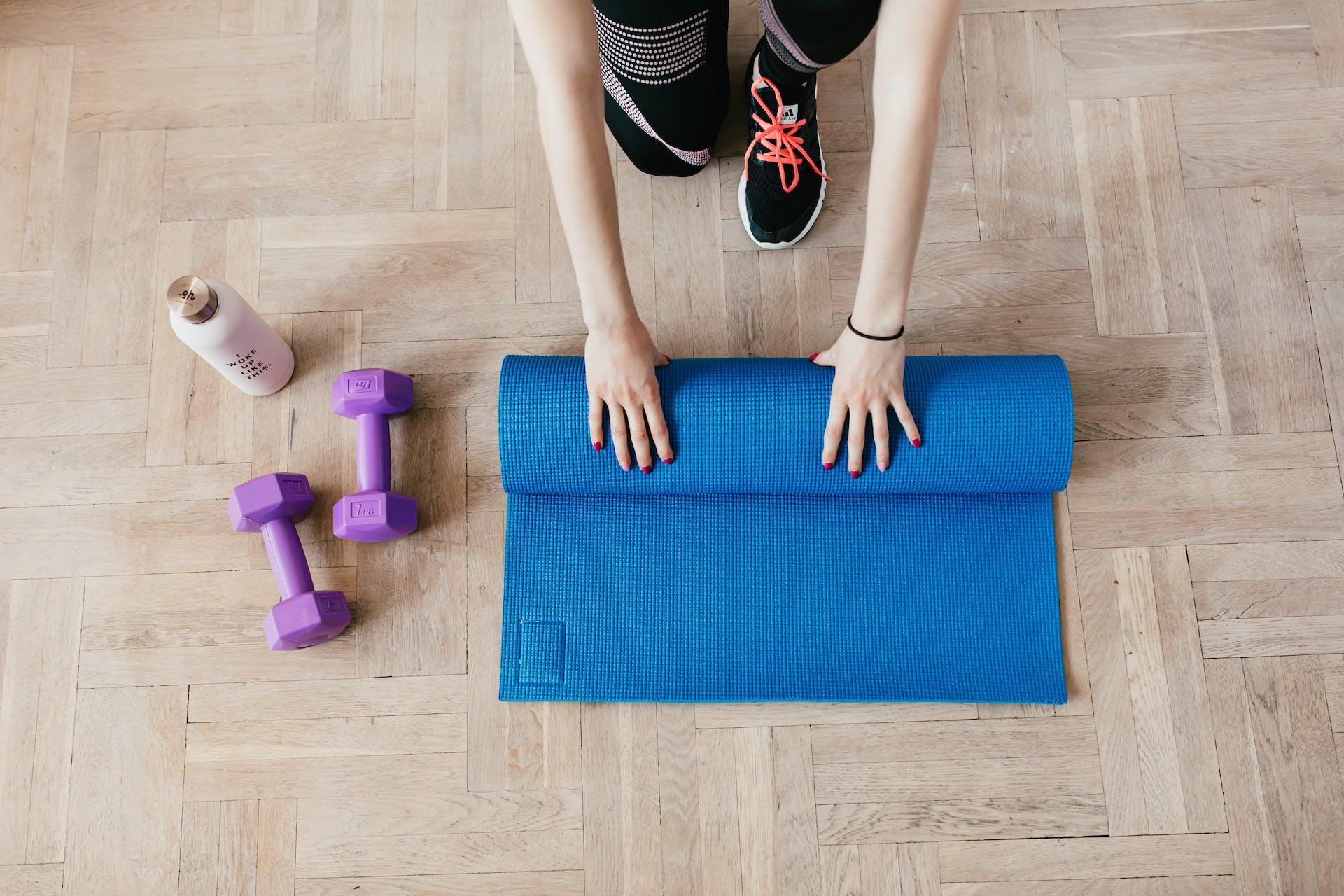

Fitness is important for a healthy lifestyle, so it's essential to choose an exercise routine that you enjoy and that helps you achieve your health goals while ensuring your safety. If you aim to enhance your balance, flexibility, and strength, Pilates could be a suitable option for you!
Pilates is a gentle form of exercise that has gained popularity among fitness enthusiasts and models in recent years. The key advantages of Pilates include developing lean muscle, toning the body, and correcting posture. The exercises in Pilates draw inspiration from ballet, yoga, and callisthenics.
By stretching muscle groups in a coordinated manner, Pilates promotes strength, flexibility, and balance, with a focus on strengthening the core for overall body stability.
Pilates is suitable for individuals of all ages and fitness levels, offering various benefits such as weight loss, increased strength, flexibility, and endurance. Due to Pilates’ low-impact nature, it comes with a reduced risk of exercise-related injury compared to higher-impact exercises. Additionally, it can help you reduce the risk of injury in other exercises since your entire body gets conditioned during Pilates.
Keep in mind that it’s important to consult a doctor before starting any exercise regimen, regardless of your current health status.


Types Of Pilates
There are two primary types of Pilates:
Mat-based Pilates
This variation involves exercises done while sitting or lying on a mat, utilizing gravity and body weight as resistance.
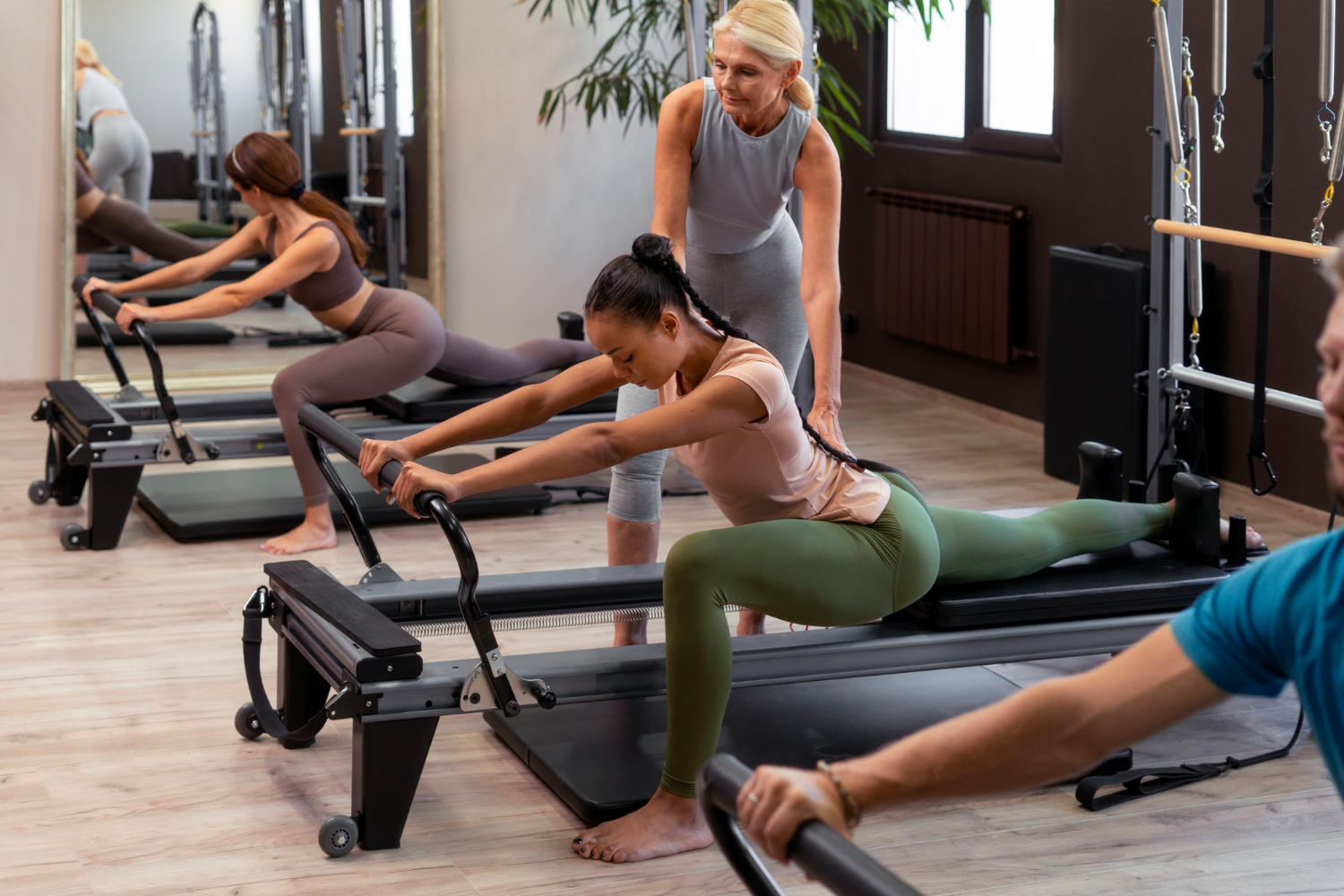
Reformer-based Pilates
This type is practised using a specialized Pilates apparatus, the most popular of which is known as a reformer. The reformer consists of a box frame with a movable horizontal platform. Individuals can perform various Pilates movements on this platform while sitting, standing, kneeling, or lying down.
How To Prepare Your Body For Pilates
Since Pilates is a relatively safe and simple exercise for most people, you can typically begin without a formal warmup; you will get warmed up and limber as you progress through the class.
When doing a Pilates workout at home, you will just need to ensure that you have the right equipment and space. At a studio, you may need to follow some extra studio policies.
No matter where you practise your Pilates, ensure that you are properly hydrated and feeling well enough for a focused workout!
What should you bring to your Pilates classes?
If you're attending a Reformer class, you may need to wear socks with rubber grips on the bottom. It's a good idea to check your studio's policies as you might have to buy them at the studio if you don't have your own. If you're attending a Mat class, you probably won't need socks. Some studios may require you to bring your own mat, but many will provide them and any other equipment (a Pilates ring, Pilates ball, etc) at the studio where they get cleaned after each class.
Some studios require you to bring a towel.
What should you wear for your Pilates classes?
Choose clothes that are comfortable but not too loose, as your teacher will need to see your pelvic and spine alignment. Opt for yoga or Pilates pants and avoid clothing with zippers, long strings, pockets, or anything that could get caught in the equipment.
You’ll also likely be doing exercises that have your legs in the air and in other partially-vulnerable positions, so be sure to wear clothing that will cover you no matter what movement you’re doing.
What Should You Avoid While Doing Pilates?
- Joseph Pilates initially named his approach Contrology, which focused on the study of control. Therefore, it is crucial to maintain the pace intended by your instructor with control. In Pilates, slow and steady wins the race. It's important to avoid relying on momentum and understand that moving at a controlled, slower pace engages your stabilizing muscles, which is what makes Pilates effective and challenging.
- In Pilates, the emphasis is on breathing using the diaphragm and ribcage while minimizing movement in the abdominal area. The goal is to use the breath to widen the ribcage outward and to the sides, rather than focusing on vertical expansion.
- During Mat Pilates, it is common to be instructed to raise your upper chest and back off the mat, which also requires keeping your head lifted. To prevent strain on the neck, look slightly forward and upward, and position your chin as if it could hold an orange between your chin and chest.
- To ensure proper tucking of your pelvis without compromising the stability of your core, employ the B-Line Method (also known as the bikini line or belt line).
Can I Learn Pilates At Home?
Yes! Pilates is a holistic practice that integrates the mind, body, and spirit, emphasizing the use of core muscles for stability and mobility. Beginners can start with at-home practice using Mat Pilates videos and books, which are easily accessible.
Pilates for beginners is safe for individuals without injury or chronic back pain to engage in home practice. While beginners can also benefit from attending in-person Mat or Reformer Pilates classes with a qualified instructor, many instructors recommend practising exercises at home in between classes.
When preparing your workout area, ensure that there is ample space to fully stretch out on the floor and the freedom to extend your arms and legs in all directions without any obstacles. A peaceful environment is best, and if you intend to stream Pilates videos, select a room where this is feasible. Since beginner Mat Pilates primarily utilizes your own body, you can do your exercises anywhere that is convenient. For better concentration, you might consider designating a corner of your home or a specific room for your Pilates practice.
You don’t need a lot of equipment to start practising Pilates at home. All you really need is a yoga or exercise mat that cushions your joints against the floor. Optional equipment includes
- Resistance bands
- Pilates ring
- Pilates ball / yoga ball
- Small Pilates ball(s)
- Foam roller
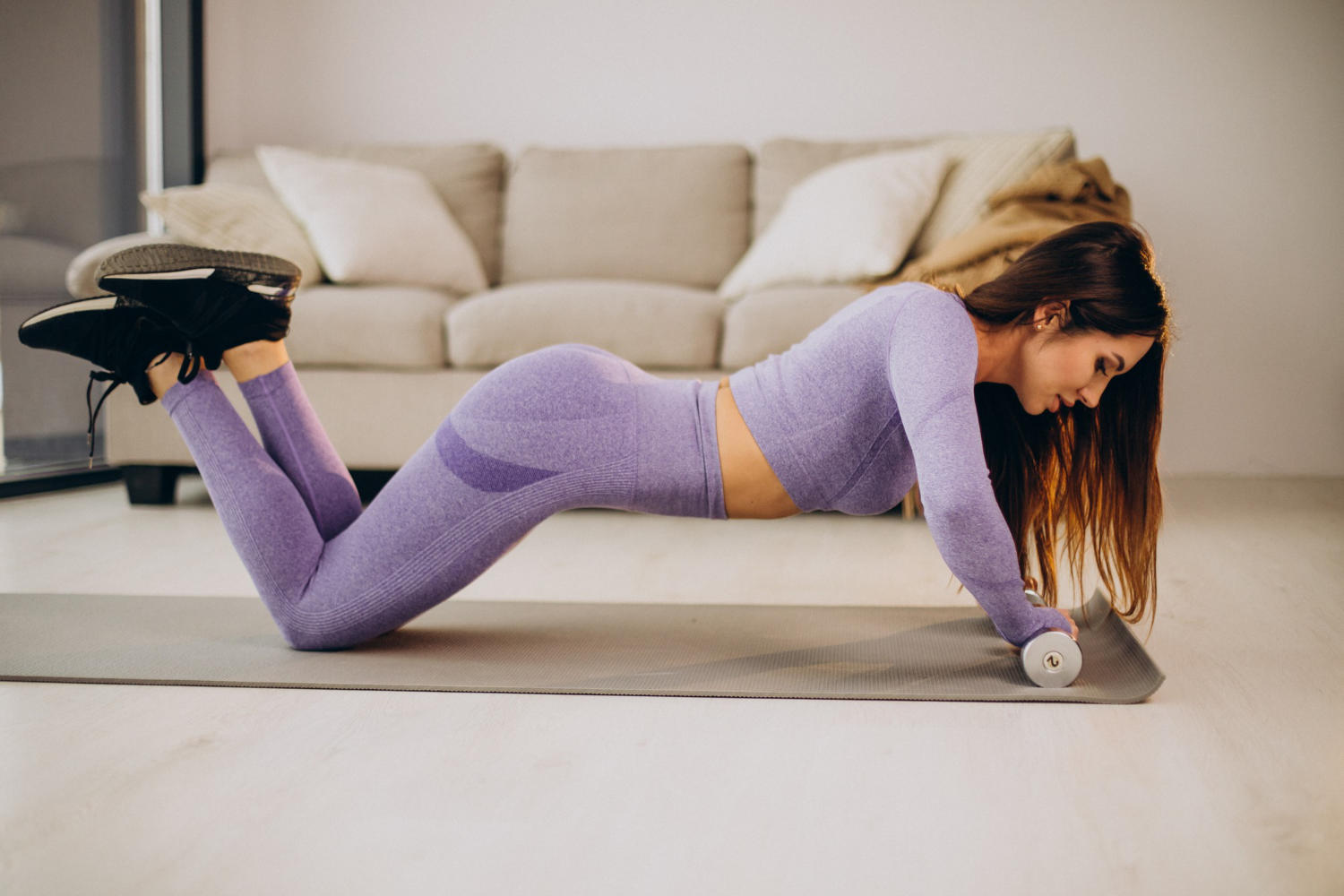
Do Pilates Exercises at Home
Ready to learn some beginner Pilates exercises for a home workout? Here are some simple Mat Pilates moves to get you started on your Pilates journey!
100s
This is one of the most basic Pilates positions that every practitioner should know. It’s simple and effective for core strength and endurance.
- Lay on your back and bend your knees. Lift the feet off the mat. Align the knees over the hips and the shins parallel to the floor.
- Engage the core between the groin and the ribs, lifting the head and upper shoulders off the floor in a sort of half-situp position. Lengthen the back of the neck and tuck the chin slightly.
- Reach your fingertips toward the front of the mat, lifting your arms a few inches off the mat.
- Breathe (inhale for a count of 4 and exhale for a count of 4) while you pulse your arms up and down in the space of a few inches 100 times.
- The inertia of your pumping arms will challenge your core as you maintain strength and breathing.
Single Leg Stretch
- Assume the same starting position as 100s, with the legs and upper shoulders lifted.
- Extend the legs upward and point the toes.
- Pull one leg in toward your chest while the other extends out towards the edge of the mat without touching the ground.
- Pull the leg in for a pulse of 2, then switch legs.
- You will build core strength, especially the lower core, as you move your legs and keep your abdomen strong. Make sure to breathe!
Roll-Ups
- In this sit-ups replacement exercise, start by laying on your back with legs extended and toes pointed.
- As you inhale, focus on slowly lifting your upper body up one vertebrae at a time, starting at the neck. Use your core to roll up and lift the body into a seated position.
- As you exhale, slowly and with control lower back down one vertebrae at a time, starting with the tailbone.
- To modify this move to be less intense, bend your knees and grab the back of your legs for support as you roll up.
- Remember to use the core to support your whole body as you lift and lower.
Single Leg Drop
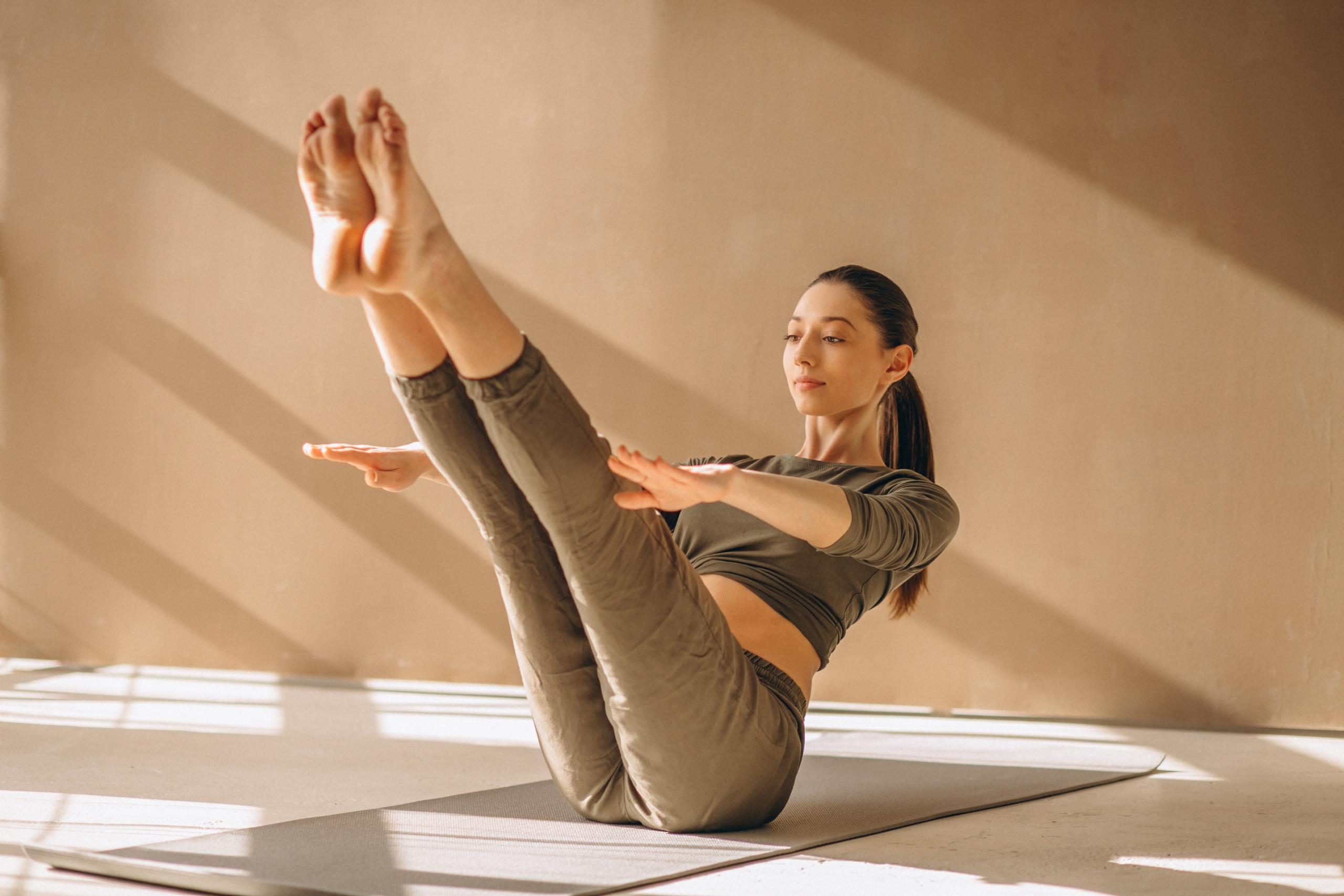
- Assume the same position as 100s, with the legs and upper shoulders lifted. Point the toes.
- Slowly lower one foot and tap the toes to the floor before bringing it back to the starting position. Keep the knees at a right angle for the whole movement.
- Alternate legs. Remember to breathe and go slow!
Double Leg Lift
- Start by laying flat on your back. You might like to put your hands, palms face down, under your tailbone for some pelvic and low-abdomen support.
- Extend both legs straight up into the air and point the toes.
- Gently scoop the tailbone forward to keep the low back pressed against the mat.
- Slowly and with control, lower both legs down until they almost touch the floor. Then, with the same control, lift the legs back up to starting position.
- Make sure to use your core muscles rather than the hip flexors to move the legs.
- Modifications:
- Move one leg at a time while the other remains in the starting position
- Bend one leg and plant the sole of the foot on the mat or gently rest the toes on the mat while the other leg does a few reps
- Bend both knees slightly and don’t lower the legs as much
Plank
- Spread your hands and fingers wide and firmly plant them on the mat directly under your shoulders
- Extend legs out behind, balance on the balls of the feet, and brace the core as you lift the knees and aim to keep the hips at the same height as the shoulders
- Remember to breathe!
While it’s possible to practice Pilates at home with a reformer or other specialised equipment, most people start Pilates on a mat. Special equipment is expensive and bulky and harder to use, especially when you’re learning on your own. Start with mat Pilates as home and take reformer Pilates classes at a studio until you know how to safely use the equipment. Then, you can decide if it’s beneficial to purchase home equipment.
Learn Pilates at home with written tutorials, video workouts, or virtual or in-person personal trainers! You can find qualified Pilates instructors for hands-on or virtual instruction on Superprof!
Summarise with AI:
Did you like this article? Leave a rating!

 Loading...