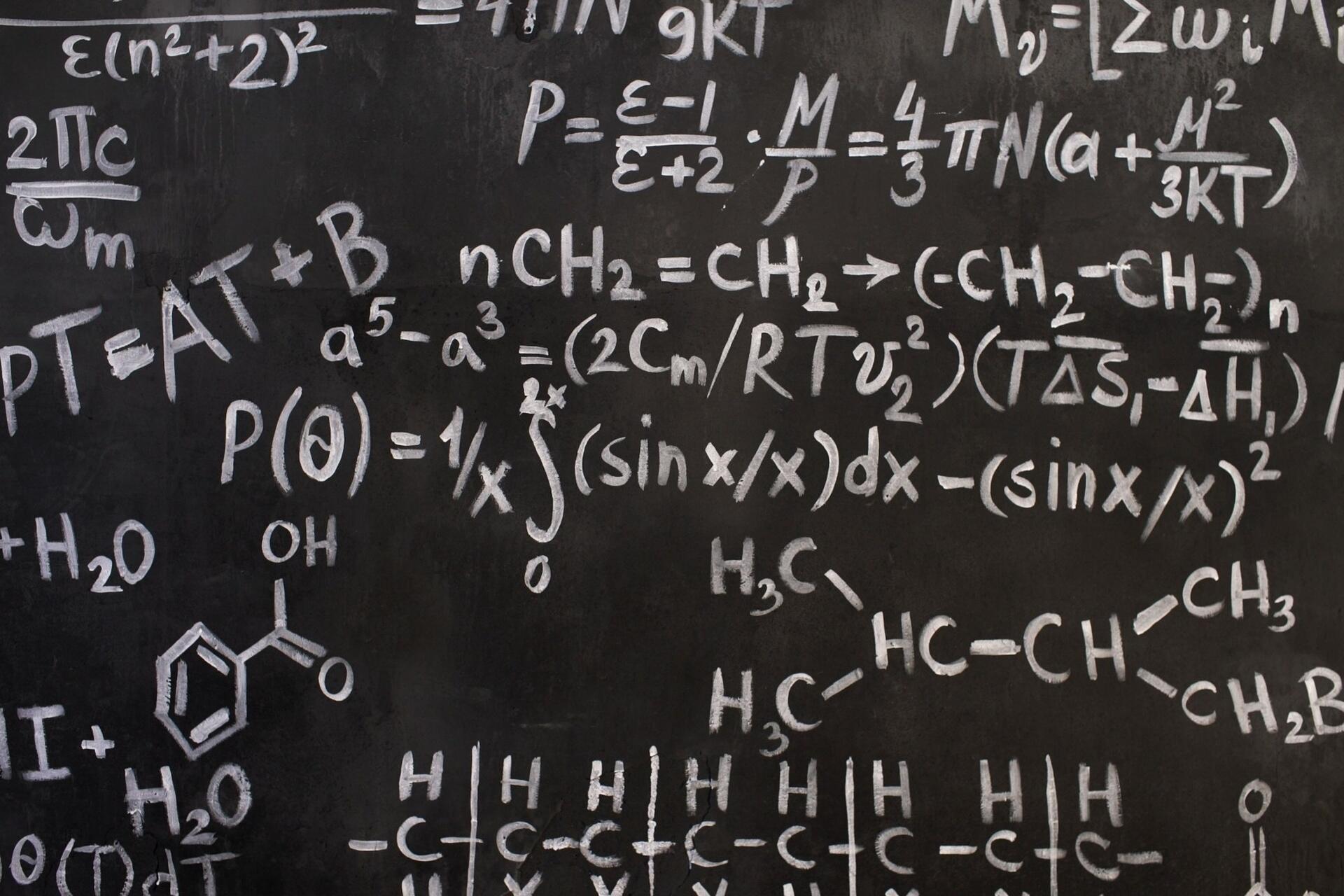

H2 Mathematics is a core subject in Singapore's Junior College (JC) curriculum, designed to develop advanced mathematical knowledge and analytical skills. Covering topics such as calculus, vectors, and statistics, it prepares students for the A-Level examination and university courses in engineering, science, economics, maths, and other STEM disciplines.
Whether you're starting H2 Maths or looking to improve your results, mastering the curriculum, paper format, and effective study strategies is essential. This guide covers everything you need to know to build confidence and succeed in H2 Maths.





📘What Is H2 Math and Why Is It Important?
H2 Mathematics is one of the most important subjects for individuals pursuing STEM-related degree programmes in Singapore. For a more detailed explanation of the curriculum, study methods, and preparation strategies, refer to our H2 Maths Study Guide.
The H2 Mathematics curriculum is meant to cultivate sophisticated mathematical mastery and analytical competencies necessary for the Singapore-Cambridge GCE A-Level exams. One starts with theory development at JC1 and then continues with advanced applications and problem-solving strategies in JC2.
Offered in Singapore's Junior Colleges (JCs), H2 Mathematics builds advanced mathematical knowledge for higher education.
Provides the mathematical foundation required for degree programmes in engineering, science, economics, computer science, etc.
Enhances critical thinking, analytical reasoning, logical thinking, and problem-solving abilities through challenging mathematical concepts.
Equips people with practical mathematical and analytical skills that are valuable in university studies and a wide range of professional careers.
students who took H2 Mathematics in the 2026 Singapore GCE A-Level examination!
To stay up to date with the latest syllabus revisions and examination requirements, refer to our comprehensive guide on the updated H2 Mathematics syllabus.
📚 H2 Math Exam Format
The H2 Maths (Syllabus 9758) consists of two written papers, each lasting 3 hours and carrying 100 marks. Both papers contribute 50% each to the final H2 Maths grade, so one needs a balanced preparation strategy rather than focusing on only one component. Candidates are expected to answer all questions in both of these.
| Paper | Duration | Content | Question Structure | Marks | Weightage |
|---|---|---|---|---|---|
| Paper 1 | 3 hours | Pure Mathematics | 10–12 questions of different lengths and marks | 100 | 50% |
| Paper 2 | 3 hours | Pure Mathematics and Probability & Statistics | Section A: 4–5 Pure Mathematics questions; Section B: 6–8 Probability and Statistics questions | 100 | 50% |
📝 Paper 1: Pure Mathematics
Duration and Weightage
Paper 1 is a 3-hour exam worth 100 scores, contributing 50% of the final grade. It consists of approximately 10 to 12 compulsory questions, with shorter questions testing specific methods and longer questions requiring one to combine ideas from several parts of the course.
Main Focus of Paper 1
This paper assesses the complete Pure Math section of the H2 Maths curriculum. People are expected to demonstrate more than formula recall. They must select suitable methods, show accurate working, interpret mathematical information, and apply ideas to unfamiliar situations. The main topics tested include:
1. Functions and Graphs
2. Sequences and Series
3. Vectors
4. Complex Numbers
5. Calculus
H2 Maths is a challenging subject that requires strong analytical thinking, problem-solving skills, and consistent practice. With a solid base and regular revision, most people can succeed.
📈 Paper 2: Pure Mathematics and Probability & Statistics
Duration and Weightage
Paper 2 is also a 3-hour paper worth 100 marks and contributes the remaining 50% of the final grade. It is divided into two compulsory sections:
Section A: Pure Maths - 40 marks
Section B: Probability and Statistics - 60 marks
One must answer every question in both sections.
📘 Section A: Pure Mathematics
Section A contains approximately 4 to 5 questions of varying lengths and scores. It assesses the same broad Pure Maths content as Paper 1, but the number of questions is smaller, and the section is worth 40 marks. Topics may include:
- Functions and graphs
- Equations and inequalities
- Sequences and series
- Vectors
- Complex figures
- Differentiation and integration
- Maclaurin series
- Differential equations
Although Section A is shorter, one must still be prepared for multi-step questions. A question may combine algebra, graph interpretation, calculus, or modelling instead of testing only one isolated skill.
Because Section A carries 40 marks, one must manage their time carefully and avoid spending too long on one difficult pure maths question before moving to the statistics section.
📊 Section B: Probability and Statistics
Section B is worth 60 marks and contains approximately 6 to 8 questions. It tests the entire Probability and Statistics section of the exam.
1. Probability
2. Discrete Random Variables
3. Normal Distribution
H2 Mathematics is ideal for students planning to pursue Engineering, Computer Science, Maths, Physics, Data Science, Economics, or other STEM-related university courses. It is also recommended for those who enjoy analytical thinking and advanced problem-solving.
4. Sampling
5. Hypothesis Testing
6. Correlation and Linear Regression
🧠 Real-World Application Question
Section B includes one application question worth at least 12 scores. It may combine more than one statistics topic and present data from areas such as market research, clinical studies, finance, standardised testing, or scientific investigations.
For example, one may need to:
- Identify a suitable model.
- Calculate relevant probabilities or statistics.
- Conduct a hypothesis test.
- Interpret the result in the context of the issue.
- Comment on the limitations or suitability of the model.
This question tests the student's ability to translate a realistic situation into maths and communicate a meaningful conclusion.
🎯Important Examination Instructions
Mastering these important instructions before your paper helps you avoid unnecessary mistakes and ensures you follow the required guidelines while attempting every question confidently.
Answer Every Question
There are no optional questions in either paper. Candidates are expected to attempt all questions, including every question in both sections of Paper 2.
Use an Approved Graphing Calculator
An approved graphing calculator without a computer algebra system, such as the Casio FX-9860GII and TI-84 Plus CE, is expected for both papers. Questions are set on the assumption that candidates have access to one. One may use it for graphing, numerical solutions, regression, and other calculations.

📍Tips for Candidates
- Calculator answers must be entered accurately.
- Mathematical working is still required when not requested.
- Calculator commands should not replace proper maths notation.
- Graphs used to obtain solutions should be sketched when required.
- Incorrect answers without working generally receive no points.
- Method scores may be given despite an incorrect final answer.
Paper 1 focuses entirely on Pure Maths, while Paper 2 combines a shorter Pure Mathematics section with a larger Probability and Statistics component. Since each paper contributes 50% to the final H2 grade, one should prepare equally for both papers by mastering all curriculum matters, practising multi-step sums, using their graphing calculator confidently, and communicating their mathematical reasoning clearly.
➗H2 Math Requirements: Prerequisites for H2 Mathematics
H2 Math is an advanced subject that builds on ideas introduced at the secondary school level. Students are expected to have a strong mathematical core of principles and the ability to apply ideas across unfamiliar and multi-step issues. Here are some prequisite areas that students should have strong prior knowledge of:
Overall, a strong core in O-tier and Additional Mathematics is essential for H2 Mathematics. Reviewing the assumed prerequisite knowledge before the course begins can help you transition more smoothly into the advanced syllabus.
94.2% of the 2025 Singapore-Cambridge GCE A-Level cohort attained at least three H2 passes and a pass in General Paper or Knowledge & Inquiry, reflecting strong overall performance among A-Level candidates.
💪Challenges and How to Overcome Them
Preparing for H2 Maths can be demanding due to its advanced ideas and problem-solving requirements. Understanding the common challenges pupils face and adopting effective strategies to overcome them can help improve confidence, strengthen mathematical skills, and achieve better results.
📚 Common Challenges
- Adjusting to the Transition: Moving from O-Level or Additional to H2 Maths can be challenging due to the faster pace, greater depth of content, and increased emphasis on analytical thinking and application-based sums.
- Managing the Extensive curriculum: H2 Maths covers a wide range of subjects, including calculus, vectors, probability, and statistics. Keeping up with the syllabus while revising earlier themes can be difficult without proper planning.
- Solving Multi-Step Questions: Many sums require combining ideas from different themes, making it essential to think critically and apply mathematical techniques accurately.

✅ Strategies for Success
- Practise Regularly: Solve tutorial tests, topical exercises, and past-year papers consistently to strengthen your understanding.
- Use Reliable Study Resources: Make use of school notes, online tutorials, and revision guides to reinforce learning and confidence.
- Create a Revision Plan: Allocate regular time for revision, revisit weaker theme, and practise mixed-topic tests to build confidence and efficiency.
📚Resources and Support for H2 Mathematics Students
Singaporean pupils have access to a variety of learning and revision resources that helps mastering H2 Maths, improve problem-solving skills, and prepare them for the these exams.
📘 H2 Mathematics Tuition Centres
Specialist study centres provide structured lessons, topical revision, strategies, and personalised guidance to helps one master challenging subjects.
- Zenith Education Studio – Offers comprehensive H2 Mathematics study with small class sizes, detailed notes, and regular practice tests to reinforce classroom learning.
- Achevas A-Level JC H2 Math Tuition – Provides structured H2 Mathematics programmes that focus on concept mastery, step-by-step problem-solving techniques, and strategies aligned with the Singapore A-Level syllabus.
- Power Mathematics – Specialises in H2 Maths and offers intensive revision, challenging practice sums, and guidance for those aiming for top grades.
- H2Math.com – Offers one-to-one and small-group H1 and H2 Mathematics classes, supported by customised notes, online lessons, and exam-focused practice that follows the Singapore Cambridge A-Level curriculum.
"My H2 Maths tutor helped me understand the concepts clearly and was always willing to provide extra consultations. I managed to improve from a D to an A."
- Lim Hui Shi, Temasek Junior College
💻 Online Learning Platforms
Online resources allow one to revise independently through practice sums, revision notes, video lessons, and past-year tests.
- Holy Grail – A free online repository created by a Singapore pupil that provides H2 Mathematics notes, school tests, answer keys, and revision materials from various junior colleges.
- Superprof Singapore – Connects people with experienced H2 Mathematics tutors for both online and face-to-face lessons. People can compare tutor profiles, qualifications, reviews, and lesson fees to find personalised one-to-one support that suits their learning style and academic goals.
- Tim Gan Math – Offers free resources, including topical practice sums, video tutorials, revision notes, formula sheets, and worked solutions to help one master individual subjects.
- SEAB Mathematics Formula Booklet (MF27) – The official formula booklet used in Singapore Math exams1. Pupils can use it to familiarise themselves with the formulas available during the examination and practise applying them effectively instead of memorising every sum.
Which aspect of H2 Mathematics do you find the most challenging?
Students who need a detailed version of academic support can explore our H2 Maths Tuition Guide to compare leading study centres, teaching approaches, and programmes available in Singapore.
H2 Mathematics provides pupils with the analytical and problem-solving skills needed for the Singapore-Cambridge A-Level examinations and many university programmes, particularly in STEM-related fields. Although the subject is academically demanding, consistent practice, a strong understanding of fundamental notions, and the effective use of available learning resources can help build confidence and achieve success.
References:
- Singapore Examinations and Assessment Board (SEAB). GCE A-Tier Syllabuses Examined for Private Candidates 2026. https://www.seab.gov.sg/gce-a-level/a-level-syllabuses-examined-for-private-candidates-2026/.
Summarise with AI:
Did you like this article? Leave a rating!

 Loading...