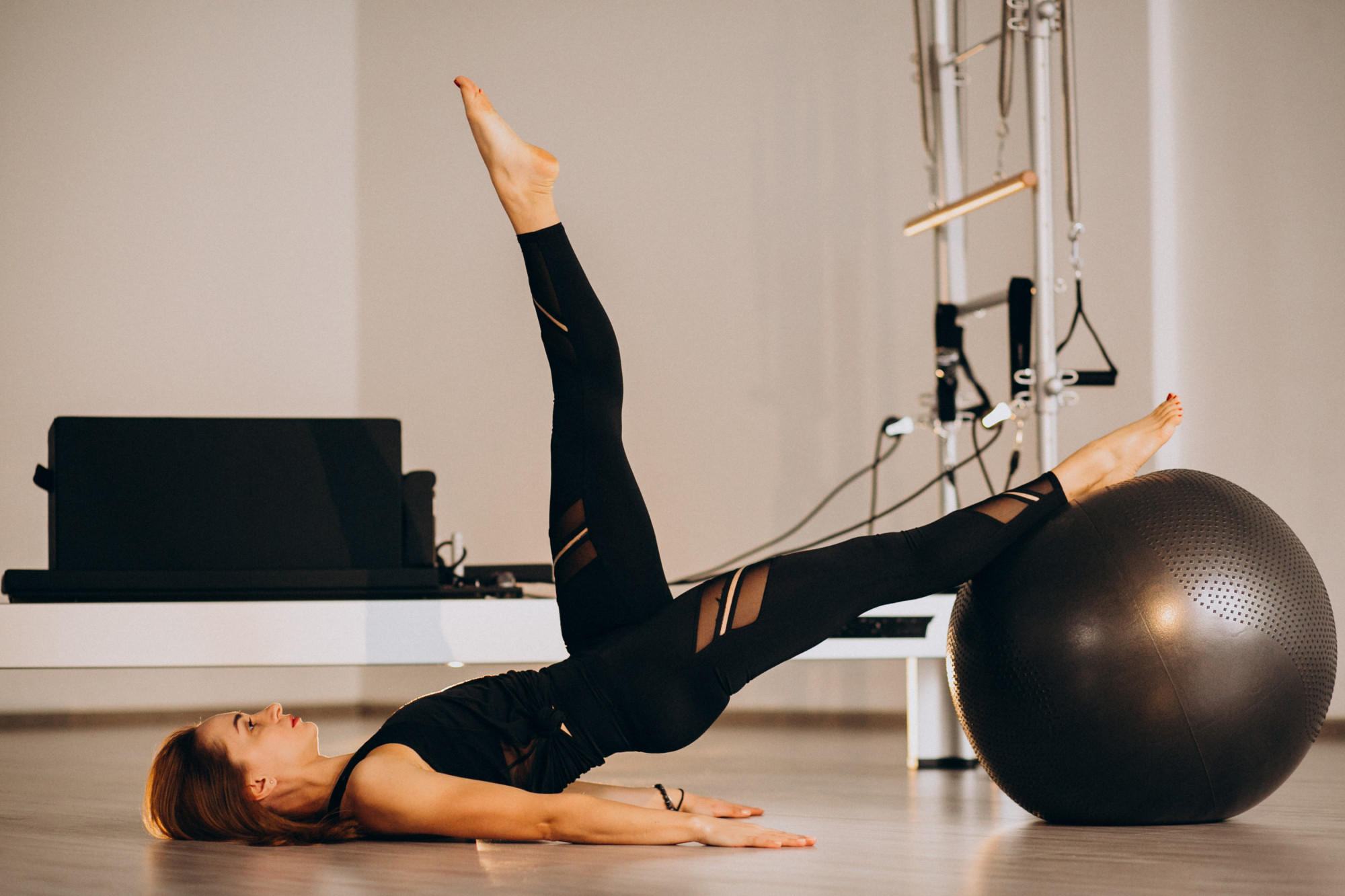

Pilates was originally invented as a way to counteract the damaging habits we all have as we go about our daily lives at home and at work. It’s always been meant to be used as a kind of physical therapy, rather than an intensive workout for strength training or weight loss.
Many people have benefitted from Pilates, and many others could enhance their lives by starting a Pilates workout routine, too!
Let’s dive into the background of the invention of Pilates as well as the many ways it helps people live better lives today.


Joseph Pilates: The Inventor of Contrology
Joseph Pilates (born in 1883) was a German physical trainer. When he was a child, he suffered from many ailments like asthma, rickets, and rheumatic fever that made him weak.
Determined to gain health, Joseph learned things like martial arts, gymnastics, and bodybuilding from his father who was an avid gymnast. Joseph may also have been inspired by his mother’s knowledge of holistic well-being to pursue a lifestyle that could bring him into health.
With dedication to these physical practices, Joseph was able to overcome his childhood frailty and live a rather healthy life! He observed that other people also suffered from weakness and pain and concluded that many individuals are plagued by poor health stemming from insidious and integral aspects of modern life, like poor posture, manual labour, and inefficient breathing.
Joseph Pilates developed an exercise regimen consisting of bodyweight movements and equipment-assisted exercises designed to help undo the harm done to the average human body in their regular life. Combined with a focus on breath control, Pilates’ exercises were shown to work, helping many people reduce pain and condition their bodies to resist further injury. By this time, he had moved to England and was a professional boxer, a circus performer, and a self-defence trainer.
When World War I started, England placed many Germans into internment camps, and Pilates was no exception. There, he developed his exercise regimen even more, studying yoga and even the movements of animals (especially cats) for inspiration. He trained his fellow camp-mates in self-defence and strength as well as with his unique exercise methods, which he called Contrology.
Contrology was founded on the basis that by exercising precise control over the breath and muscles, one could reverse old injuries, eliminate chronic pain, condition the body to prevent future injury and live a happier, healthier life overall.
In the 1920s, Pilates moved to the United States. He met his future wife, Clara, on the ship! Together, they founded a Contrology studio in New York City and became known as the people who could help dancers and other performers recover from injuries and enhance their physical movements due to the focus on strength, stamina, and flexibility.
Eventually, average people began attending classes and so, the Pilates Method was born!
Joseph and Clara taught classes for decades, and Joseph even continued to instruct after he was too old to perform the moves anymore.
Health Benefits of Pilates
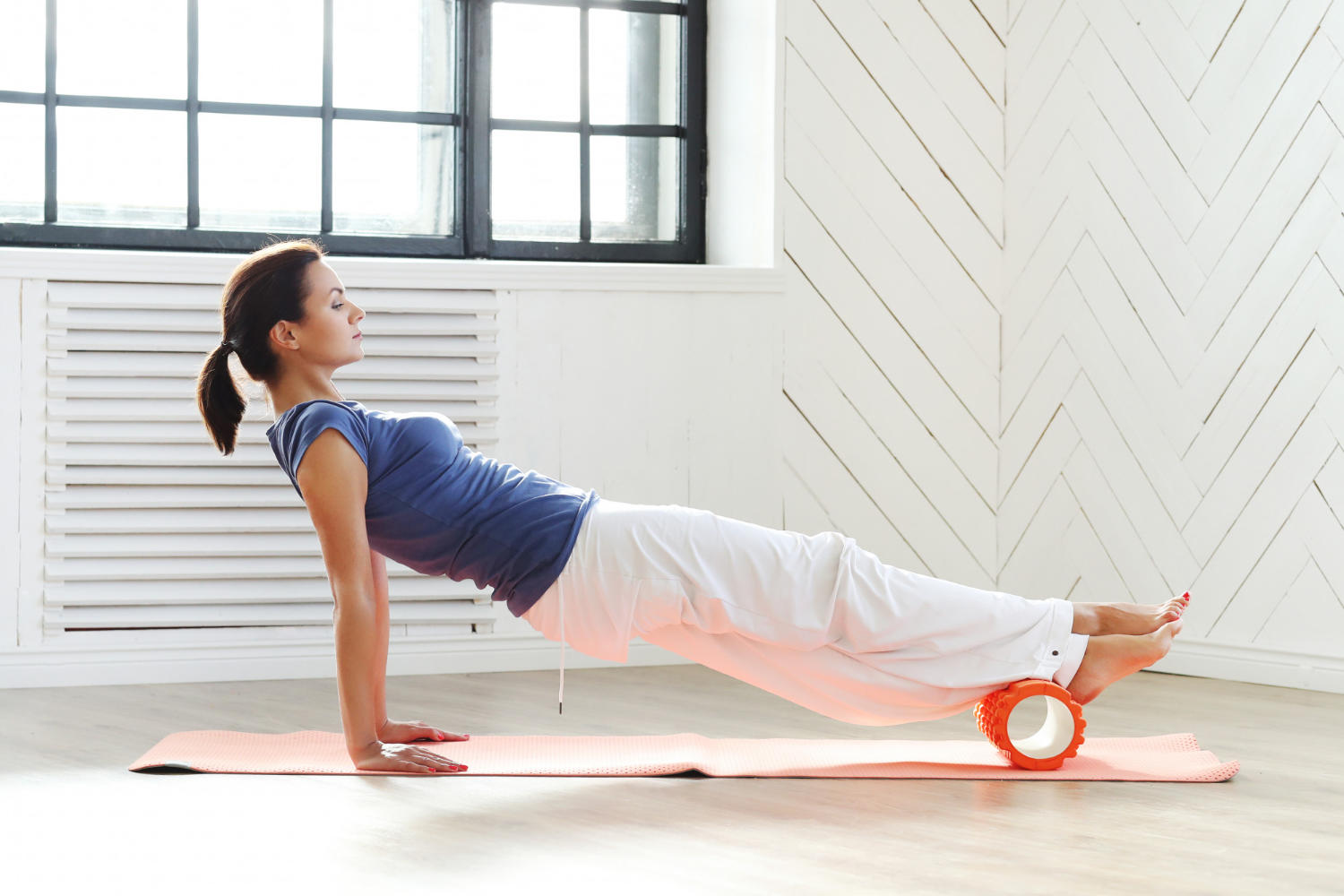
Pilates gained its following because people felt the real benefits of doing the exercises. It was (and still is) a tried-and-true method of improving strength, stamina, body control, and mental health while reducing pain and conditioning the body to avoid future injury.
What are the health benefits of Pilates and how does it provide these benefits?
Improved Flexibility and Mobility
Through active stretching and movements, the muscles, ligaments, and tendons of the body are conditioned to have a better range of motion.
Increased Strength and Precision
While Pilates is not a strength-focused exercise routine, by virtue of using muscles in a controlled way, they naturally become stronger. This careful and deliberate use of muscles also greatly improved coordination and fine motor skills for the entire body.
Improved Posture and Reduced Pain
Many of us have poor posture due to hunching over computers and steering wheels, performing household tasks like mopping and yard work with less-than-perfect form, and have general weakness from a lifestyle that doesn’t require athleticism.
Pilates helps strengthen the core muscles which leads to better spinal posture and whole-body positioning in daily life and while doing physical tasks. Better posture leads to less pain, especially in the back, neck, and shoulders.
Better Energy and Mental Health
Pilates also focuses on breath control; breathing well and enough to fuel the muscles as you perform. Many of our physical and mental ailments can be reduced or eliminated simply by breathing enough! Pilates helps you remember to breathe as well as teaches you how to breathe well, which is surprisingly something that most of us don’t actually know how to do.
More oxygenated blood leads to better-functioning muscles and brains, boosting an overall sense of well-being, reducing fatigue, and improving mental health.
Improved Body Health
Regular exercise paired with breathwork leads to healthier respiratory and cardiac function, which in turn helps the entire body function better. From the musculoskeletal system, to the digestive system, to the endocrine system, to the immune system, Pilates is a holistic way to give your entire being a boost.
What Equipment is Required for Pilates?
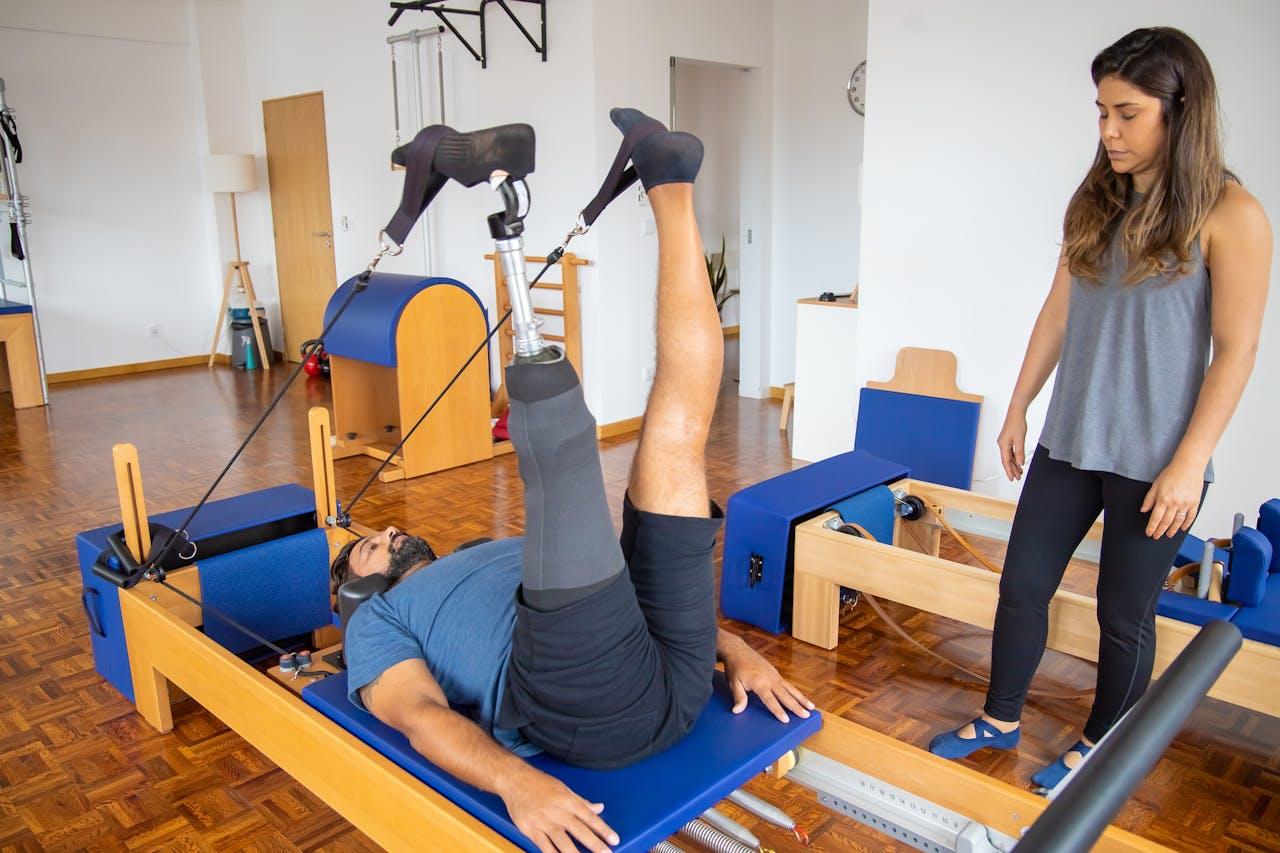
Pilates generally comes in two forms: Mat Pilates and Reformer Pilates. There are many sub-styles that fall under these two larger categories.
These two styles each utilise different equipment.
Mat Pilates
Mat Pilates is the most beginner-friendly type because it requires less equipment and can be done at home easily. All you really need is a yoga or exercise mat!
Optional and helpful equipment include:
- Resistance bands
- Pilates ring
- Pilates ball
- Pilates mini ball(s)
- Foam roller
Reformer Pilates
There are actually a few different kinds of Pilates machines besides a Reformer, but the Reformer is the most popular Pilates machine.
This type of Pilates is easier to do at a studio because the machines are expensive and take up a lot of space. It’s also important to learn from an instructor so you don’t accidentally hurt yourself on these intricate machines!
- Pilates Reformer: A sliding platform on a wooden base with straps, springs, and pulleys.
- Cadillac Reformer / Trapeze Table: A Reformer with a frame extending upward that holds different types of straps and allows more exercises.
- Pilates Chair / Wunda Chair: Allows for seated exercises.
- Pilates Barrel: There are two versions, one with a ladder and one without a ladder.
For any type of Pilates, you might choose to wear grippy socks and have a towel nearby to absorb sweat. And don’t forget a water bottle for staying hydrated!
How Is Pilates Different from Yoga?
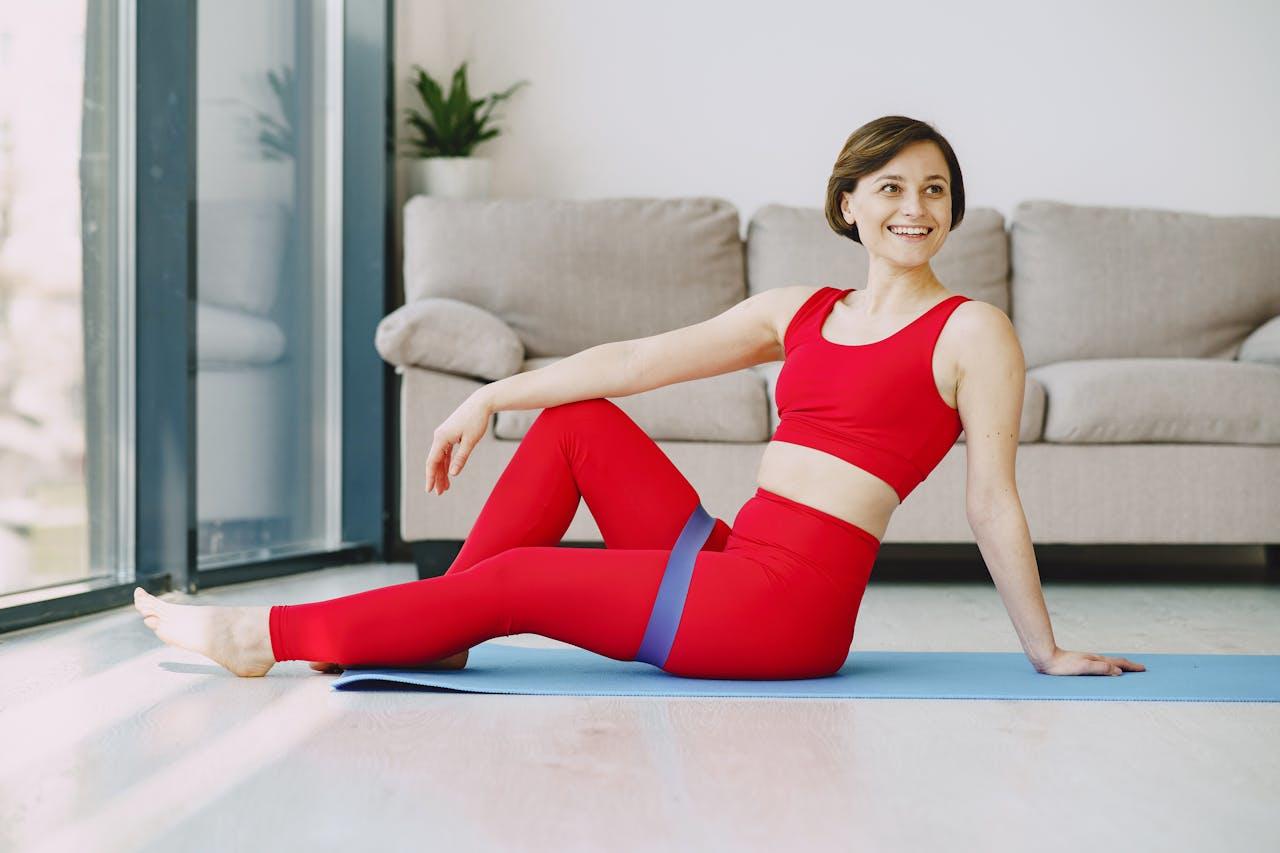
You might notice that Pilates and yoga share some similar qualities, like focused concentration and breath control. In fact, Joseph Pilates studied yoga while developing his Contrology method!
The biggest difference between yoga and Pilates is that yoga is meant to be a lifestyle encompassing physical fitness, meditation and mental exercises, personal ethics, and spirituality. Pilates is more focused on physical fitness with some mental health benefits on the side.
Many yoga asanas (poses) served as inspiration for a Pilates counterpart. For example, in Pilates, there is an exercise called “the teaser” which is remarkably similar to navasana (boat pose) in yoga. Both practices also focus heavily on breathing, but where yoga has many different pranayama (breath control) techniques, Pilates focuses mostly on one specific method that isn’t typically found in yoga.
Overall, while Pilates shares many of its physical and breathing aspects with yoga, the two practices have different intentions and goals in mind.
The Fundamentals of Pilates
Pilates is, at its essence, focused on core strength as a method to stabilise the entire body. For most people, this is effective because most people have weakness in their core muscles. Core muscles are more than just the “six-pack abs” that ultra athletes manage to chisel and maintain. We all have abdominal muscles, whether they are visible or not. Additionally, the core consists of supporting muscles in the front, behind the abs, as well as muscles on the sides and back of the body. Pilates seeks to strengthen this entire cylinder of muscles (and even the pelvic floor) to give the entire body strength and stability which corrects old injuries, resolving chronic pain, and making the body resilient to new injures and pain.
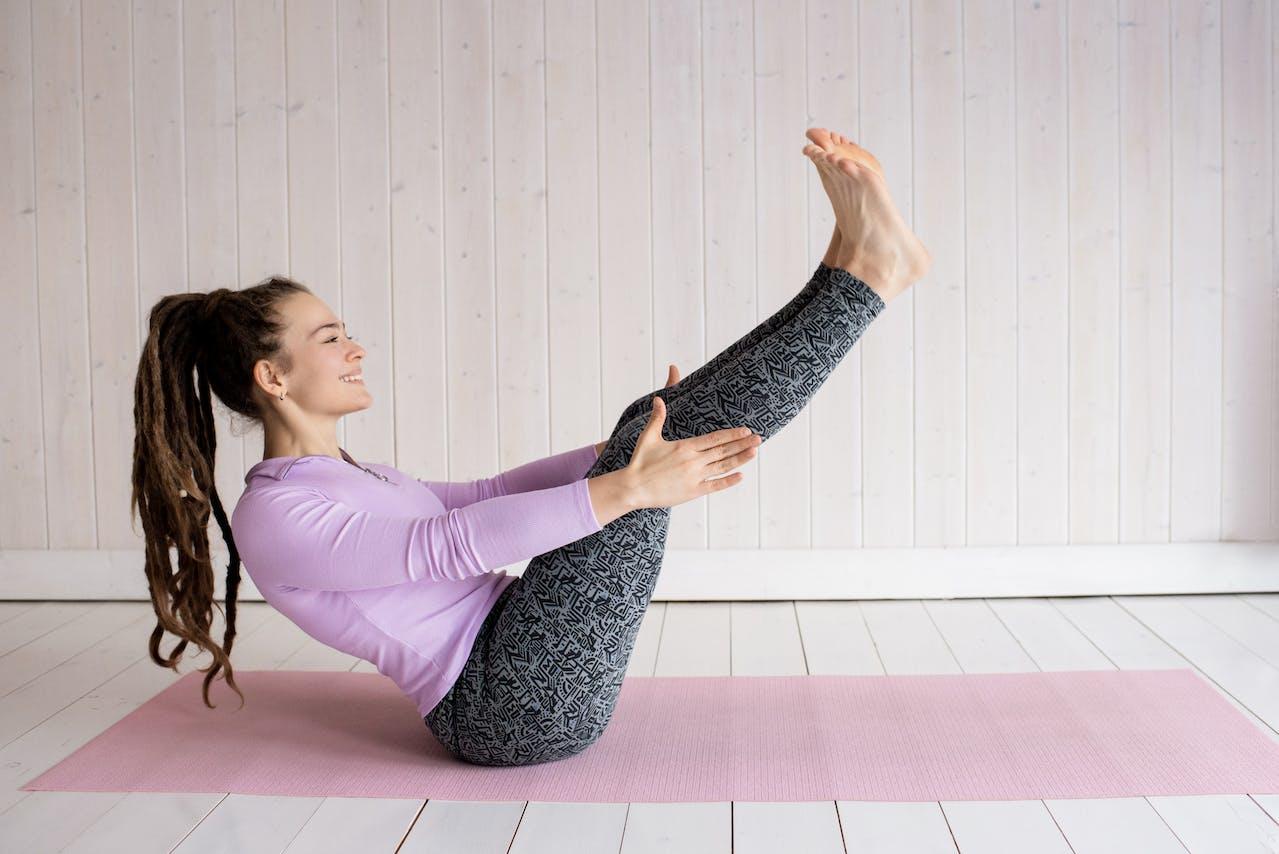
Pilates for Beginners: 3 Exercises to Try At Home
You can begin a simple Pilates practice at home today! All you need is a yoga or workout mat, or a carpeted floor or or blanket to pad your joints against a harder floor.
1. Saw
This stretch/core exercise combo is great for improving flexibility while stabilising your core muscles.
Start by sitting on your mat with your legs extended in front of you, knees as straight as possible (but not locked). Keep the feet about hip-width apart and flex the feet slightly. Sit up as tall as possible and engage the core. Extend your arms out to your sides, parallel to the floor. With control, twist your upper body to the right, keeping arms perpendicular with the torso. The left arm should be reaching towards the toes and the right arm towards the back of the room. Reach your left arm towards your right toes, but keep your core engaged; the goal is not to touch the toes. Come back up to a straight spine and rotate back to centre before repeating the movements on the other side.
2. Pendulum
This is another stretch and strengthen combo that’s great for the spine.
Lay on your back with your arms out to either side for stability. Bend the knees and lift the legs so the knees are directly above the hips and the shins are parallel to the floor. Engage the core so the lower back is pressed against the mat and the abdominal muscles are active. Slowly twist, lowering the knees to one side with control. Your knees might touch the floor but it’s not necessary - you are focused on the strengthening twist happening in your entire core. With control, bring your knees back to start, and repeat on the other side.
3. Bird-Dog
This classic move works the back muscles as well as your balance.
Get into a tabletop position; your hands are spread wide and placed right under your shoulders while your knees are directly beneath your hips. Engage the core so that when you move your limbs, your back does not sag down. Extend your right arm out in front of you as if to shake someone’s hand. Simultaneously, extend your left leg out behind you, parallel to the floor. Lower both your arm and leg back to start at the same time. Repeat on one side for a set amount of reps and then move on to the other side.
Pilates is a classic, effective, and well-loved exercise routine that can help you improve your health while gaining flexibility, with minimal impact on your joints!
Summarise with AI:
Did you like this article? Leave a rating!

 Loading...