
The Singapore A-Levels are taken by students after completing O-Levels, typically as a pathway to admission to local universities. It is commonly chosen by students who are seeking academic pathways to local universities or overseas institutions.
The A-Level programme is typically completed over two years and focuses on subject learning that allows learners to specialise according to their strengths and future plans. It is widely recognised by universities both in Singapore and internationally.
In this article, you’ll gain a clear understanding of the Singapore A Levels, including how the H1, H2, and H3 systems work. You’ll also learn about the subjects offered, the examination structure, and the key progression pathways available after completing the qualification.
| Aspect | Details |
|---|---|
| Full Name | Singapore-Cambridge GCE Advanced Level |
| Commonly Taken By | students from Junior Colleges (JCs), Millennia Institute (MI), and private candidates. |
| Duration | 2-3 years (depending on the institution) |
| Subject Levels | H1, H2, and H3 |
| Main Components | 3 H2 Content Subjects 1 H1 Content Subject General Paper (GP) Project Work (PW) Mother Tongue Language (MTL) (un less exempted) |
| Overseen and administered by | Singapore Ministry of Education (MOE) Singapore Examinations and Assessment Board (SEAB) University of Cambridge Local Examinations Syndicate (UCLES) |
| Purpose | University admissions and academic progression |
| Exam Period | Usually, from October to November |
| International Recognition | Recognised by universities worldwide |


📚What is the Singapore GCE A-Level?
As we mentioned earlier, the General Certificate of Education Advanced Level (GCE A-level) is a prestigious annual national examination that is jointly conducted by the Ministry of Education (MOE) and the Singapore Examinations and Assessment Board (SEAB) with Cambridge University.
A-level is a prerequisite for a majority of students who want to enter universities locally or internationally. Most of the universities, such as the National University of Singapore (NUS) or Nanyang Technological University (NTU), require students to have A-level qualifications for admission.
Compared to secondary school's O Levels or IGCSE programme, the A Levels place greater emphasis on independent learning, deeper content mastery, and time management. Students are expected to handle a rigorous academic workload while balancing multiple subjects and project-based assessments.
The qualification is widely respected for its academic standards, making it valuable for students applying to universities within the country, the UK, Australia, and many other countries. 🌏
🧭 What is GCE A Level in Singapore: Historical Background
The Singapore-Cambridge GCE A-Level examination was first introduced in 1975 as part of Singapore’s national pre-university education system. It was designed as the main qualification for learners completing Junior College before moving on to tertiary institutions.
In 2002, they took greater control of the syllabus and assessment structure, allowing the examination to be more closely aligned with national education goals, such as nurturing a “Thinking Schools, Learning Nation” and a knowledge-driven economy, while still maintaining Cambridge standards.
The popular examination underwent another major revamp in 2007 when the traditional A, AO, and S paper system was replaced with the new curriculum structure built on H1, H2, and H3 levels of study. This change introduced greater flexibility, deeper subject specialisation, and a more balanced workload.
Today, the examination continues to be jointly managed with the Singapore Examinations and Assessment Board (SEAB) and remains a key gateway to tertiary institutions locally and internationally.
📚 Structure and Levels (H1, H2, H3)
The Singapore A-Level system uses three subject levels: H1, H2, and H3. These levels reflect the depth and workload of each subject.
- H1 (Higher 1): Covers less content and is generally considered about half the workload of an H2 subject.
- H2 (Higher 2): Are the main academic subjects taken by most learners and are studied in greater depth.
- H3 (Higher 3): Are optional advanced subjects for academically stronger learners who want to explore a topic in greater depth.
A typical combination looks like this:
- 3 H2 subjects (main content components)
- 1 H1 subject (lighter component)
- General Paper (GP)
- Project Work (PW)
- Mother Tongue Language (MTL) (unless exempted)
For example, a student in the Science stream may take H2 Mathematics, H2 Chemistry, H2 Mathematics, H2 Physics, and H1 Economics.
This structure allows learners to balance depth and breadth depending on their strengths and future goals.
📘 A Level Subjects Singapore: Subject Offerings and Combinations
Students in Junior College choose their subject combination at the start of their JC journey. These combinations are made up of H1 and H2 subjects and may influence their future tertiary study options and course requirements.
Most take either a Science or Arts combination, although some schools do offer hybrid combinations that mix both science and humanities subjects.
| Combination | Common Subjects |
|---|---|
| Science | Mathematics, Physics, Chemistry, Biology, Economics |
| Arts | Economics, Mathematics, Geography, History |
| Hybrid | A combination of both streams |
Most students select their subjects according to their interests, personal strengths, and the requirements of their intended tertiary courses.
🧠 Core Subjects
In addition to their H1 & H2 subjects, Junior College students are also required to take several compulsory components as part of the A-Level curriculum.
These include:
- General Paper (GP)
- Project Work (PW)
- Mother Tongue Language (MTL) (unless exempted)
General Paper focuses on assessing students' language proficiency, critical thinking, essay writing, and engagement with current affairs. It is a graded subject and contributes to a student’s overall A-Level results.
Project Work is a group research and presentation subject completed in the first year of JC. From the 2024 JC1 intake onwards, it is graded on a Pass/Fail basis and does not contribute to the final university admission score.
Mother Tongue Language is generally compulsory for Singaporean students, although exemptions may apply for those who have met the requirement earlier.
This brings the total to around 6–7 components, depending on subject combinations and exemptions.
Some learners may also take Knowledge and Inquiry (KI), an advanced H2-level subject that focuses on philosophical thinking, critical thinking, argument evaluation, and epistemology (the field that explores how we know what we know). However, it is optional and does not replace General Paper under the current curriculum structure.
🔬 Common Elective Subject (contrasting requirement)
Elective subjects refer to the range of subjects available for selection in Junior College across Humanities, Sciences, Mathematics, and Languages.
Students are also required to include at least one contrasting subject(H1 & H2) when deciding their combination. This means choosing at least one subject from a different broad discipline, for example, a Science student taking a Humanities subject, or vice versa. This, of course, depends on their subject combination requirements.
Common contrasting subjects are:
- Chemistry
- Physics
- Biology
- Mathematics
- Economics
- History
- Geography
- Literature
📝 Examination Format and Assessment
The Singapore A-Levels use a combination of written exams and internal assessments, depending on the subject.
Written Examinations
Most subjects are assessed through structured written papers, including:
- Essays
- Case studies
- Data analysis
- Problem-solving questions
These papers test both knowledge and application skills.
A-Level performance is measured using the University Admission Score (UAS), formerly known as Rank Points (RP). Under the previous system, the maximum score was 90 RP, while the revised system introduced from 2026 onwards will have a maximum score of 70 UAS.
🧪 Coursework and Practical Work
Some subjects include additional components such as:
- Science laboratory practicals
- Art portfolios
- Project Work presentations
These assessments evaluate applied understanding beyond written examinations.
🗣️ Oral/Listening
Typically applicable to language subjects.
🏫 Singapore A Level Exam Dates 2026
The Singapore A-level exam dates 2026 follow a structured national schedule coordinated by SEAB.
Key Dates and Registration:
7 – 21 April 2026
Registration (school candidates)
20 – 26 May 2026 (supplementary window)
Registration (Private candidates)
2 June 2026
Mid-Year Written Papers
Jul 2026
Oral & listening components
Late October – Late November 2026
Science practicals and performance-based exams
Mon, 2 Nov - Fri, 27 Nov 2026
November main written papers
February 2027 (tentative)
Results Release
School candidates do not register individually because their school handles it. Private candidates must register independently through the official SEAB website.
🏫 What schools offer A Levels in Singapore?
Individuals can take this certification through:
Junior Colleges (JC)
- Raffles Institution
- Hwa Chong Institution
- National Junior College
- Victoria Junior College
- Nanyang Junior College
- Eunoia Junior College
Centralised Institute
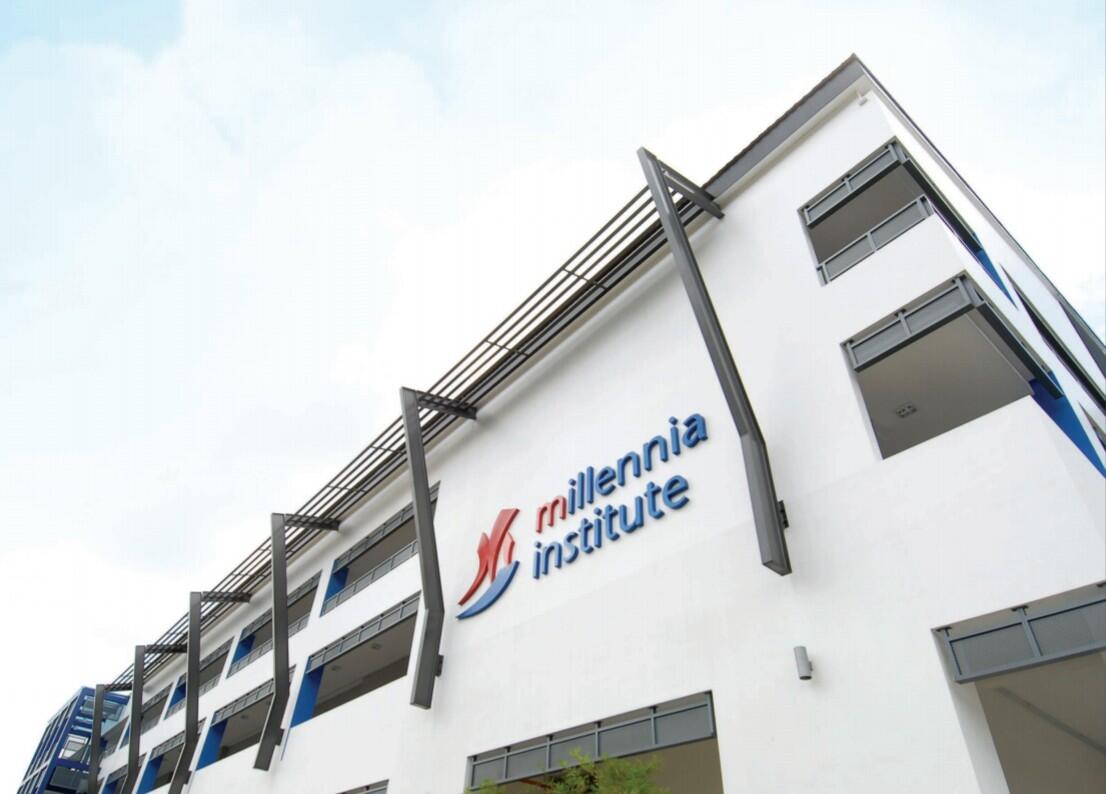
- Millennia Institute (3-year A-Level pathway)
Private/international schools (Cambridge International A-Levels)
Examples include:
- Tanglin Trust School (offers A-Levels + IB)
- DPS International School
- Furen International School
- Invictus International School
Selected international schools
Some international schools offer this certification (usually Cambridge International A-Levels), such as:
- Integrated International School
🌍 Is Singapore A-Levels Harder Than UK A-Levels?
A common question is whether Singapore A Levels are harder than UK A Levels. Although they share the same qualification name, they are structured differently in terms of curriculum design, subject focus, and assessment approach.
| Singapore A Levels | UK A Levels |
|---|---|
| Structured national system with fixed subject levels (H1, H2, H3) | Flexible subject selection (usually 3–4 subjects, no national H-level system) |
| Centralised syllabus set by SEAB | Syllabuses set by different exam boards (e.g. AQA, Pearson Edexcel) |
| Includes compulsory components (GP, PW, MTL) | No national compulsory subjects like GP or PW |
| Assessment is mainly the final national examinations | Mostly exam-based assessment, with coursework only in some subjects depending on the exam board |
| Highly standardised across all schools | More variation in content and assessment across schools and exam boards |
🎓 University Admissions and Recognition
Singapore A Levels are widely recognised by universities worldwide.
Local Universities
- National University of Singapore (NUS)
- Nanyang Technological University (NTU)
- Singapore Management University (SMU)
Admission is typically determined by the UAS and subject prerequisites.
International Recognition
Accepted by universities in:
- UK
- Australia
- USA
- Canada
- New Zealand
This makes the certification highly valuable for learners who want to pursue opportunities overseas.

📈 Preparing for the A Levels
Study Strategies
Famously known as one of the toughest examinations around the world, it requires consistent revision habits, strong time management, and the ability to handle a heavy workload.
- Maintain regular revision schedules instead of last-minute cramming
- Practise frequently using past-year papers
- Focus on understanding and applying concepts rather than rote memorisation
- Manage time effectively across multiple subjects
- Start preparation early to keep up with the content-heavy syllabus
🎥 Learning Resources
Students preparing for the A-Levels can use a combination of school materials and external resources to support their learning.
Common resources include:
- Official lecture notes and tutorials provided by schools
- Past-year papers and marking schemes
- Subject textbooks approved by the Ministry of Education
- Tuition classes and support from platforms like Superprof
Education is not the learning of facts, but the training of the mind to think.
Albert Einstein
🛣️Understanding the Singapore A-Level Pathways
The Singapore A Levels remain one of the most respected academic qualifications in the country. From subject selection to final examinations, learners go through a structured but demanding journey that prepares them for tertiary-level education locally or internationally.
Understanding how it works helps learners make better decisions about their academic goals and future pathways.
Summarise with AI:
Did you like this article? Leave a rating!

 Loading...