
Singapore is a sovereign republic based on the Westminster system. It conducts free and fair elections and is governed by a parliamentary system. Its politics has long been dominated by the People's Action Party (PAP), founded by Lee Kuan Yew. The PAP has been in continued governance ever since it was first voted into power. Although there is a healthy opposition presence, none have been able to dislodge the PAP from power.
This raises the question of whether Singapore is a democracy or not. In practice, Singapore combines electoral democracy with a highly centralised form of governance. It can thus be described as a “guided” democracy where political stability goes hand in hand with economic planning and administrative efficiency.


Historical Context of Singapore's Political System
Pre-Independence Era
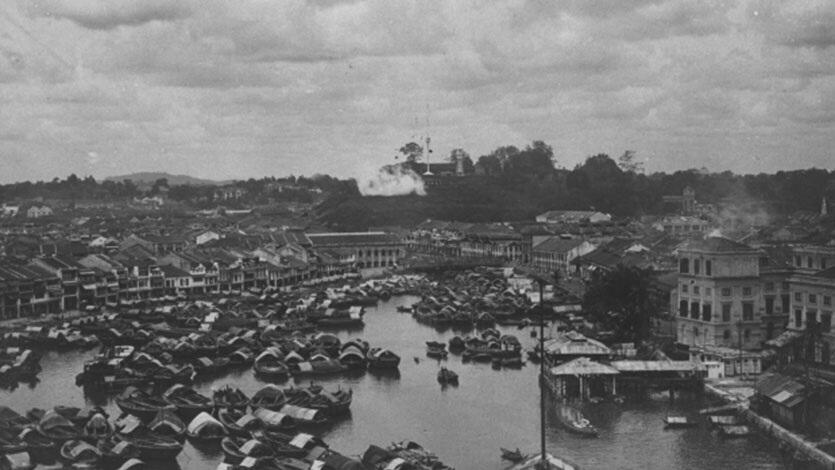
To understand the Singapore political system, you need to go back to its history. Singapore came under British rule in 1819 when Sir Stamford Raffles of the British East India Company (EIC) established a trading post on the island. The Straits of Malacca were a strategic zone, and Raffles wanted to control this trade route over which the Dutch had supremacy.
Under him, Singapore developed into a major port. For better administrative control, the Straits Settlements were formed, which comprised of Singapore, Penang and Malacca. In 1867, the Straits Settlements became a Crown Colony.
1819
Sir Stamford Raffles establishes a British trading post in Singapore
1824
The Anglo-Dutch treaty was signed, which gave the British full control over Singapore
1826
Singapore becomes part of the Straits Settlements
1867
Singapore becomes a Crown colony
1955
The Rendel Commission introduces partial self-government
1959
Singapore achieves full internal self-government, and Lee Kuan Yew becomes the first Prime Minister of Singapore
1965
Singapore separates from Malaysia, and Singapore becomes a Republic
1965–1990
PAP under Lee Kuan Yew dominates the political scene
2000s–2010s
The Opposition makes its presence felt
2020 Election
Opposition makes a strong comeback, and the Workers' Party secures more seats
Under British colonial rule, Singapore’s political structure was largely centralised and controlled by the British government. Power rested with the colonial governor, who acted on behalf of the British Crown. He was supported by the Legislative Council, mostly consisting of British officials.
Post World War II saw calls for local participation. However, actual self-governance began only in the 1950s with the introduction of partially elected legislative bodies. Singapore achieved full internal self-government in 1959, paving the way for the merger with Malaysia in 1963 and full independence in 1965.
How well do you know Singapore's history?
Post-Independence Developments
Singapore's political history is closely interwined with that of the People's Action Party (PAP). Founded in 1954, PAP has governed the country continuously ever since it came into power in 1959. Although there are several registered political parties in Singapore, no one has ever been able to win the General Elections in Singapore.
At its inception, the party comprised English-educated professionals and trade union activists who shared a similar aim of achieving self-governance and improving social and economic conditions of Singaporeans. Key founding figures included Lee Kuan Yew, C. V. Devan Nair, Abdul Samad Ismail, Toh Chin Chye, Goh Keng Swee, and Fong Swee Suan.
During its formative years, the PAP functioned as a broad anti-colonial movement and saw strong support from both workers and the middle class.
It had 4 key objectives:
🤝 Unification with the Federation of Malaya
🏛️ Establishment of a democratic-socialist government
🌍 Creating a multi-ethnic society and to
⚖️ Establish a just society
The party has a strong stance against corruption. It is reflected in its logo as well!
🔴⚡️ The red lightning in the centre signifies action
🔵⭕ The blue ring stands for the unity of all races
⚪ The white backdrop signifies purity
After coming into power post-British colonial rule, the party has evolved into the dominant governing party, prioritising stability, economic growth, and nation-building.
The Constitution of Singapore
👑 Supreme Law of the Land
The Constitution of Singapore is the supreme law of the Republic and is codified in a single written document. In simple terms, it means that all other laws in Singapore are subservient to the Constitution and cannot go against it. If there is a conflict between these laws and what the Constitution says, then those laws will be deemed void.
Unlike other laws that operate within defined limits, the Constitution stands as the ultimate law. The Constitution sets the very framework for how Singapore functions. It not only protects the nation’s sovereignty, but also sets down how the key institutions of government will function.
Article 4 of the Constitution defines the Constitution as follows: The Constitution is the supreme law of the Republic of Singapore, and any law enacted by the Legislature after the commencement of this Constitution which is inconsistent with this Constitution shall, to the extent of the inconsistency, be void.
🔄 Amendments and Evolution
Given the importance of the Constitution, amending it has been deliberately made a difficult task. Unlike other amendments that can be changed by a simple majority, Constitutional amendments cannot be made without the support of more than two-thirds of the members of parliament on the second and third readings.1
Note:
✅Nominated Members of Parliament (NMPs) are not allowed to vote on Constitutional amendments.
✅In addition, amendments that affect the sovereignty of Singapore (e.g., proposals to merge with other states) are also not allowed.
A Bill seeking to amend any provision in this Constitution shall not be passed by Parliament unless it has been supported on Second and Third Readings by the votes of not less than two‑thirds of the total number of Members of Parliament (excluding nominated Members).
These stringent rules are there for a reason. If the Constitution could be amended by a simple majority, then it could be easily changed by any party that is in power. The supermajority requirement ensures that even the most powerful government cannot alter these core rights without broad consensus from almost all parties.
Despite the limited political choice they offer, countries like Singapore, Malaysia, and Thailand provide a better environment for the life, liberty, and happiness of their citizens...
The Rise of Illiberal Democracy’ - Fareed Zakaria
However, that does not mean that the constitution has remained unchanged over time. Whenever the need for change has been felt, it has been amended with due support from Members of Parliament. Over the years, several important Constitutional amendments have been made to reflect the changing realities of the Republic of Singapore.
Here is a look at several important Constitutional amendments over the years.
Constitution Amendment Act 1984
Establishment of the Non-Constituency Member of Parliament (NCMP) scheme
This Act modified Article 39 of the Constitution to allow for up to six NCMPs, with a minimum of three opposition voices in Parliament.
Constitution Amendment Act 1988
Introduction of the GGroup Representation Constituency (GRC) scheme
The GRC mandates that at least one member in a team of GRC be from a minority ethnic group (Malay, Indian, or other).
Constitution Amendment Act 1990
Introduction of the Nominated Member of Parliament (NMP) scheme
The NMP scheme was introduced to allow for nonpartisan views in the House.
Constitution Amendment Act 1991
Introduction of Elected Presidency
Constitution Amendment Act 2016
Reserved Election scheme (hiatus-triggered election)
Under the reserved election scheme, certain elections would be reserved for candidates from specified ethnic backgrounds.
The 3 Branches of Government in Singapore
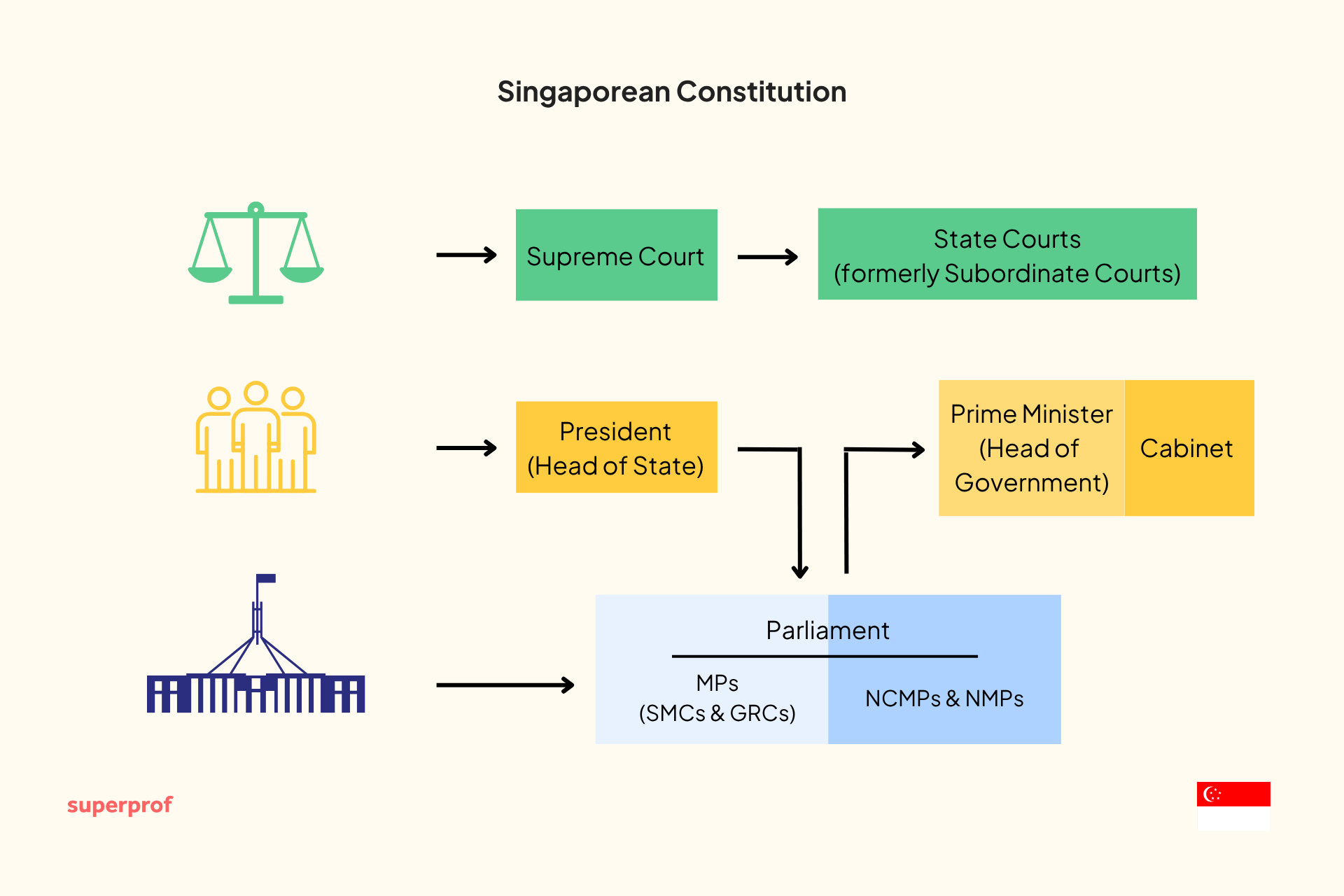
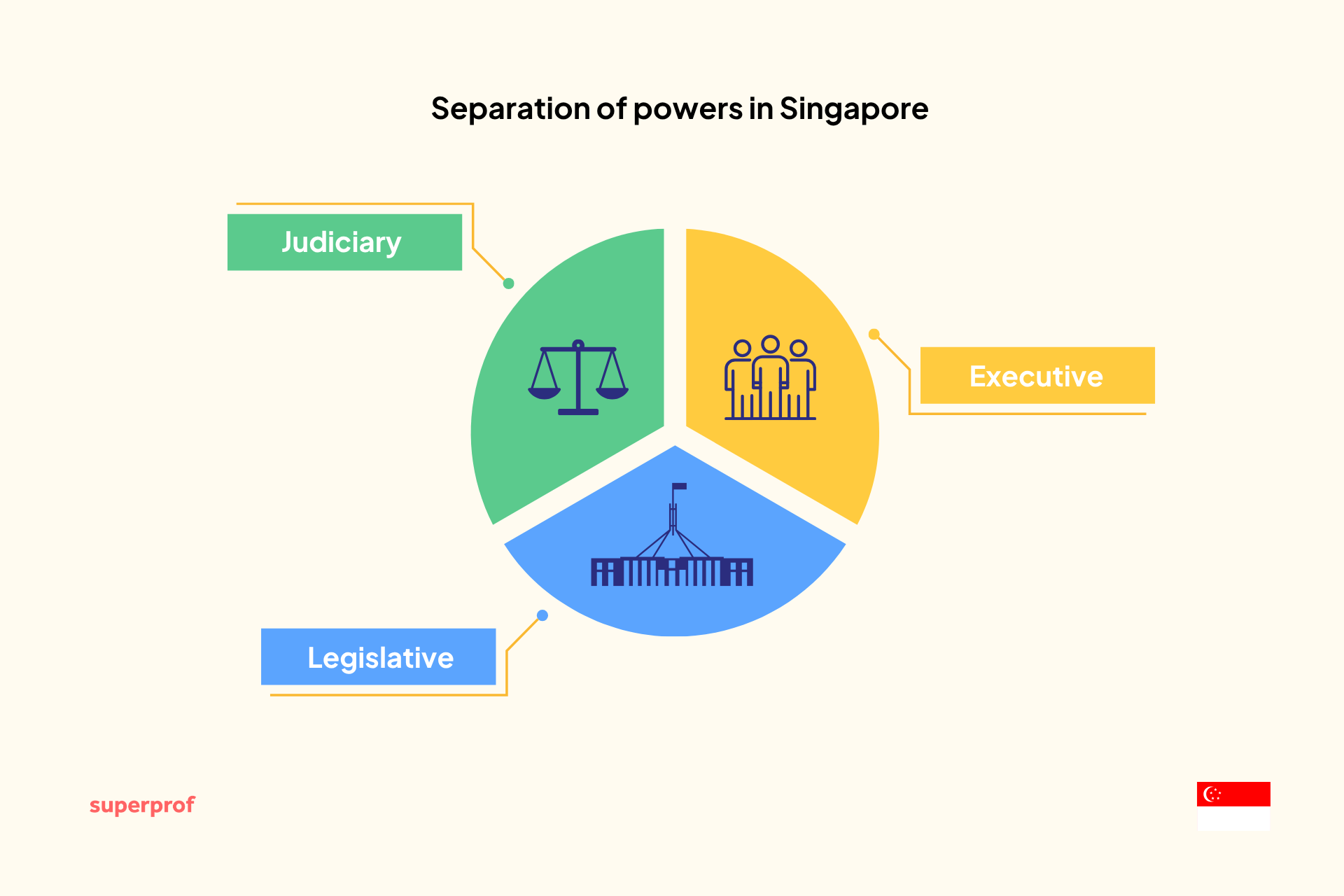
In Singapore, the power of the government has been divided into 3 branches (the Executive, the Legislative, and the Judiciary). There is a reason why the Constitution has done so. It is to prevent the excessive concentration of power within any one body and to reduce the risk of corruption.
⛪The Executive Branch
As laid out in the Constitution, the executive authority of Singapore is vested in the President but exercised on the advice of the Cabinet. The Cabinet, led by the Prime Minister, is responsible for all government policies and conducting the day-to-day affairs of the state. It is collectively responsible to Parliament.
✅ The President of Singapore appoints the Prime Minister of Singapore under Article 25 of the Constitution.
✅Acting on the advice of the Prime Minister, the President appoints other ministers from among the Members of Parliament to form the Cabinet.
The President of Singapore is the Head of State and is directly elected by the people, following changes to the constitution in 1991. The President has limited discretionary veto powers in specific areas defined by the Constitution. Outside of these areas, the President is required to act on the advice of the Cabinet.
🏛The Legislative Branch
Under Article 38 of the Constitution, the legislative power of the Constitution is vested in the Legislature that consists of the President and Parliament. The ‘Parliament’ consists of elected Members of Parliament, the Non-Constituency Members of Parliament (NCMPs) and Nominated Members of Parliament (NMPs).
⚖️The Judiciary
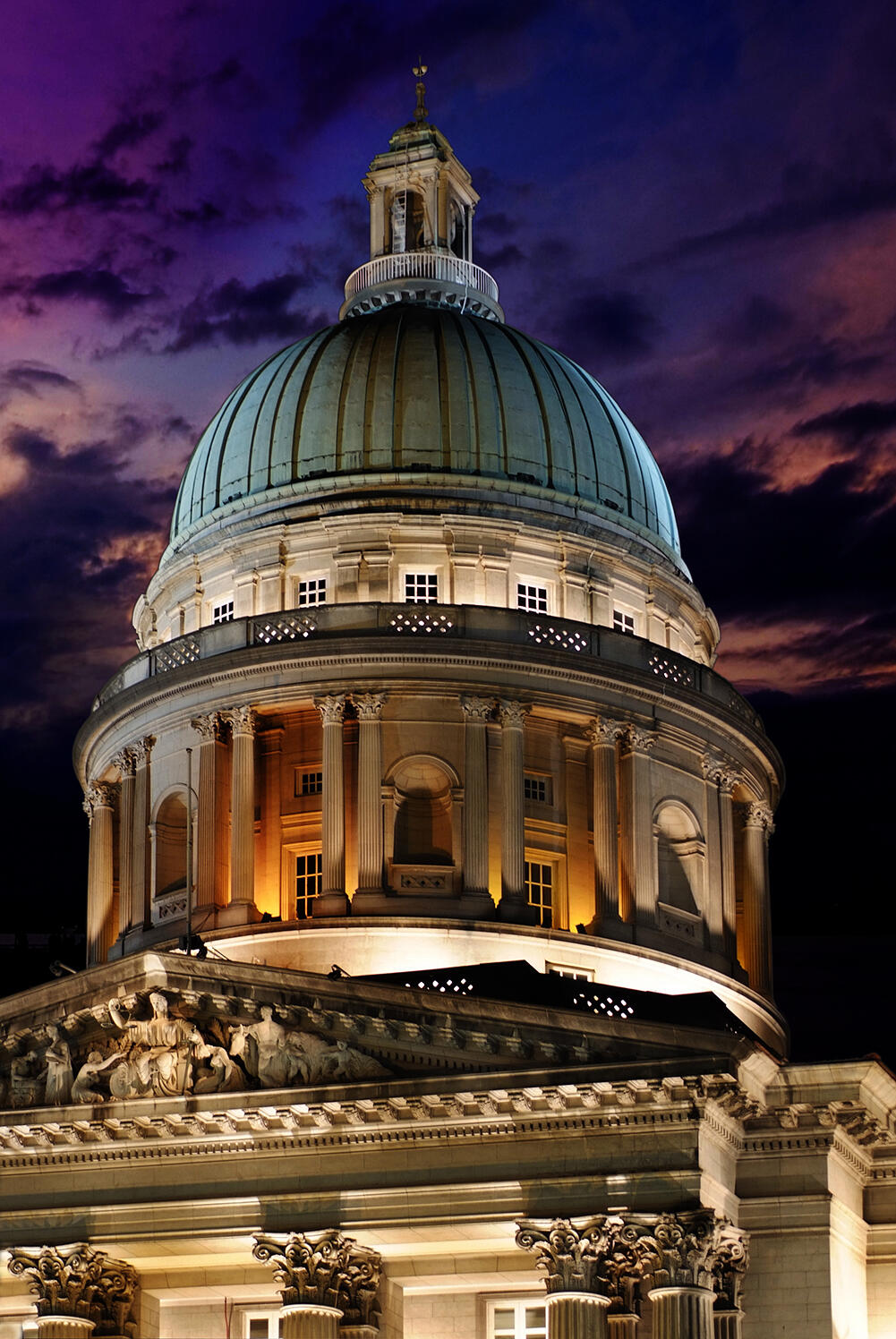
Judicial power in Singapore is vested in the Supreme Court (comprising the Singapore Court of Appeal and the High Court), the State Courts and the Family Courts.
Supreme Court
- Court of Appeal
- High Court
State Courts
- District Courts
- Coroners' Courts
- Magistrates' Courts
- Small Claims Tribunals
- Employment Claims Tribunals
Family Justice Courts
- Family Courts
- Youth Courts
- Family Division of the High Court
Roles of the 3 Branches of Government
Each of the three branches of governance in Singapore has distinct roles to play.
🗳️ Role of The Legislature
The Legislative branch has three important functions:
👉Making laws
👉Financial scrutiny
👉Ensuring Accountability of the Government
1️⃣ Making Laws
One of the important functions of the Legislature is lawmaking. Here is how a law takes effect in Singapore, from its conception as a Bill to its final form as a Law.
First Reading (Introduction)
A Member of Parliament/Minister introduces a Bill. The long title of the Bill is read aloud.
Second Reading
A general debate will take place discussing the overall merits and principles of the Bill.
Committee Stage
The Bill is either referred to a Committee of the Whole Parliament or to a Select Committee comprising a smaller group of MPs.
Third Reading
The Bill is reported back to Parliament for review. Debate is restricted only to the contents of the Bill. The Bill is then put to a vote.
Presidential Council for Minority Rights (PCMR) The PCM
The Bill is then sent to the PCMR to ensure the Bill does not discriminate against any racial or religious community.
Presidential Assent
The Bill is sent to the President for assent, and after their formal approval, it becomes an Act of Parliament.
Gazetting
The Law comes into operation on the date published in the Government Gazette.
2️⃣ Financial Scrutiny
An important function of Parliament is to maintain financial scrutiny over the government. In that respect, the Parliament thoroughly debates the annual Budget before approving it. For greater transparency, the Budget Book also contains Estimates of Expenditure showing how each Ministry is going to use the allocated funds.
The President of Singapore has the authority to withhold assent to a Supply Bill if they believe the government will draw on past reserves without providing necessary justifications.
However, Article 148A(2) of the Constitution of Singapore ensures financial continuity is maintained even in such a situation. If the President withholds assent to a Supply Bill, spending is still allowed, the only catch being that spending is capped at the amount that was approved in the previous financial year.
3️⃣Ensuring Accountability of the Government
Under the Westminster structure of governance, the executive is answerable to the legislature, ensuring there are adequate checks and balances on the government. Provisions like parliamentary questioning and committee investigations are in place to check if the government is performing properly.
✅The period set aside at the beginning of every sitting of Parliament, where Ministers are asked questions by other Members, is called Question Time.
✅Question Time lasts 90 minutes.
✅Any questions that remain unanswered during Question Time are addressed through written responses, unless the Member concerned chooses to defer the question to the next sitting day.
🛠️ Role of the Executive
The Executive branch of the government is responsible for the day-to-day affairs of the state. It implements the laws made by Parliamnet and regulates governmental policies. It has several functions:
- It is headed by the Prime Minister and the Cabinet
- They prepare the national budget
- They are accountable to Parliament through questioning
- Introduce bills in Parliament through Ministers
- Carry out and enforce laws passed by Parliament
👩⚖️ Role of the Judiciary
The Judiciary in Singapore is responsible for upholding the rules of law and ensuring justice is meted out to all fairly and independently. Its job is to interpret the laws passed by the Legislature and apply them.
The job of the Judiciary is to:
✅Interpret the Constitution and laws
✅Settle conflicts between individuals, organisations, and the state
✅Ensure that laws are applied fairly
✅Safeguard citizens’ rights
🧩Checks and Balances in the System
There are several mechanisms in place to prevent the excessive concentration of power in any one branch of the government in Singapore. These mechanisms establish a system of checks and balances to ensure power is exercised responsibly for the benefit of Singaporeans.
1️⃣ Constitutional Supremacy
The Constitution of the Republic of Singapore is the supreme law of the land. It divides the power of the government into 3 branches and makes each one answerable to the Constitution. This ensures that the branches form adequate checks and balances against each other and prevent any one branch from overriding the others.
2️⃣ Independent Judiciary
The Judiciary has the authority to invalidate laws made by the other two branches if they go against the Constitution. At the same time, the Judiciary itself is bound by the laws passed by Parliament, ensuring that judges do not act arbitrarily but within the framework set by the government of Singapore.
3️⃣ Presidential Checks
The President plays an important role in checking the excesses of the legislature and government spending. The President has special custodial powers to:
- Veto on government spending that draws on past reserves
- Approving the appointment of judges and other key public servants
4️⃣ Parliamentary Checks
The Legislature, led by the Parliament of Singapore, holds the Prime Minister and his Cabinet accountable for their policies. The members of Parliament
⭐Hold debates and scrutinise governmental actions
⭐Discuss legislation
⭐Put forth alternative viewpoints
Is Singapore a Democracy?
Singapore is a representative democracy where people vote in elections to select their next leader. The electoral process involves several steps, beginning with the issuance of the Writ of Election, followed by subsequent steps.2
On the surface, its political system is similar to most Western democracies. Among other things, it upholds the rule of law, has a written constitution with clear delineation of powers between the three organs of state, and conducts free and fair elections within a parliamentary framework.
Yet Singapore remains a paradox for many. Some call it a liberal democracy, while others call it an authoritarian state or an illiberal regime. The long-standing dominance by one single party—the People’s Action Party (PAP) makes critics question how fully democratic Singapore truly is.
A liberal democracy is a form of governance that combines liberalism with democratic principles. Liberal democracy ensures that citizens' individual rights are protected while allowing them to choose their representatives and enjoy protections for fundamental civil rights.
The benefits of liberal democracy are :
✅Increased political stability
✅Lower corruption
✅Respect for human dignity
✅A safe and secure community
According to Freedom House in its The Freedom in the World report, Singapore is categorised as "partly free", with the country meeting certain democratic standards but falling short on civil liberties and political pluralism.
Here is a look at how Singapore fares on the Democracy Index with respect to other countries:
| Country | Political System Type | Democracy Index Score (approx) | Regime Classification | Key Strengths | Key Weaknesses |
|---|---|---|---|---|---|
| Singapore | Parliamentary republic with dominant-party system | 6.18 | Flawed democracy | Strong governance; low corruption; rule of law | Limited political competition; media restrictions; constrained civil liberties |
| Norway | Parliamentary constitutional monarchy | 9.8 | Full democracy | High civil liberties; strong institutions; high participation | Few major structural weaknesses |
| United States | Federal presidential republic | 7.9 | Flawed democracy | Strong electoral competition; civil liberties | Polarization; declining trust; governance gridlock |
| India | Federal parliamentary republic | 6.6 | Flawed democracy | Competitive elections; large participation | Institutional stress; civil liberty concerns |
| Japan | Parliamentary constitutional monarchy | 8.1 | Full democracy | Stable institutions; rule of law | Low political participation |
| Malaysia | Federal constitutional monarchy | 7.1 | Flawed democracy | Improving electoral competitiveness | Political instability; governance issues |
| China | One-party socialist state | 2.3 | Authoritarian | State capacity; long-term planning | No electoral competition; limited freedoms |
| Russia | Federal semi-presidential republic (centralized) | 3.2 | Authoritarian | Centralized decision-making | Weak opposition; restricted civil liberties |
Despite these views, there is no denying the fact that Singapore has succeeded and how. Over the decades, Singapore has transformed itself from a run-down, struggling port city to the bustling metropolis of today. Today, it can easily rival many First World countries in terms of infrastructure and quality of life.
A more accurate way to describe Singapore’s governance system is state-led capitalism. Singapore operates as a highly developed mixed market economy where the government plays a strategic role in guiding economic growth.
PM Lee described it well:
Nobody can say how things will develop in two, three, four elections' time. But for as long as we can, it is the responsibility of me and my team to govern Singapore well, to maintain the support of the population and to keep Singapore united and cohesive, so that in a dangerous world, we make sure that we are safe, and we can look after ourselves and have a future for our people.
PM Lee at a discussion at the 27th International Conference on the Future of Asia in Tokyo.
References
- Constitution of the Republic of Singapore - Singapore Statutes online. (2024, December 9). https://sso.agc.gov.sg/act/cons1963?ProvIds=P15-#pr23-
- THE LAW REVISION COMMISSION. (2011). Parliamentary Elections Act. In THE STATUTES OF THE REPUBLIC OF SINGAPORE. https://www.eld.gov.sg/Resources/Parliamentary%20Elections%20Act%20version%20in%20force%20from%202%20Jan%202019.pdf
Summarise with AI:
Did you like this article? Leave a rating!

 Loading...