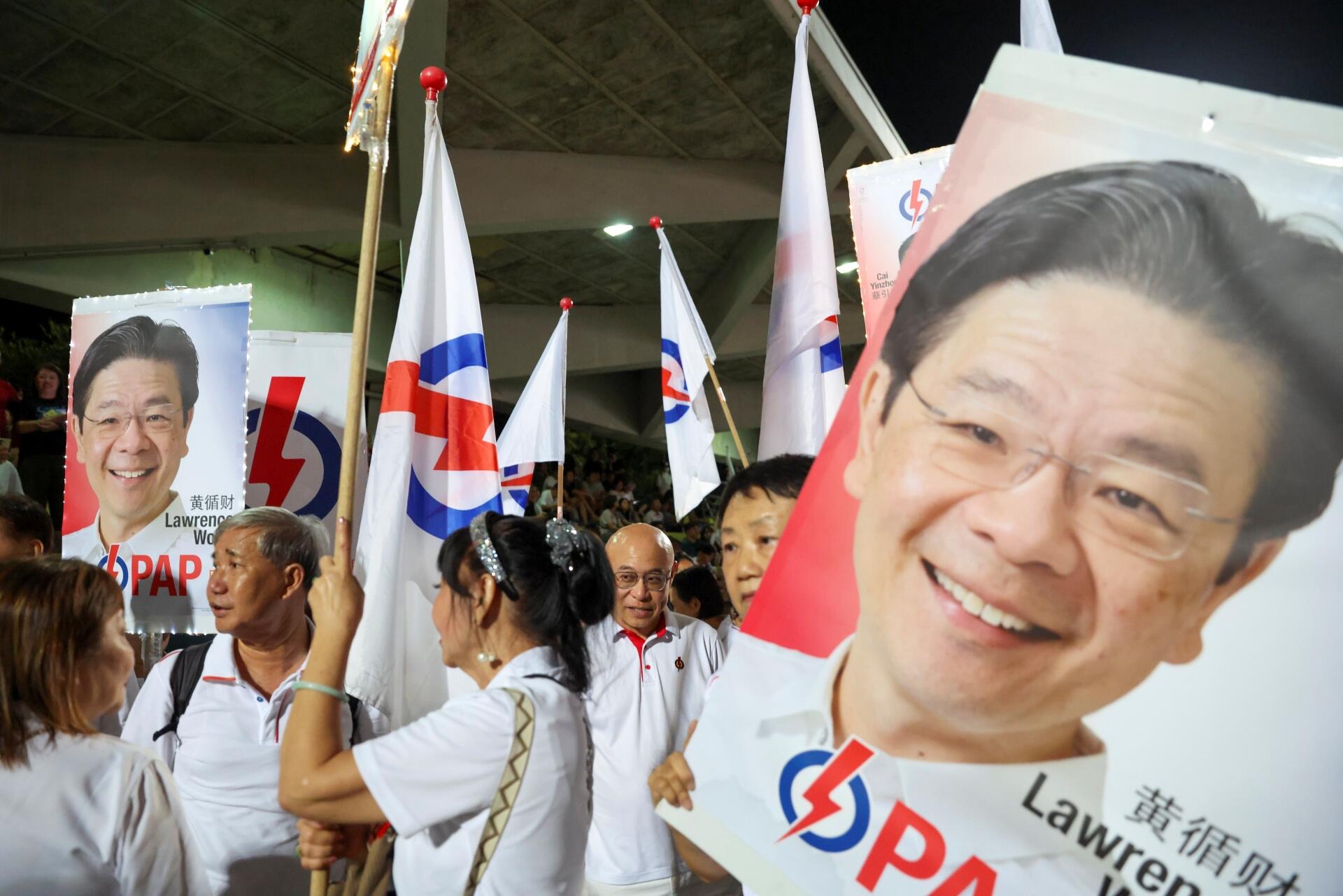

Singapore's election system often sparks curiosity as to how elections work in Singapore. The Republic of Singapore operates as a representative democracy where the people vote from among candidates who stand for election to represent them in the Parliament of Singapore. Rather than voting directly for policies, citizens vote for people who represent them and act on their behalf in parliament.
Elections in Singapore are broadly divided into two electoral processes: the parliamentary elections and the presidential elections. Within the parliamentary process, there are general elections and by-elections. This article provides a comprehensive overview of the election system of Singapore, including its structure, general election processes, and other unique features such as GRC and SMCs.
Election Writ Issued
The Election Writ specifies the nomination date and place of nomination
Notice of Election
After the Writ of Election is issued, the Returning Officer issues a notice stipulating the date, time and venue for nomination of candidates
Nomination Day
Prospective candidates submit their nomination papers and certificates to the Returning Officer, in duplicate and in person, at the nomination centre between 11 am and 12 noon
Notice of Contested Election
The Returning Officer issues the notice of contested elections specifying the poll date, names of candidates and location of polling stations
Campaigning
Campaigning begins immediately after the Notice of Contested Election is issued, till the start of Colling-Off Day
Cooling-off Day
Cooling-Off Day is the eve of Polling Day, when all election campaigning is prohibited to allow voters to reflect on their choice of candidates
Polling Day
On this day, voters cast their votes anytime between 8 am and 8 pm


Overview of Singapore's Electoral Framework
Types of Elections
In Singapore, there are two separate electoral processes: parliamentary and presidential elections.
1️⃣ Parliamentary Elections:
In Singapore, elections are held under a first-past-the-post system, where whoever receives the majority of votes wins. The president selects the leader of the political party with the most votes as the Prime Minister, and the Prime Minister, in turn, chooses from the elected Members of the Parliament to form the cabinet.
Parliamentary elections are held every five years. General elections have to take place within five years of the first sitting of Parliament. If this five-year period is over, then Parliament gets automatically dissolved by law.
In practice, the Singapore general elections process happens earlier. The President may dissolve Parliament on the advice of the Prime Minister before the maximum term is reached and declare a general election.
In the 2025 general elections, 97 parliamentary seats were contested, up from 94 in GE2020, consisting of:
📌15 single-member constituency (SMC) seats, where each party nominates a single candidate
📌82 group representation constituency (GRC) seats, where parties nominate between 3 and 6 candidates who contest the election as a group
The other parliamentary seats are:
👉Up to 12 NCMPs who must be from opposition parties (also called the ‘best losers’)
👉Up to 9 NMPs and bring non-partisan voices to Parliament. NMPs are elected for 2.5 years
The party that wins over 50% of the electable seats get to form the government in Singapore.
The President shall appoint as Prime Minister a Member of Parliament who, in his judgment, is likely to command the confidence of the majority of the Members of Parliament, and shall, acting in accordance with the advice of the Prime Minister, appoint other Ministers from among the Members of Parliament.
- Part 5, Article 25 of the Constitution
2️⃣By-Elections
By-elections are held between general elections when the seats are vacated. This can happen in 2 scenarios:
📌Either a Member of Parliament resigns from the political party they were in
or
📌A Member of Parliament dies in office
3️⃣ Presidential Elections:
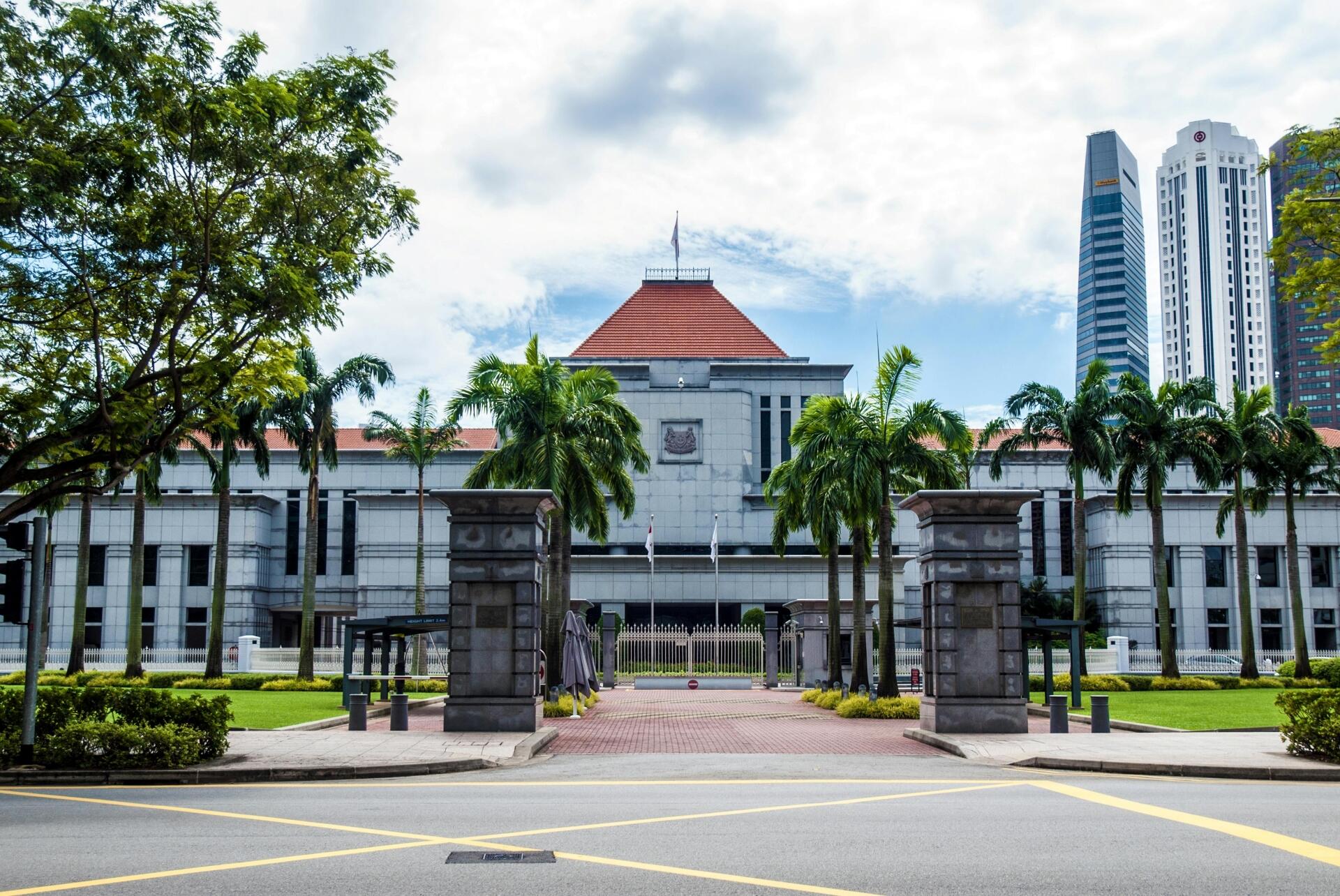
Presidential elections in Singapore are held every six years to elect the President, who serves as the head of state. Prior to 1991, presidents were indirectly elected by Parliament. This changed with the introduction of the Elected Presidency in 1991, after which Presidents began to be directly elected by the people through popular vote.
However, the eligibility criteria for candidates are quite stringent. Individuals running for the presidency have to obtain a Certificate of Eligibility proving they are of exceptional character and integrity.
The next presidential election is due to be held in 2029.
🗳Voting System
In Singapore’s voting system, all citizens aged 21 years or older are mandated to vote in both the presidential and parliamentary elections.
The other prerequisites to be eligible to vote include:
📌Be enrolled in the electoral register
📌Not be disqualified from voting (for example, individuals serving jail time or having been convicted of voter fraud)
📌Have a registered Singapore address, or if living overseas address ensure your address is recorded with the ICA so they can vote through overseas polling stations
For more details on the voting system, refer to the official Elections Department website.
Constituency Structures
When Singapore attained self-rule, it inherited the Westminster system that operated within clearly defined electoral boundaries. Members were elected through universal and compulsory voting in Single Member Constituencies (SMCs).1
In 1988, a major change was introduced when the Group Representation Constituency (GRC) system was introduced during the General Elections. The Parliamentary Elections Act and the Constitution were amended to provide for the creation of three-Member GRCs, with the requirement that at least one-quarter of the total number of MPs must come from GRCs.
The justification for this change was to safeguard minority representation in Parliament.
As set out in the Parliamentary Election Act, Chapter 218: “The President shall declare any electoral division, having regard to the number of electors in that division, to be a group representation constituency and designate that constituency as a constituency in which any election is to be held on the basis of a group of such number of candidates, being not less than 3 but not more than 6.”
In simple terms, it means the President has the power to designate certain electoral divisions as GRC, where voters elect a team between 3 to 6 candidates instead of a single candidate.
Today, the electoral constituencies in Singapore are divided into two types:
✅Single Member Constituencies (SMCs) and
✅Group Representation Constituencies (GRCs)
These are set by the Electoral Boundaries Review Committee (EBRC), which is set up by the Prime Minister's office for parliamentary elections and presidential elections.
1️⃣ Single Member Constituencies (SMCs)
An SMC is an electoral division represented by a single Member of Parliament (MP) who represents the interests of those residents in Parliament.
At all times, there shall be at least 8 electoral divisions that are not GRCs.
The current terms of reference provide some stability in our electoral landscape by having a balance in the proportion of GRCs and SMCs. Having MPs serving a broadly similar number of electors on average as the last election will enable MPs in the coming parliament to continue to serve and represent their residents effectively.
Chan Chun Sing, Singapore’s Minister-in-charge of the Public Service (and Education Minister)
2️⃣ Group Representation Constituencies (GRCs)
A GRC is a larger electoral division that is represented by a group of MPs who represent the interests of residents of that particular division.
📌During elections, voters vote for a group of individuals (3 to 6) to be their MPs.
📌They must either be from the same political party or stand as independents.
📌Importantly, in each GRC, at least one of the MPs must be from the minority community for diverse representation.
Below is a brief overview of the SMC vs GRC Singapore key debate.
SMC
- Represented by 1 MP
- Focus on individual representation
- Smaller geographic area
- Fewer voters
- One winner takes the seat
GRC
- Represented by a team of 3–6 MPs
- Ensures minority representation
- Covers multiple wards
- More voters
- The whole team wins/loses
📢Election Process
The electoral process in Singapore is governed by the:
✅Constitution of the Republic of Singapore
✅Parliamentary Elections Act 1954
✅Foreign Interference (Countermeasures) Act 2021
✅Key Subsidiary Legislation
1️⃣ Nomination
The Nomination Day is specified in the Writ of Election, and the Returning Officer notifies the public of the date.
As per law, Nomination Day has to be at least 5 days (not including Sundays or public holidays) and not more than one month after the date of the Writ of Election.
On Nomination Day, nominations open at 11 am and close at 12 noon, during which candidates have to deliver the nomination papers in duplicate to the Returning Officer at the Nomination Place.
2️⃣ Campaigning
Official campaigning begins after nomination and ends on Cooling-off Day, the day before polling.
When campaigning:
✅Candidates must maintain proper decorum when campaigning
✅Candidates should steer away from negative campaigning practices
✅Candidates should also avoid making false statements that can cause racial or religious tensions
✅Candidates must also ensure that their campaign is free from foreign influence
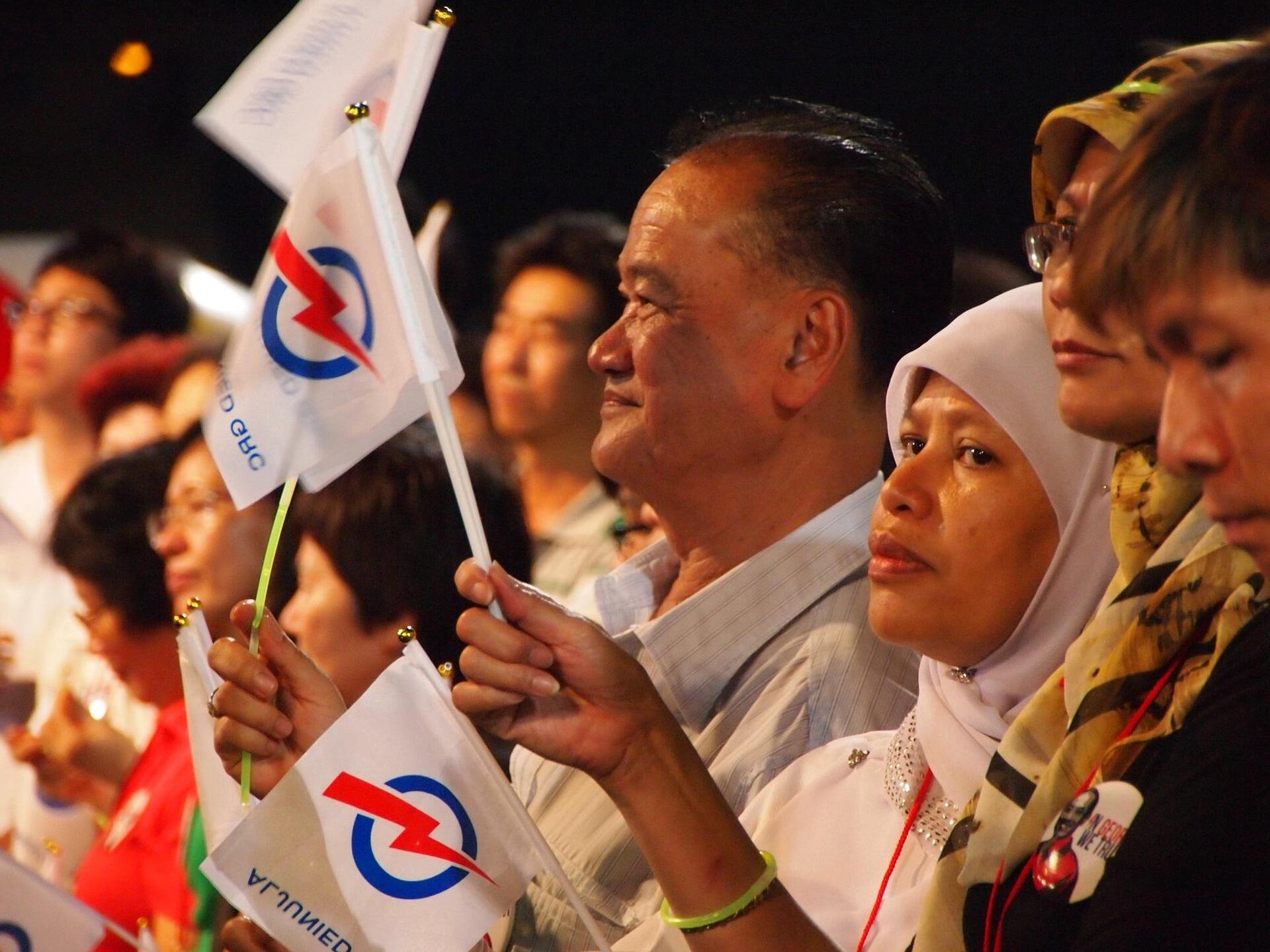
Campaigning can be of two types:
- Physical campaigning
- Online campaigning
3️⃣ Polling Day
On Polling Day, qualified electors cast their votes at their designated polling stations anytime between 8 am and 8 pm for the political party of their choice. Overseas Singaporean voters vote at their assigned overseas polling booths. Due to time zone differences, overseas Singaporeans may vote before polling starts in Singapore. However, all overseas polling stations have to close before polling ends in Singapore.
In Singapore, the entire country observes a “cooling-off day” the day before voting, during which no election campaigning is allowed.
On this day, voters are given time to reflect on their choices without being influenced by last-minute speeches and advertisements.
Cooling-off Day was first implemented in the 2011 general elections.
Do you want to learn more about the history of the Singapore government? Or perhaps about its election process. Watch this YouTube video for a visual explanation of the election process.
4️⃣ Sample Count
To prevent speculation and unfounded rumours, a sample count is done to give voters an early indication of which way the election will go.
In the Singapore voting system, at each polling station, a counting assistant randomly selects a bundle of 100 ballot papers in the presence of candidates and counting agents. Then they count the number of votes for each candidate (or a group of candidates in the case of a GRC).
These votes are then added up, with weightage applied to reflect differences in the total number of votes cast at each polling station. The sample count is then shown as a percentage of valid votes received by each candidate (or group of candidates).
🎯Unique Features of Singapore's Election System
1️⃣ Compulsory Voting
In Singapore, all eligible citizens are required to vote. Non-voters who do not have valid reasons for not voting are removed from the electoral roll.2 Non-voters can restore their voting status by applying online via Singpass. They may even be required to pay a fee of $50 to restore their status.
If you fail to vote in the elections, there is a possibility of your name being struck off the voter list. After the elections conclude, the Returning Officer prepares a list of all individuals who did not vote. They are called the "non-voters".
This list is sent to the Registration Officer, who deletes their name from the electoral roll.
As a result, these non-voters can no longer vote in future Parliamentary and Presidential elections.
2️⃣ Non-Constituency Members of Parliament (NCMPs)
Following the constitutional amendments, the law allows up to 12 Non-Constituency Members of Parliament (NCMPs) to be declared elected. As per the scheme, unsuccessful candidates from the non-ruling parties who garner the highest percentage of votes are declared as NCMPs. This ensures a minimum number of Opposition representation in Parliament.
The computation of the maximum number of NCMPs at any given time is determined by subtracting the number of opposition Members of Parliament elected at a general election from the total cap of 12. In other words:
No. of NCMPs = 12 - Total No. of Elected Opposition MPs in Parliament
3️⃣Nominated Members of Parliament (NMPs)
Nominated Members of Parliament (NMPs) are members who are appointed by the President upon the recommendation of a Special Select Committee of Parliament. The position of NMPs was introduced in 1990 through a constitutional provision to accommodate independent voices in Parliament.
To be nominated:
✅citizens must have distinguished themselves in their respective fields
✅possess a record of distinguished public service
✅must have brought honour to the Republic
Similar to NCMPs, NMPs have limited voting powers in Parliament. Thus, they cannot vote on constitutional amendments, no-confidence motions, supply bills, or the removal of the president.
Recent Developments and Statistics
Electoral Divisions
✅Electoral divisions, also known as constituencies in Singapore, are demarcated by the Prime Minister for both presidential and parliamentary elections.
✅As we read earlier, there are 2 types of electoral divisions:
- Single Member Constituencies (SMCs)
- Group Representation Constituencies (GRCs)
✅Each electoral division is further subdivided into smaller units called polling districts, with each district having its own polling station.
✅In election system Singapore, a register of electors is maintained for each electoral division.
✅As of February 2025, Singapore has 15 SMCs and 18 GRCs, totalling 33 constituencies.
electors were eligible to vote
Latest Election Outcomes
In the 2025 general election, 97 MPs were elected to Parliament.
💡The People's Action Party (PAP) came to power yet again, winning 87 out of 97 seats. With 65.57% of the votes, this was its best performance since 2011. The results confirm Singaporeans' strong faith in the PAP government and its policies.
💡Meanwhile, the Opposition Workers' Party led by Pritam Singh retained all 10 of its elected seats, consolidating its position as the leading opposition party in Singapore. The rest of the opposition parties failed to gain traction among voters.
💡Key election issues included the high cost of living, job security and maintaining economic stability.
Here is an overview of the election results.
⭐Elected MPs: 97
⭐Workers’ Party (WP): 10 seats (main opposition)
⭐NCMPs: 2
⭐Nominated MPs (NMPs): 9
➡️ Total Parliament size: 108 members
The election system in Singapore, or the Singapore voting system, is shaped by the Westminster model, where the party with the maximum number of votes gets to form the government. The Singapore general election process includes unique features such as GRCs and SMCs, which leads many to ask what is GRC in Singapore. Voting is compulsory for all citizens, and the unique NCMP scheme allows for opposition voices in Parliament.
Campaigns are held with full fervour, and citizens come out to vote in large numbers. Overall, Singapore's general election process ensures smooth governance and allows citizens to participate in the voting process proactively.
References
- Parliament of Singapore. (n.d.). A GUIDE TO PARLIAMENT OF SINGAPORE. https://www.parliament.gov.sg/docs/default-source/default-document-library/fa_parliament-e-brochure.pdf
- Eld. (n.d.). Elections Department Singapore. https://www.eld.gov.sg/homepage.html
Summarise with AI:
Did you like this article? Leave a rating!

 Loading...