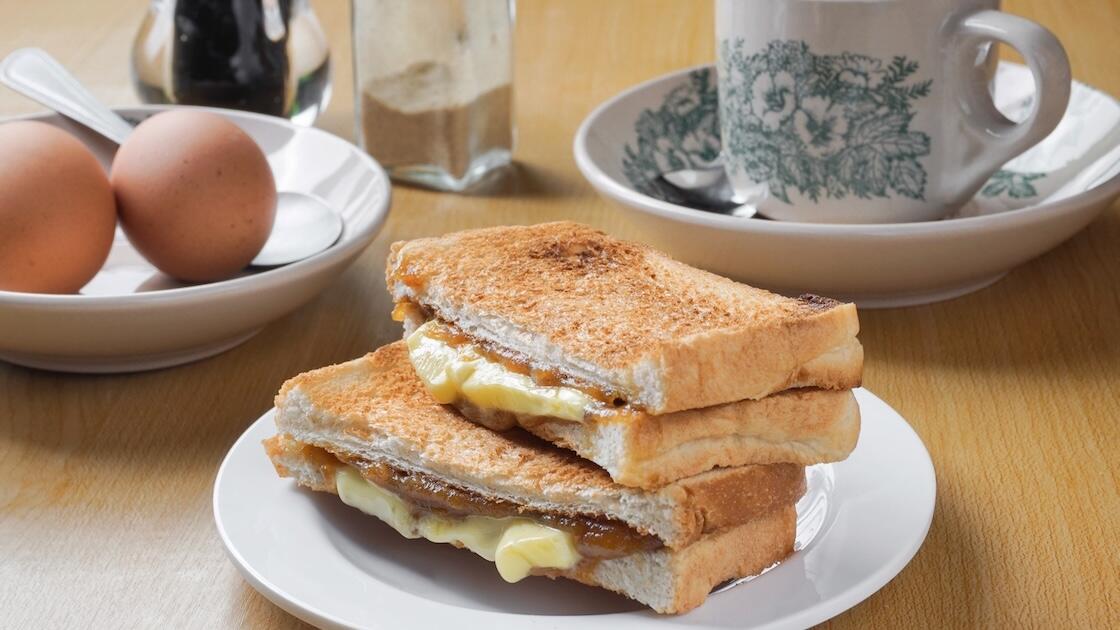

Kaya toast Singapore is a much-loved breakfast food known for its simple but satisfying combination of crisp toast, fragrant kaya, and cold butter. It is a humble meal, but one that has become an important part of Singapore breakfast food and everyday food culture.
Typically served with soft-boiled eggs and kopi or tea, this combination is also known as a Nanyang breakfast.
It has deep roots in kopitiam culture and is closely associated with the Hainanese community, whose coffee-shop traditions helped shape Singapore’s breakfast culture.
In this guide, we will look at what kaya toast is, its history and origins, why it is special, how it is made, where to find it, and how to prepare it at home.
| Question | Quick Answer |
|---|---|
| What is kaya toast in Singapore? | Kaya toast is a classic Singapore breakfast food made with toasted bread, sweet kaya and butter, usually served with soft boiled eggs and kopi or tea. |
| What is kaya made from? | Kaya is a sweet coconut-and-egg spread traditionally made with coconut milk, eggs, sugar and pandan. |
| What comes in a traditional Singapore kaya toast set? | A traditional set usually includes kaya toast, cold butter, two soft boiled eggs, and kopi or tea. |
| Where can I eat kaya toast in Singapore? | You can find kaya toast in Singapore at traditional kopitiams, hawker-centre stalls, heritage coffee shops and modern chains. |
| What makes Singapore kaya toast special? | The combination of crisp toast, sweet kaya, cold butter, runny eggs and local coffee or tea gives this simple breakfast its distinctive flavour and texture. |
| Can I make Singapore-style kaya toast at home? | Yes. Use toasted bread, kaya and cold salted butter, then serve it with soft boiled eggs and kopi or tea for a simple homemade set. |




🍞What is Kaya Toast in Singapore?
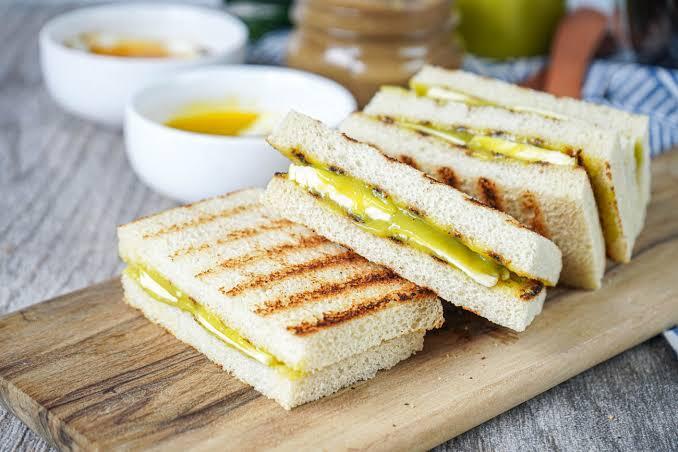
Kaya toast is a simple Singapore dish made with toasted bread (without the crust), kaya and cold butter, usually served with soft-boiled eggs and a cup of coffee or tea.
It is part of the wider Hawker Food culture, where simple, affordable dishes have become an important part of everyday dining.
Kaya is a rich, sweet spread typically made with eggs, sugar, coconut milk and pandan. It gives the toast its distinctive flavour, while a slice of cold butter adds a creamy and slightly salty taste. The toast can be thin and crispy, or grilled over charcoal for a deeper toasted flavour.
What Does Kaya Taste Like?
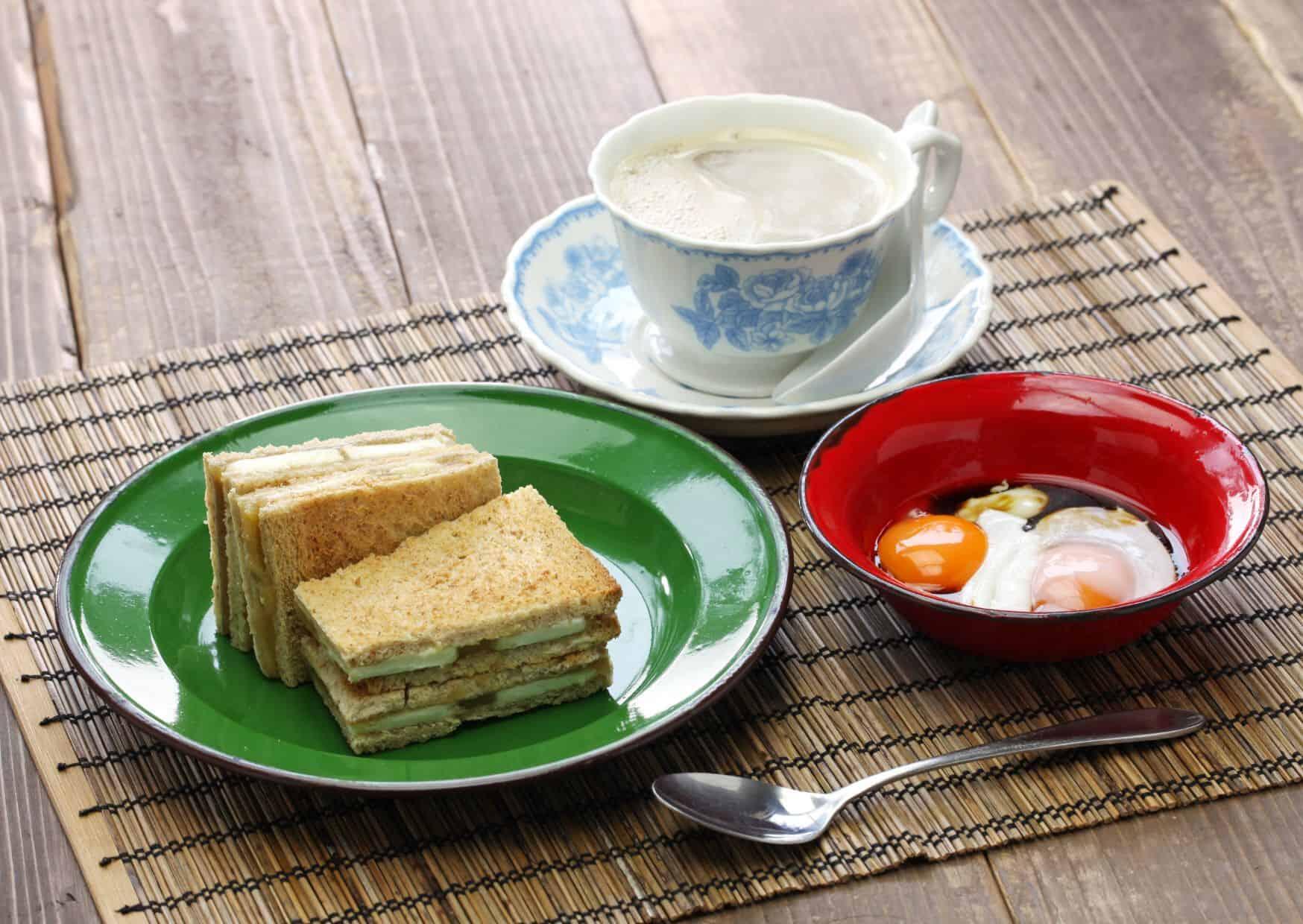
Kaya is creamy, sweet and coconut-forward, with a fragrant pandan aroma. Depending on the recipe and cooking method, it can also have a lightly caramelised flavour. Some versions are smoother and custard-like, while others are thicker and more jam-textured.
You may come across both green Peranakan (Nyonya) kaya and golden-brown Hainanese kaya in Singapore1. The green version is commonly made with fresh pandan leaf juice, which gives it its natural green colour and fragrant aroma. It usually has a more noticeable pandan flavour, with floral and grassy notes alongside the coconut and egg.
The golden-brown version gets its darker colour and deeper caramel flavour from caramelised palm sugar (gula melaka). Pandan can still be used for flavour, but it does not provide the main colour in this style.
Kaya can also have different textures, depending on how it is made. Some versions are smooth, glossy and gooey, while others are firmer, denser or slightly lumpy. Some versions can also have a grainier texture.
However, colour and texture do not always tell you exactly how the kaya will taste, as recipes vary from one shop to another.
The texture and intensity of pandan can also differ, so two servings of kaya toast in Singapore may taste surprisingly different.
What Comes in a Traditional Singapore Kaya Toast Set?
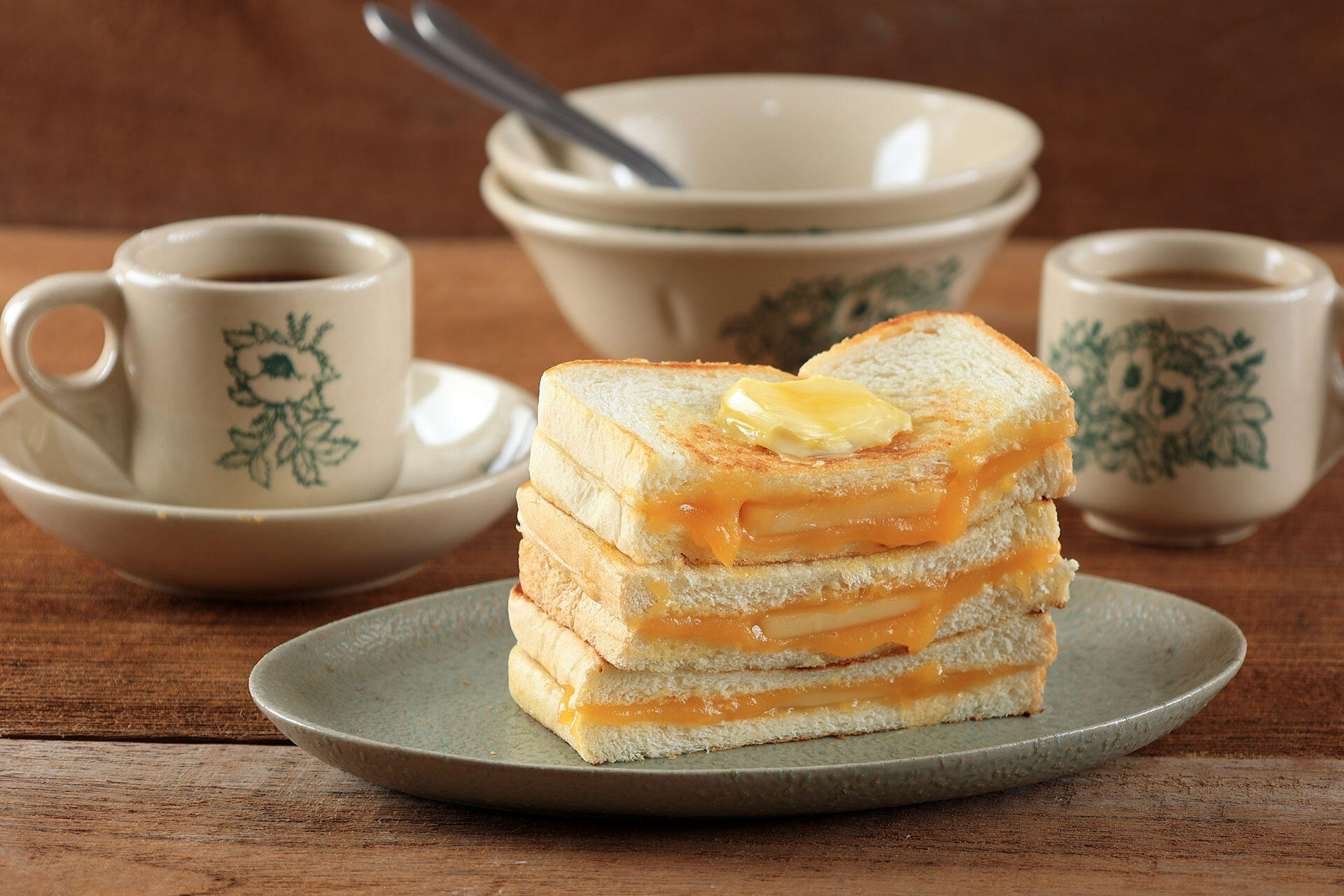
A traditional Singapore kaya toast set usually brings together several simple items.
Toast
The base: Two thin, crispy pieces of white or brown bread, usually toasted until crisp, either over charcoal or on a grill.
The filling: The toast is generously coated with kaya, either green or golden brown.
The finishing touch: It is topped with thin, ice-cold slabs of salted butter, which melt slightly from the heat.
Eggs
They usually come with together as a combo, although they can also be ordered separately. Two eggs are served in their shells, with diners cracking them into a small saucer/plate. Typically, diners drizzle some dark soy sauce over them and sprinkle on white pepper to add flavour.
Kopi or Teh
Typically, it is eaten with a cup of kopi or tea, although there are several variations depending on your preferred drink.
- Kopi: Coffee with condensed milk.
- Kopi-O: Black coffee with sugar.
- Kopi-C: Coffee with evaporated milk and sugar.
- Teh: Tea with condensed milk.
- Teh-C: Tea with evaporated milk and sugar.
You can also order your drink kosong, which generally means without sugar.
How Do You Eat It?
Typically, the eggs act as a savoury dipping sauce. Diners break the runny yolks, mix them with the soy sauce and pepper, and dip the crunchy toast directly into the egg mixture.
Some enjoy the toast and savoury eggs separately, while others enjoy them together. There is no right or wrong way to eat it.
🍽️Where to Eat Kaya Toast in Singapore
There is no single type of place to look for kaya toast in Singapore. Coffee shops, hawker-centre stalls and modern chains all offer slightly different experiences. Some focus on thin, crisp toast and old-school preparation, while others offer thicker bread, larger menus and air-conditioned seating.
When choosing where to eat, consider whether you want a nostalgic experience or an affordable option from budget-friendly places to eat. Each offers a different way to enjoy this familiar morning meal.
It is also worth checking the opening hours before visiting, as some operate only during certain hours or have regular rest days.
Heritage Coffee Shops and Hawker Stalls
For a more classic experience, look for an old-school kopitiam or hawker-centre stall. These places tend to have simple menus, quick service and the familiar atmosphere of a neighbourhood eatery. Some still prepare their bread over charcoal, although electric grills and toasters are now more common.
The style of kaya toast can vary considerably. You may find thin and crisp pieces at one stall and thick, fluffy bread at another.
Here are some places to consider:
| Kaya toast spot | Best for | Toast style | Price range | Atmosphere |
|---|---|---|---|---|
| Ya Kun Kaya Toast | First-time visitors and traditional Nanyang- style breakfast | Thin, crisp toast | ~S$4–7 | Fast-casual, familiar chain |
| Toast Box | Convenience and variety | Traditional toast and thicker toast options | ~S$7.40-10.70 | Modern café/chain |
| Tong Ah Eating House | Traditional coffee shop experience | Traditional and very crisp thin toast | ~S$6.20- 7.60 | Old-school, casual |
| Sen Yen Charcoal Traditional Toast | Charcoal-grilled toast | Thick, fluffy white toast grilled over charcoal | ~S$1.20-4.90 | Local kopitiam |
| Hainan Street Café | Hainanese-style local breakfast | Traditional toasted bread | ~S$2.80-5.90 | Casual neighbourhood café |
| Great Nanyang | Nostalgic modern setting | Traditional, thick and wholemeal options | ~S$5.70-7.50 | Heritage-inspired café |
| Chin Mee Chin Confectionery | Heritage experience and buns | Toast and fluffy baked buns | ~S$4.90-6.50 | Restored heritage confectionery |
| Coffee Queen | Hawker-centre breakfast | Hawker-style grilled toast | ~S$3.40-4.00 | Bustling, no-frills |
| May's Cafe | Neighbourhood café experience | Varies | ~S$5.20-6.10 | Casual |
| Hainan Street Cafe | Hainanese-style breakfast | Traditional toast | ~S$5.90-6.20 | Casual |
| Fullybooked Cafe | Casual café setting | Varies | ~S$5.90-6.40 | Modern/casual |
Note: Prices may not reflect the stall’s current prices and are estimates only. The listed price may refer to an à la carte item rather than a combo, and prices may vary depending on the items included. Some prices may only apply during breakfast hours.
Check their current menu, operating hours and days before making a trip. If you have dietary restrictions, check with the vendors before ordering.
The word kaya is linked to the Malay word serikaya, which refers to the coconut-and-egg spread. The name is also associated with the Malay word kaya, meaning “rich” or “wealthy,” which may refer to the spread’s rich texture and ingredients.
📜A Brief History of Kaya Toast in Singapore
The history of kaya toast in Singapore is closely tied to the development of kopitiams and the Hainanese community, but there is no known original inventor of this dish. Instead, it appears to have developed through a mix of culinary influences and local adaptations.
There are several claims about the origins of kaya, according to the National Library of Singapore.
The National Heritage Board traces the kaya and kopi to the arrival of Hainanese immigrants in the 19th century. Many Hainanese migrants had worked as cooks on British ships, in British homes or in hotels run by Europeans, where they encountered Western-style morning meals featuring toast, eggs and coffee or tea2.
The Hainanese influence can also be seen in Hainanese chicken rice, another familiar dish that became firmly established in the city’s food culture.
This style of morning meal later became known as the Nanyang breakfast, reflecting the way these Western influences were adapted to local ingredients and tastes.
Over time, they adapted fruit-based jams to create kaya, and developed kaya toast based on the original British breakfast.
There is also another claim stating that kaya is a Eurasian jam associated with Malaysia and Singapore, as it was originally adapted from a Portuguese egg jam. Another source claims that kaya is based on the Portuguese dessert, sericaia, which shares a similar taste.
Similarly, another source credits Nyonya or Peranakan women for sharing their knowledge of kaya-making with the Hainanese cooks who worked for rich Straits Chinese families.
Food historian Khir Johari says that kaya originates from Malay cuisine and is part of serikaya, a broader range of egg-based coconut cream confections.
However, some sources believe that Hainanese cooks and kopitiams are responsible for popularising kaya among Singaporeans.
Kaya is not only famous here but also found in other Southeast Asian countries, including Malaysia, Indonesia, Thailand and the Philippines.
Today, it ranks 42nd among the top 100 sandwiches in the world3, according to Croatia-based food encyclopaedia TasteAtlas.
The Role of Kopitiams in Singapore Breakfast Culture
A kopitiam is essentially a traditional coffee shop, with the word combining kopi, meaning coffee in Malay, and tiam, meaning shop in Hokkien4. While the exact format can vary, these establishments have long been places where people gather for affordable food and drinks.
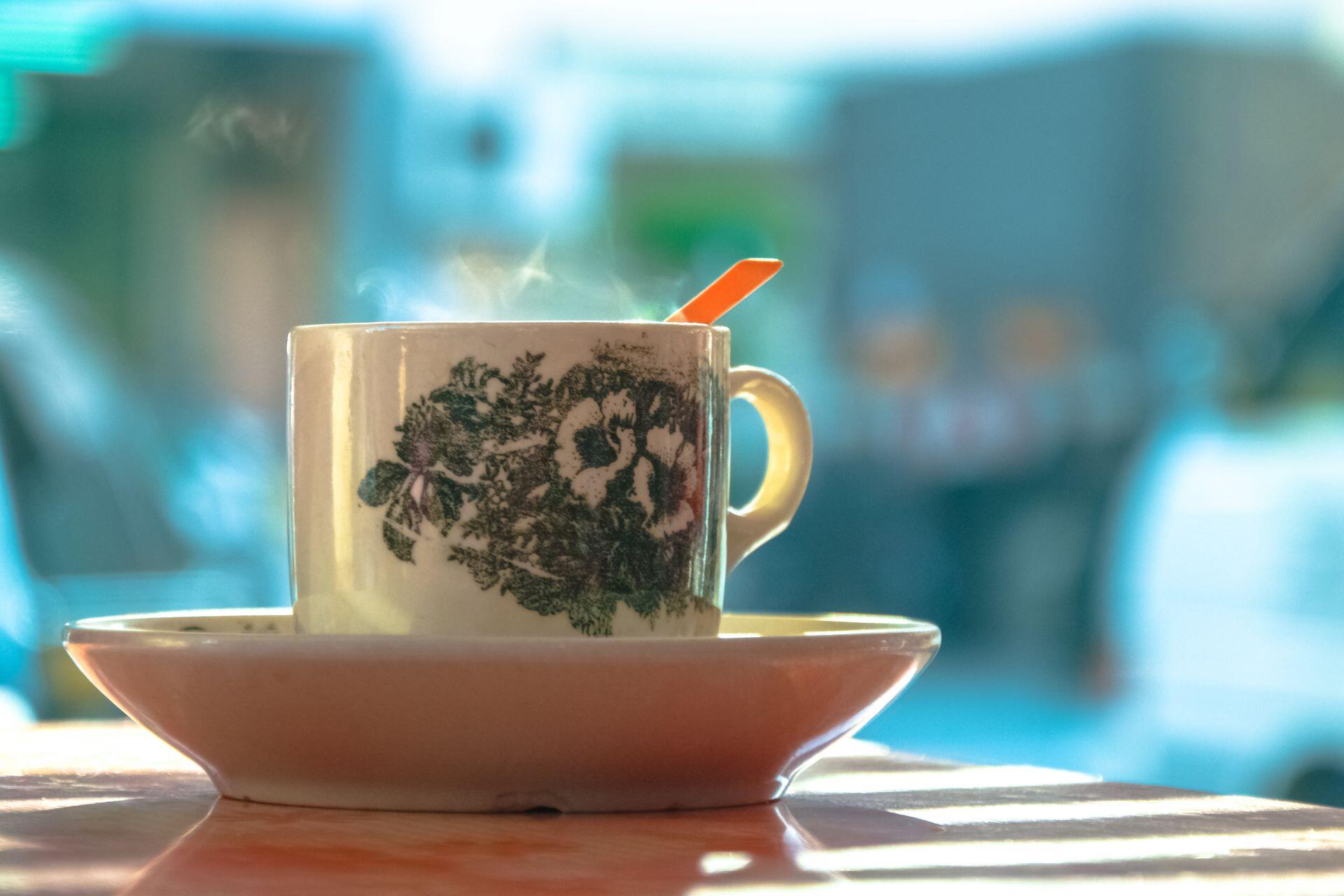
For many residents, kopitiams are not only places to eat but also places to socialise and an important part of public life.
Kaya toast has been a popular kopitiam staple since the early 20th century. For many customers, the morning routine could be as simple as a cup of kopi, some toast and eggs, perhaps while reading the newspaper or meeting friends and family.
Today, this morning meal is enjoyed by everyone from working adults and retirees to younger customers.
The same coffee shops can also serve other familiar dishes, from noodles to rice meals, with a bowl of laksa being another popular example of the city’s diverse everyday dining culture
Although this dish is strongly associated with breakfast, eateries may serve it beyond morning hours, making it an easy snack whenever you are in the mood for something rich, satisfying and filling.
A key component of the Nanyang breakfast is the kaya toast.
National Heritage Board, MUSE SG
👩🏻🍳How to Prepare Singapore-Style Kaya Toast at Home
Preparing it at home is fairly simple if you use store-bought kaya. If you want to prepare your own kaya, there are plenty of guides online with shorter cooking times.
For an easy homemade version, here’s all you need:
Ingredients
- 2 pieces of bread of your choice, with the crusts removed
- Kaya, either store-bought or homemade kaya
- 2–4 thin slices of cold salted butter
- 2 eggs
- Dark soy sauce
- White pepper
How to Toast the Bread
- Heat a grill pan, frying pan or toaster.
- Toast the bread until it is golden brown or slightly darker.
- Fill a generous but even layer of kaya over two slices.
- Add thin slices of butter to each.
- Place one slice on top of the other.
- Slice the assembled pieces into halves or triangles and serve immediately.
How to Cook Singapore Soft-Boiled Eggs
The soft-boiled eggs should have whites that are gently firm while the yolks remain runny.
For a simple home method:
- Add enough water to a pot to fully cover them.
- Bring the water to a rapid boil, then turn off the heat.
- Gently lower the eggs into the hot water.
- Cover the pot and let them steep.
- Start with 6–8 minutes, then adjust the timing based on your results.
- Remove the eggs and serve immediately.
- Crack them into a small saucer and season with dark soy sauce and white pepper.
☕Enjoy a Singapore Kaya Toast Breakfast at Home
Singapore kaya toast is a nostalgic morning meal that some miss when living abroad.
Sometimes, we do not appreciate familiar dishes until we no longer have easy access to them. The good news is that it is simple to recreate at home.
Store-bought kaya helps you put together a quick brekkie with eggs and kopi. Now you can even get the instant coffee mixes to recreate the vibe at home.
Whether you enjoy it while dining out or prepare it in your own kitchen, this simple meal shows how a few everyday ingredients can become a memorable part of local food culture. It is one of the many familiar dishes, from everyday morning meals to famous satay stalls, that give the city its distinctive culinary identity.
References
- MUSE SG TEAM, & See-Toh Kam Hung, B. (2021). THE INTANGIBLE CULTURAL HERITAGE ISSUE NO. 42 VOLUME 13 ISSUE 02. In Norsaleen Salleh, Tan Jeng Woon, & Royston Lin (Eds.), MUSE SG (Vols. 13–13, Issue 02, pp. 1–77) [Journal-article]. https://www.roots.gov.sg/-/media/Roots/Files/muse/Muse-MagazineVol132Highrescompressed.pdf
- National Library Board. (n.d.). Kaya. Singapore Infopedia. https://www.nlb.gov.sg/main/article-detail?cmsuuid=a7415fd3-676c-4555-a5ba-33149993de95
- Yeo, R. (2024, March 13). #trending: “Singapore’s kaya toast” in world’s top 50 sandwiches list, Malaysians say it was “stolen” from them. CNA. https://www.channelnewsasia.com/singapore/singapore-kaya-toast-world-tastiest-sandwiches-5589291
- MICHELIN Guide. (n.d.). Singaporean breakfast: Kopitiam, kaya toast and eggs. https://guide.michelin.com/my/en/article/features/singaporean-breakfast-kopitiam-kaya-toast-eggs
Summarise with AI:
Did you like this article? Leave a rating!

 Loading...