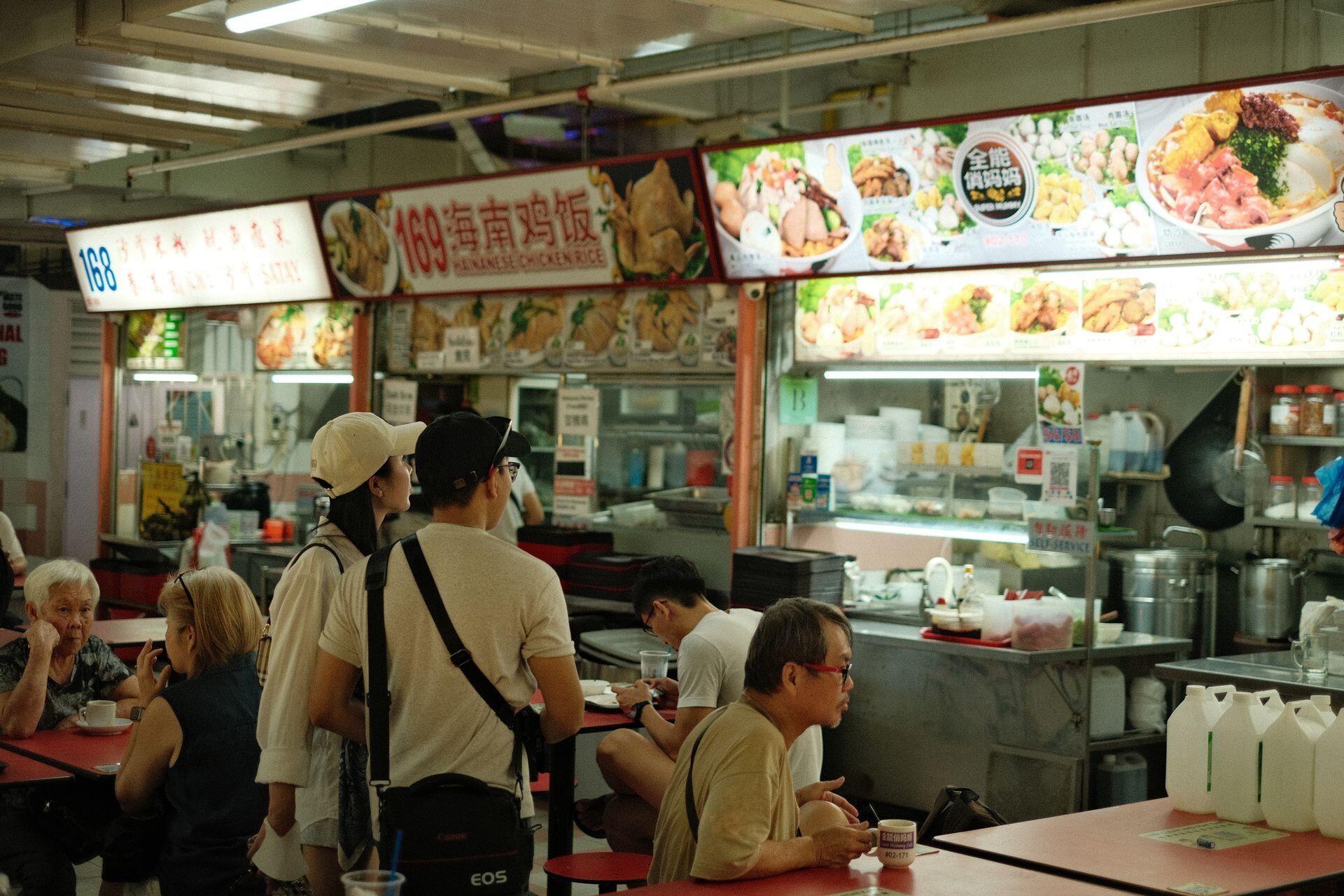

Singapore hawker food is one of the easiest ways to understand the country’s rich culinary diversity. Walk into a hawker centre, and you will find Chinese, Indian, Malay and Peranakan dishes.
Each stall has its own specialities, recipes and cooking methods, many of which have been passed down through generations.
Hawker food is more than affordable and convenient dining. Hawker centres are part of everyday life in Singapore, where people stop for breakfast before work, grab a quick lunch, meet friends over dinner or pick up a favourite chicken rice from a familiar stall.
Hawker centres are communal spaces bringing together Chinese, Malay, Indian, Peranakan and other culinary traditions, reflecting the migration, trade and cultural exchange that have shaped Singapore’s food over time.
In this guide, you’ll discover what to eat, where to go and how to order, while learning how to experience Singapore’s hawker food culture with curiosity, appreciation and respect.
| Question | Quick Answer |
|---|---|
| What is Singapore hawker food? | Everyday food prepared by specialist stalls in communal hawker centres, reflecting Singapore’s multicultural culinary traditions. |
| What influences Singapore hawker food? | Chinese, Malay, Indian and Peranakan culinary traditions have all contributed to Singapore’s diverse hawker cuisine. |
| Why is hawker culture important in Singapore? | Hawker centres are shared community spaces where people from different backgrounds come together, while specialist stalls preserve culinary knowledge and traditions. |
| Is hawker culture in Singapore recognised by UNESCO? | Yes. Hawker Culture in Singapore was inscribed on UNESCO’s Representative List of the Intangible Cultural Heritage of Humanity in 2020. |
| What is the first hawker centre in Singapore? | Newton Food Centre, opened in 1971, is commonly identified by Singapore’s National Heritage Board as the first hawker centre built without an attached wet market. |
| Which Singapore hawker dishes should visitors try? | Start with chicken rice, laksa, char kway teow, satay, roti prata, kaya toast, nasi lemak, bak chor mee, chwee kueh, chai tow kway and many more. |
| Where can I find hawker food in Singapore? | Popular choices include Maxwell Food Centre, Old Airport Road Food Centre, Tiong Bahru Market, Lau Pa Sat, Newton Food Centre, Tekka Centre and Chomp Chomp. |




🍜What Is Singapore Hawker Food?
The word “hawker” historically refers to a peddler or itinerant seller1 who moves from place to place offering goods. In Singapore, the term became closely associated with street food vendors who sold affordable meals to the growing population.
As Singapore developed into a busy trading port, waves of immigrants from China, India, the Malay Archipelago and elsewhere came looking for work2. They included coolies, labourers, and merchants who brought familiar food traditions with them.
Street hawking became an immediate survival trade for these immigrants because it required relatively little capital to start. A vendor could work with basic equipment such as a bamboo pole and baskets, a portable stove, and basic ingredients.
Hawker food also grew in response to everyday needs. Street hawkers provided filling, inexpensive meals for workers and other residents who needed food that was affordable, convenient, and accessible.
Dishes such as chicken rice, char kway teow, roti prata and laksa were adapted over time using local ingredients, cooking methods and tastes, eventually developing into the versions associated with Singapore today.
Hawker Food Singapore: More Than Street Food
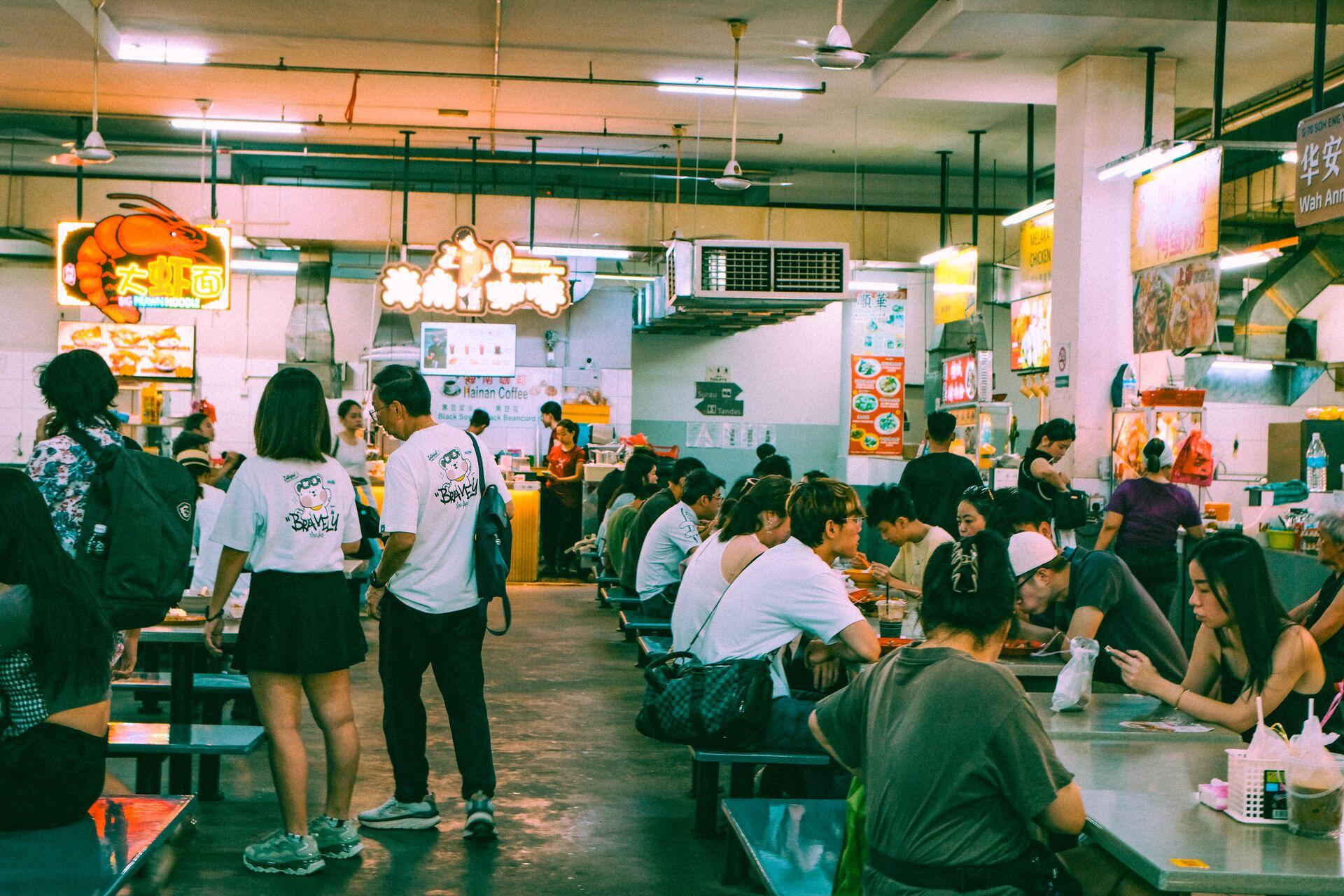
Although hawker food has roots in Singapore’s street-vending tradition, it is now closely associated with dedicated hawker centres and other communal dining spaces.
A meal may be cooked to order and carried to a shared table, where diners can eat food from different stalls in the same space.
Singapore’s hawker centres are also different from other popular eating places such as food courts and kopitiams.
- Hawker centres: Purpose-built public food centres developed as part of the government’s efforts from the 1960s onwards to resettle street hawkers into more organised facilities3.
- Food courts: Typically found in shopping malls, office buildings and transport hubs. These enclosed, often air-conditioned spaces bring multiple food vendors together around a shared dining area.
- Kopitiams: Traditional coffeeshops whose name combines kopi, the Malay word for coffee, and tiam, the Hokkien word for shop. They are commonly associated with local coffee, tea and simple meals such as kaya toast and eggs4.
The Flavours Behind Singapore’s Hawker Cuisine
The flavours of Singapore hawker food reflect the nation’s multicultural history. Chinese, Malay, Indian, and Peranakan culinary traditions have all contributed dishes, ingredients and cooking techniques to the food served at hawker centres today.
Hokkien, Teochew, Cantonese, and Hainanese culinary traditions are all part of Singapore’s Chinese food heritage. Their influence can be seen in dishes such as chicken rice, noodle dishes, dumplings, and stir-fried rice and noodles.
Malay cuisine in Singapore draws from the wider Malay world, including strong influences from Sumatra and Java. Rice, sambal, coconut milk, tamarind, tomato, chilli, and aromatic spices feature in many dishes, contributing to their spicy, aromatic, and rich flavours.
Singapore’s Indian food heritage includes South and North Indian, Tamil Muslim, and other regional traditions. Spices and herbs play a key role in Indian cuisine, with ingredients such as cumin, star anise, nutmeg, fennel, cardamom, and cinnamon used in different combinations.
Peranakan cuisine combines Chinese (particularly Hokkien but also Hainanese), Malay, Indian, Thai, Portuguese, Dutch, and English influences. Its food is often aromatic and spicy, with ingredients such as belacan (dried fermented shrimp paste), daun limau purut (kaffir lime leaf), herbs, and spices playing an important role.
The result is a hawker food tradition where different culinary influences meet, creating dishes with bold, layered flavours that have evolved into the Singaporean dishes and flavours enjoyed today5-8.
🏛️Singapore Hawker Culture and UNESCO Recognition
What Makes Hawker Culture in Singapore Unique?
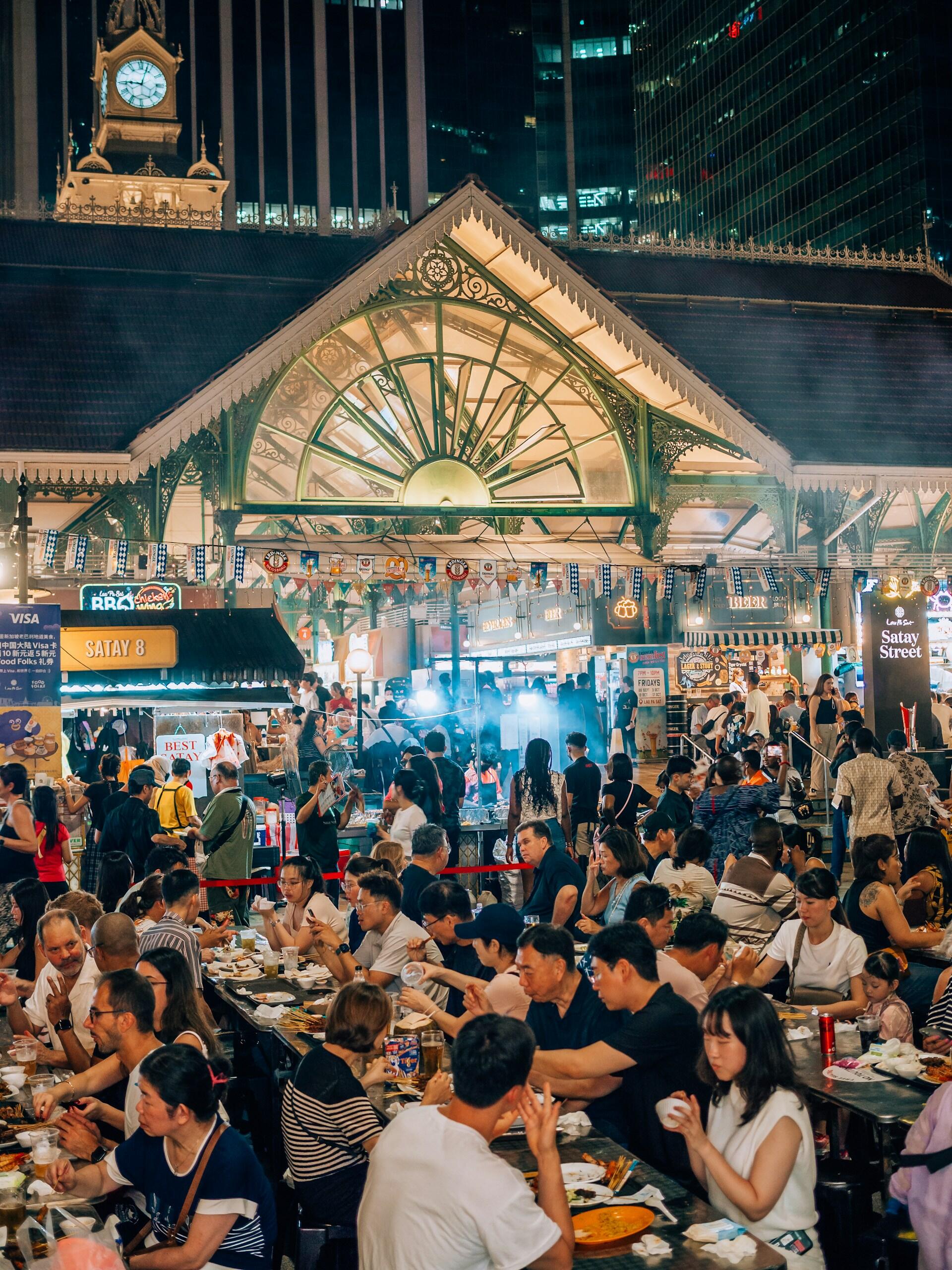
Singapore’s hawker culture is about more than the food itself. Hawker centres function as communal dining spaces where people of different ages, backgrounds, and walks of life gather to eat, interact and share everyday experiences.
They are also known for offering affordable meals, making hawker centres an important part of everyday dining in Singapore.
The atmosphere can include multilingual conversations, the sounds of cooking and the movement of people queuing for their favourite stalls.
The culture also depends on knowledge passed between generations. Hawkers develop specialised skills and recipes over years, with some passing their techniques and signature dishes to younger generations and other hawkers.
Many regular customers know their hawkers well, creating a familiar and friendly community.
UNESCO Hawker Culture: Why It Matters
In 2020, Hawker Culture in Singapore was inscribed on UNESCO’s Representative List of the Intangible Cultural Heritage of Humanity9. It recognises hawker culture as a living tradition that includes food preparation, knowledge and skills, as well as the social practices surrounding hawker centres.
Singapore Hawker Heritage: From Street Vendors to Hawker Centres
Singapore’s hawker heritage began with itinerant and street hawkers who sold meals from mobile carts and roadside stalls10.
1800s
Street Hawkers Emerge
Street hawking became common in Singapore in the 1800s, with vendors selling familiar foods from mobile kitchens and roadside stalls.
Post-World War II to the 1960s
The Need for Regulation
Hawking expanded rapidly as more people turned to it for a livelihood after World War II. However, it also created challenges related to sanitation, waste disposal, traffic, and public health. The government began regulating hawkers and looking for ways to move them off the streets and into more organised spaces.
Late 1960s to 1980s
From Streets to Hawker Centres
After Singapore gained independence in 1965, the relocation of street hawkers accelerated. The government registered and gradually relocated street hawkers to markets and hawker centres with proper amenities such as water, sanitation and other basic facilities.
1980s to Present
Hawker Centres Become a Way of Life
As hawker centres spread across Singapore, they became everyday community spaces where people from different backgrounds could eat and socialise over local food.
2000s Onwards
Preserving Hawker Culture for the Future
Hawker centres have continued to evolve with upgraded facilities while retaining their open, communal feel.
🤩Singapore Hawker Food List: 20 Dishes to Try
From rice and noodle dishes to grilled favourites and sweet treats, Singapore hawker centres offer a wide range of flavours. Noodle lovers should not miss laksa, one of Singapore’s most iconic hawker dishes.
Here are 10 popular dishes to look out for.
| Dish | What it is? |
|---|---|
| Hainanese Chicken Rice | Poached or roasted chicken served with fragrant rice, chilli sauce and ginger. |
| Laksa | Rice noodles in a rich, spicy coconut-based broth, usually with seafood and fish cake. |
| Char Kway Teow | Flat rice noodles stir-fried with egg, bean sprouts, chives and other ingredients. |
| Hokkien Mee | Yellow noodles and rice vermicelli fried with seafood in a rich stock, usually served with sambal and lime. |
| Nasi Lemak | Coconut rice served with sambal, egg, anchovies and peanuts, with sides such as fried chicken or fish. |
| Nasi Padang | Rice served with a selection of Malay and Indonesian-style dishes such as curries, vegetables and meats. |
| Satay | Marinated meat grilled on skewers and served with peanut sauce, ketupat, cucumber and onion. |
| Roti Prata | Flaky Indian flatbread served with curry, with savoury and sweet variations available. |
| Carrot Cake (Chai Tow Kway) | Fried savoury radish cake cooked with egg and seasonings; available in white or black versions. |
| Cendol | A cold dessert made with coconut milk, palm sugar, shaved ice and green rice-flour jelly. |
| Fishball Noodles | Springy noodles served with fishballs, fishcake slices. It comes dry or soup with savory condiments. |
| Mee Soto | Noodles served in an aromatic, turmeric-spiced chicken broth, often topped with shredded chicken and other garnishes. |
| Mee Rebus | Yellow noodles served in a thick, mildly sweet and spiced gravy, often topped with egg and other garnishes. |
| Bak Chor Mee | Minced pork noodles commonly served dry with vinegar, chilli and pork lard, with soup on the side. |
| Duck Rice | Braised duck served with rice and a savoury braising sauce, sometimes accompanied by other braised items. |
| Teochew Porridge | Plain rice porridge served with a selection of braised, steamed, pickled and fried side dishes. |
| Sambal Stingray | Grilled stingray topped with spicy sambal and often served on a banana leaf with calamansi. |
| BBQ Seafood | Grilled seafood such as sambal squid, prawns and shellfish, often served with spicy sauces. |
| Kaya Toast with Soft-Boiled Eggs | Crisp toast spread with coconut-and-egg kaya and butter, traditionally served with soft-boiled eggs seasoned with soy sauce and pepper. |
| Ice Kacang | A shaved-ice dessert topped with colourful syrups, sweet toppings and ingredients such as red beans and sweet corn. |
If you have dietary restrictions, check the ingredients and ask the stall if they can accommodate your requirements.
Traditional Peranakan dishes can be labour-intensive to prepare, so they may be less commonly found at hawker centres than more widely available dishes. Dedicated Peranakan restaurants and food stalls can offer a broader selection.
You may also come across Michelin-recognised hawker stalls and dishes among Singapore’s food scene. These awards highlight the quality and craftsmanship found at some humble hawker stalls, showing that exceptional food does not always come with a high price tag.
Despite its misleading name, Singapore’s carrot cake, known locally as Chai Tow Kway, contains absolutely no orange carrots. It is actually made from savoury radish cake, which is fried with egg and seasonings.
👍🏻Best Hawker Centres in Singapore for First-Time Visitors
Singapore has more than 110 hawker centres, so you do not need to worry about not finding one nearby. For a first trip, choose centres based on location, food variety and the kind of experience you want.
| Hawker centre | Best for | Ideal dishes | Transport |
|---|---|---|---|
| Maxwell Food Centre | Hainanese, Hokkien, and Cantonese cuisine | Chicken rice, bak chor mee, fish head bee hoon | Near Maxwell MRT |
| Old Airport Road Food Centre | Wide variety of local dishes | Noodles, satay, rice dishes | Near Dakota MRT |
| Tiong Bahru Market | Breakfast and traditional local food | Chwee kueh, wanton noodles, local breakfast | Near Tiong Bahru MRT |
| Lau Pa Sat | Late-night dining and atmosphere | Satay, seafood, local drinks | Near Downtown MRT |
| Newton Food Centre | Seafood and late-night supper | Sambal stingray, black pepper crab, oyster omelette | Near Newton MRT |
| Tekka Centre | Indian and Indian-Muslim cuisine | Roti prata, biryani, vegetarian dishes | Near Little India MRT |
| Chomp Chomp Food Centre | Evening dining with friends and family | Satay, BBQ seafood, sugar cane juice | In Serangoon Gardens; bus or taxi recommended |
Tip: Hawker stall opening hours, rest days and closures can change, so check before making a special trip.
First Hawker Centre In Singapore
Yung Sheng Food Centre was built in 1971 as one of the earliest dedicated food centres built by the government to house resettled roadside hawkers.
Newton Hawker Centre was built without an attached wet market. It was designed with the idea of having “hawker stalls in a garden setting” with shady trees and other landscaping features alongside its own parking facilities.
Seen Crazy Rich Asians? The hawker centre featured in the film is Newton Food Centre, where Rachel and Nick head for a late-night feast shortly after arriving in Singapore. It’s now one of the city’s most recognisable hawker stops for movie fans.
😃Make Your Hawker Visit Count
Start with chicken rice, laksa, char kway teow, satay favourites and kaya toast, but leave room for discovery. Check prices before ordering, and ask for the total if it is unclear.
Remember that long queues and social media popularity do not automatically mean a dish is better or more authentic. If possible, visit with friends or family so you can share more dishes without ordering more than you can eat.
What you do in Singapore is eat. It's a really food-crazy culture, where all of this great food is available in a kind of hawker-stand environment.
Anthony Bourdain, American celebrity chef who featured Singapore in his TV show Parts Unknown.
References
- Hawkers during the colonial period. (n.d.). https://curiocity.nlb.gov.sg/digital-stories/our-hawkers-through-time/hawkers-during-colonial-period/
- The History and Evolution of Singapore’s Hawker Culture. (n.d.). ROOTS, National Heritage Board. https://www.roots.gov.sg/stories-landing/stories/Serving-Up-a-Legacy#From-hawker-plates-to-global-palates
- Up to $1 billion to upgrade hawker centres and build five new hawker centres. (n.d.). https://www.nea.gov.sg/media/news/news/index/up-to--1-billion-to-upgrade-hawker-centres-and-build-five-new-hawker-centres
- Lim, L., & Lim, L. (2024, May 10). Reflections | How Singapore and Malaysia’s coffee names reveal the region’s history of multiculturalism. South China Morning Post. https://www.scmp.com/magazines/post-magazine/article/3262052/how-singapore-and-malaysias-coffee-names-reveal-regions-history-multiculturalism
- Chinese Cuisine in Singapore. (n.d.). ROOTS, National Heritage Board. https://www.roots.gov.sg/ich-landing/ich/chinese-cuisine-in-singapore
- Malay Cuisine in Singapore. (n.d.). ROOTS, National Heritage Board. https://www.roots.gov.sg/ich-landing/ich/malay-cuisine-in-singapore
- Indian Cuisine in Singapore. (n.d.). ROOTS, National Heritage Board. https://www.roots.gov.sg/ich-landing/ich/indian-cuisine-in-singapore
- Peranakan Cuisine in Singapore. (n.d.). ROOTS, National Heritage Board. https://www.roots.gov.sg/ich-landing/ich/peranakan-cuisine-in-singapore
- Hawker culture in Singapore, community dining and culinary practices in a multicultural urban context - UNESCO Intangible Cultural Heritage. (n.d.). https://ich.unesco.org/en/RL/hawker-culture-in-singapore-community-dining-and-culinary-practices-in-a-multicultural-urban-context-01568
- Hawkers during the colonial period. (n.d.-b). https://curiocity.nlb.gov.sg/digital-stories/our-hawkers-through-time/hawkers-during-colonial-period/
Summarise with AI:
Did you like this article? Leave a rating!

 Loading...