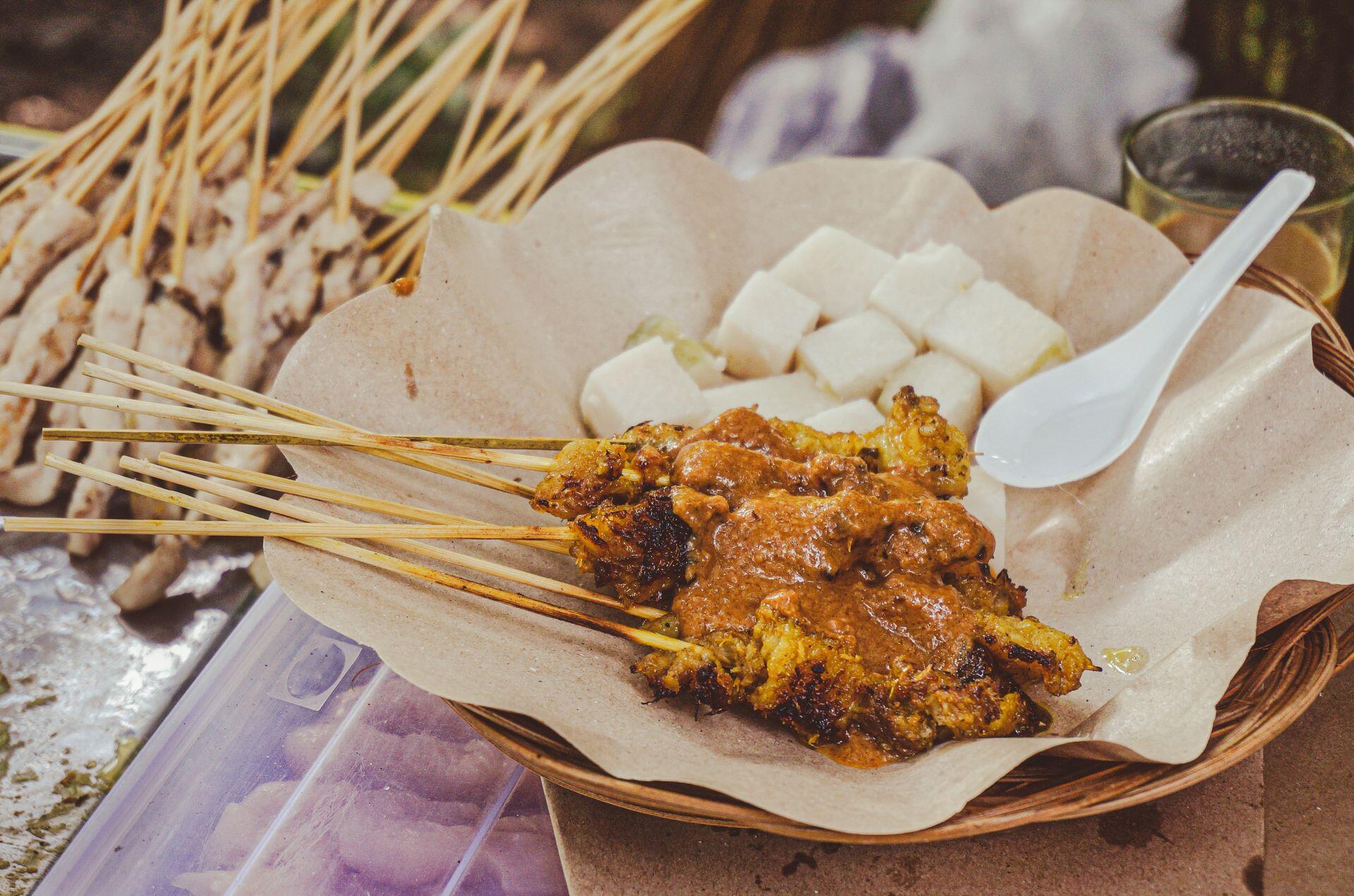

Singapore satay is the kind of food you can smell before you see it. The smoky aroma of sizzling meat over hot charcoal, mixed with the sweet and savoury scent of peanut sauce, is enough to draw people to the stall.
Accompanied by ketupat, crunchy cucumber and onions, this skewered meat is a familiar sight at hawker centres and food spots across the island.
Singapore satay has its roots in the wider food traditions of Southeast Asia, particularly Indonesia, but Singapore has developed its own satay culture and serving traditions.
In this guide, we will look at what satay is, its history and origins, what makes the Singapore version special, how the sauce is made, where to find famous satay in Singapore, and tips for enjoying it.
| Question | Quick Answer |
|---|---|
| What is Singapore satay? | Singapore satay is seasoned meat threaded onto bamboo skewers and traditionally grilled over charcoal. It is usually served with peanut sauce, ketupat, cucumber and raw onion. |
| What does Singapore satay taste like? | It is typically smoky, savoury and slightly sweet, with tender grilled meat, aromatic spices and rich peanut sauce adding a nutty, sweet and sometimes spicy flavour. |
| What meat is used for Singapore satay? | Common choices include chicken, mutton and beef, while pork is generally found at non-halal stalls. Some vendors may also offer tripe or other specialty cuts. |
| Where can I find famous satay in Singapore? | Popular places include Lau Pa Sat's Satay Street, Satay by the Bay and various neighbourhood hawker stalls. This guide covers notable options across Singapore. |
| Where did satay originate? | The satay origin is closely associated with Java, Indonesia. The dish is widely believed to have been influenced by kebab traditions before spreading across the Malay Archipelago and developing regional variations. |




🍢What Is Satay in Singapore?
Singapore satay is seasoned, skewered meat grilled over glowing charcoal until the outside is lightly charred and the meat is cooked through. The marinade gives the meat a sweet, savoury, and lightly spiced flavour, while the charcoal adds the smoky aroma that makes satay so tempting.
If you’re wondering what satay is in Singapore, think of it as a simple but flavourful grilled meat dish that is usually eaten with a zesty peanut sauce.
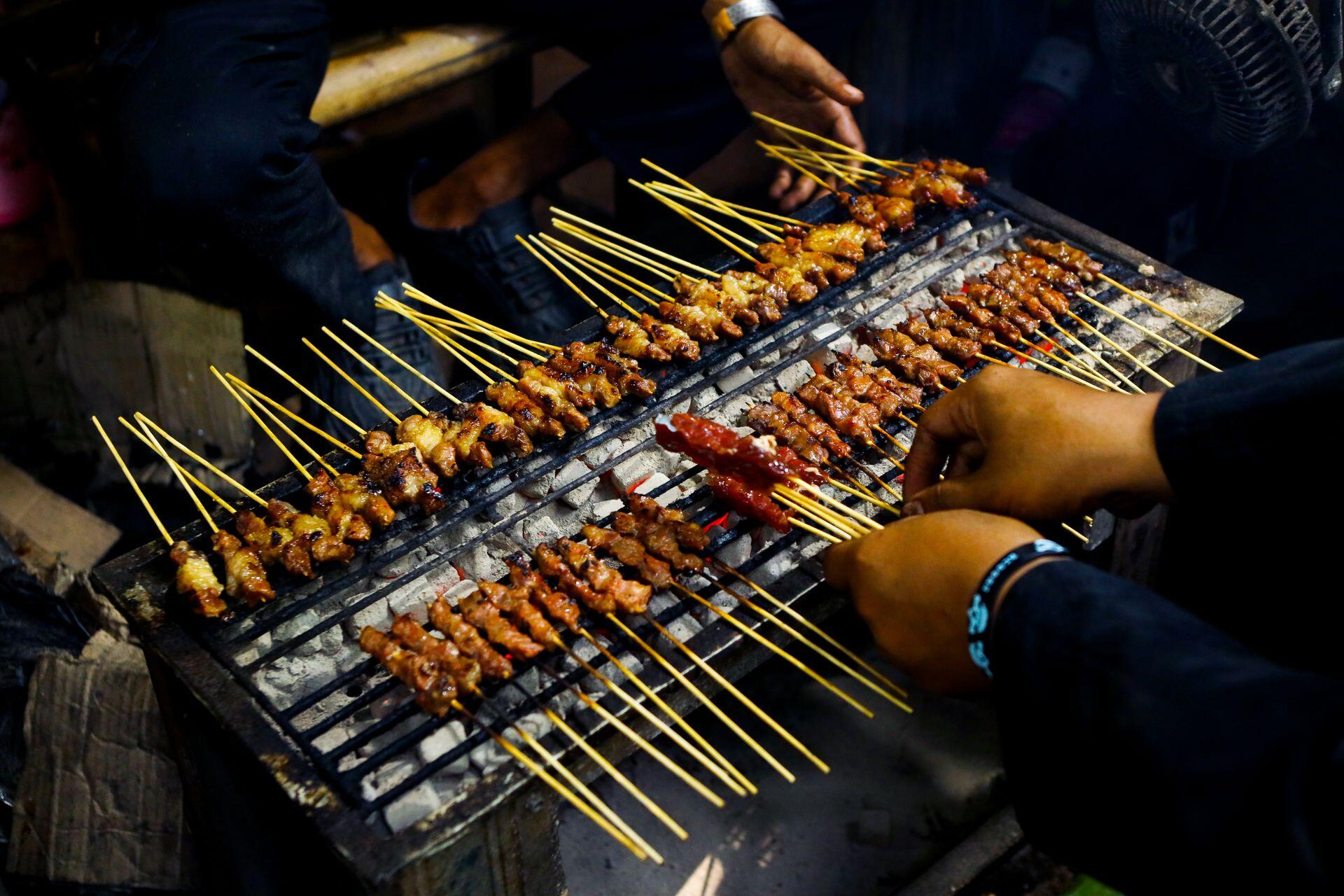
The marinade
The meat is infused with a fragrant blend of Southeast Asian aromatics, such as lemongrass, onion, garlic, ginger, ground cumin, ground coriander, sugar, salt, turmeric, peanut butter or oil. The turmeric gives the skewers their signature vibrant yellowish-orange hue.
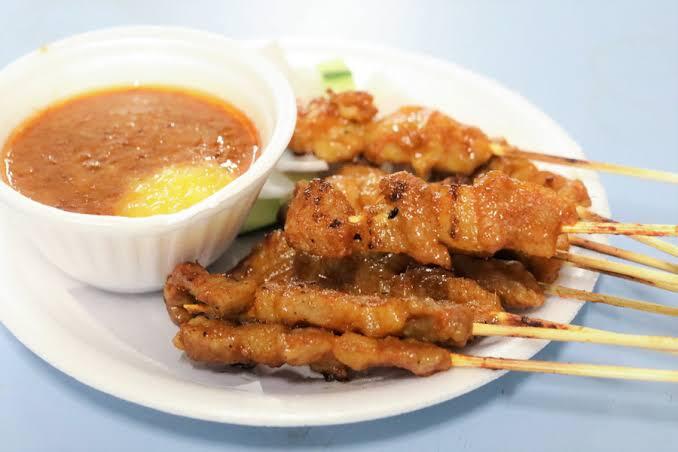
Singapore Satay sauce (Kuah kacang)
It is a dipping sauce that is sweet, savoury, and contains peanut chunks. All you need is peanuts (toasted & peeled), sambal or chilli, onions, shallots, garlic, ginger, galangal (blue ginger), lemongrass, dried shrimps, coconut milk or cream, palm sugar, tamarind paste, water, vegetable oil, salt and dark sweet soy sauce.
The sauce may end up being chunky or smooth.
A signature Singaporean twist, pioneered largely by Hainanese hawkers, is the addition of a dollop of fresh pineapple purée right into the centre of the warm peanut sauce.
Accompaniments
Satay is traditionally served with ketupat (compressed rice cakes wrapped in woven leaves), alongside diced cucumbers and onions to cool down and balance the heat. Like other dishes shaped by Southeast Asian food traditions, such as Singapore’s iconic noodle dish, satay brings together bold spices, aromatics and contrasting flavours.
Traditionally, satay is cooked over a charcoal grill, giving the meat its distinctive smoky aroma and lightly charred edges. Hawkers place the skewers across a narrow satay grill or grill box, and they turn them as they cook.
They may also brush the meat with oil while grilling and use a small hand-held woven fan to keep the charcoal glowing and control the heat.
This simple cooking method is part of what makes satay so unique and appealing.
The clouds of smoke are often enough to tell you that satay is being grilled nearby, even before you spot the skewers.
Common Types of Singapore Satay
| Type of satay | Typical flavour profile | Notes for diners |
|---|---|---|
| Chicken satay | Mild, sweet-savoury and smoky | Tender and approachable; a good first choice |
| Mutton satay | Rich, savoury and aromatic | Stronger flavour and more distinctive than chicken |
| Beef satay | Meaty, savoury and smoky | Firmer texture with a deeper flavour |
| Pork satay | Sweet, savoury and caramelised | Juicy and often slightly fatty; usually found at non-halal stalls |
| Tripe or specialty cuts | Rich, chewy and distinctive | Best for diners who enjoy offal and less common cuts |
🍡Famous Satay in Singapore: Where to Eat It
There is no single answer to where you will find the best satay in Singapore. Your ideal stall depends on what you are looking for.
You may want halal chicken satay, a particular type of meat, smoky charcoal grilling, a sweeter or more savoury satay sauce, or simply somewhere convenient after a day of sightseeing or work.
It is also worth remembering that prices, opening hours, and menus can change. Check the stall's latest information before making a special trip.
Best Satay Areas and Hawker Destinations in Singapore
1. Satay by the Bay, Gardens by the Bay
If you’re in Gardens by the Bay, Satay by the Bay is one of the easiest places to enjoy some scrumptious sticks of Singapore satay. The open-air food centre sits along the waterfront promenade, giving diners views of the Marina Reservoir while they eat.
The venue features around 25 standard food stalls, and there are dedicated satay stalls offering different styles of grilled meats.
2. Lau Pa Sat
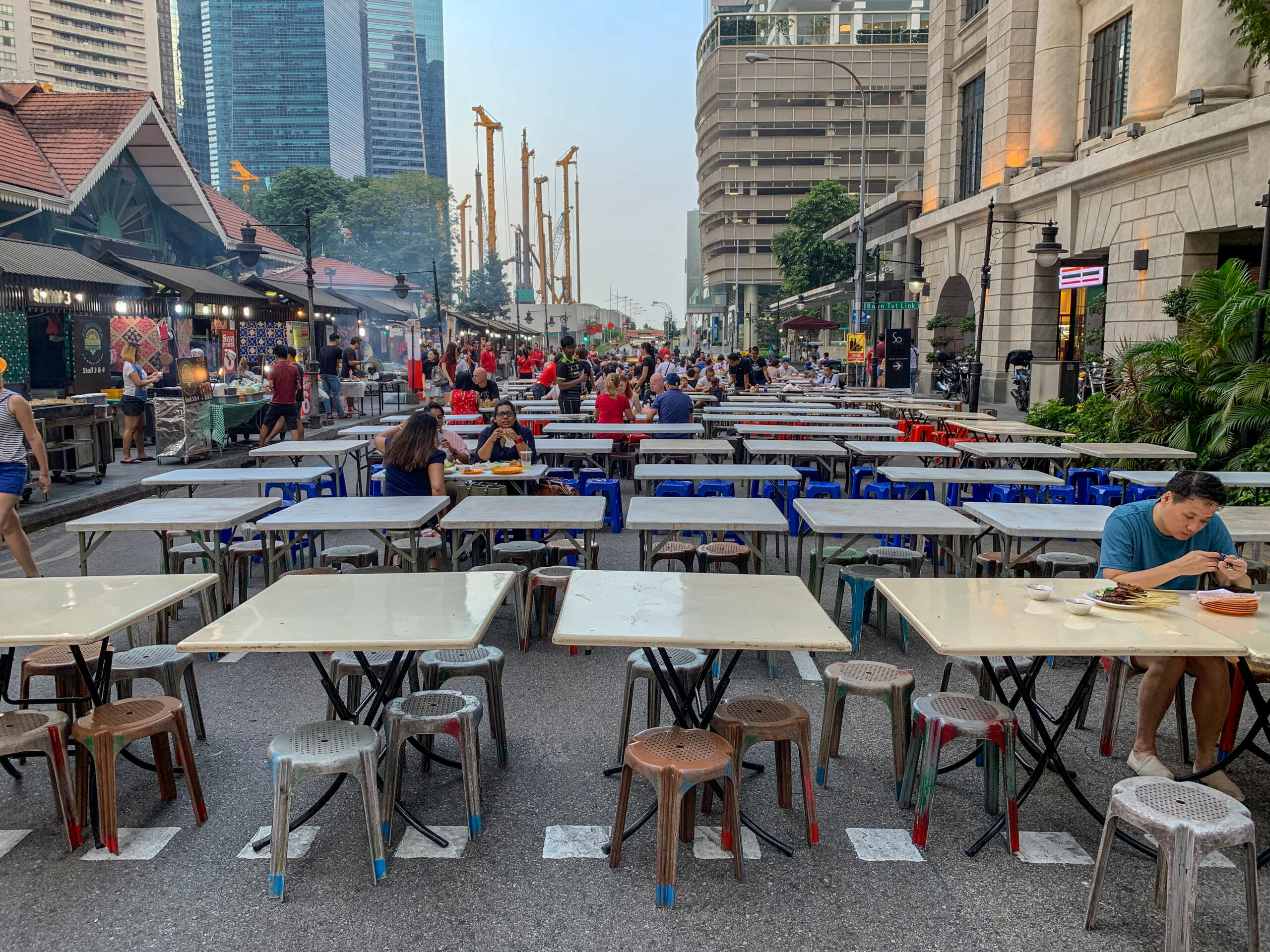
This is one of the best-known places in Singapore to enjoy traditional charcoal-grilled street food on the road while admiring the surrounding towering skyscrapers of the Central Business District4.
If you want the classic street food atmosphere, Lau Pa Sat's Satay Street is probably the most recognisable choice.
In the evening, Boon Tat Street is closed to traffic, and the satay carts set up outside Lau Pa Sat, turning the road into an open-air dining area filled with charcoal smoke and the smell of grilled meat.
In 2007, Lau Pa Sat made the world's longest satay, measuring 140.02 metres and using 150 kg of chicken. The record was recognised by the Guinness Book of Records, adding another memorable chapter to Singapore's long association with satay.
Notable Satay Stalls to Try
The following table focuses on stalls and venues that have current or recent evidence of operating. Prices are approximate because satay prices can change, and many stalls sell by the stick with minimum-order requirements.
| Stall / Venue | Area | Nearest MRT | Meat options | Signature / Key Feature | Typical price range/ stick |
|---|---|---|---|---|---|
| Chai Ho Satay | Clementi 448 Market & Food Centre | Clementi | Chicken, pork | Known for ultra-affordable prices & crispy pork satay | ~S$0.65–0.75 |
| Chomp Chomp Satay / Traditional Hai Nam Fang Yuan | Chomp Chomp Food Centre | Lorong Chuan | Chicken, pork, beef, mutton | Hainanese-style peanut sauce infused with grated pineapple | ~S$0.80–0.90 |
| Haron Satay 55 (halal) | East Coast Lagoon Food Village | Marine Parade | Chicken, mutton, beef | Famous Malay-style satay with rich, fragrant marinade | ~S$1.00 |
| Zaiton Satay (halal) | Adam Road Food Centre | Botanic Gardens | Chicken, mutton, beef | Tender mutton & classic spiced Malay-style peanut sauce | ~S$0.70–0.80 |
| 168 CMY Satay | Chinatown Complex | Chinatown | Chicken, pork, mutton | Pork satay with a generous layer of charred fat | ~S$0.70 |
| Kwong Satay | Geylang | Aljunied | Chicken, pork, mutton, pork belly | Signature Pork Belly Satay & Hainanese pineapple sauce | ~S$0.50–1.00 |
| Old Punggol Satay | Alexandra Village Food Centre | Redhill/ Queenstown | Chicken, pork, beef | Heritage recipe with grilled pork belly satay | ~S$0.80–1.60 |
| Yong Seng Satay | Beauty World area | Beauty World | Chicken, pork, mutton | Hainanese-style with rich, pineapple-infused sauce | ~S$0.80–1 |
| Pang's Satay | Chinatown Complex | Chinatown | Chicken, pork, pork belly | Hand-cut pork belly satay grilled over charcoal | ~S$0.60–0.70 |
| Satay Club, Stalls 7 & 8 | Lau Pa Sat / Satay Street | Downtown / Telok Ayer | Chicken, beef, mutton and other options may vary | Iconic outdoor street dining & grilled duck satay | ~S$0.80–1.00 |
| City Satay | Satay by the Bay | Bayfront | Chicken, beef, mutton, pork | Waterfront dining near Gardens by the Bay | ~S$0.90–1.00 |
| The Neighbourwok | Bukit Batok | Bukit Batok | Chicken, pork, mutton | Modern heartland stall known for charcoal-grilled satay | ~S$1.00–1.10 |
| Chuan Kee Satay | Old Airport Road Food Centre | Dakota | Chicken, Pork | Michelin Bib Gourmand; Hainanese-style pineapple peanut sauce | ~S$0.80–0.90 |
| Opah Satay (halal) | Bedok / Various Outlets | Bedok | Chicken, Mutton, Beef | Heritage Halal satay recipe with thick, well-marinated meats | ~S$0.90–1.00 |
| Asli Village Satay (halal) | Ang Mo Kio | Ang Mo Kio | Chicken, Mutton, Beef | Traditional Malay-style satay with extra-chunky peanut sauce | ~S$0.90–1.00 |
Check before you travel: The prices mentioned in the table may not reflect the stall's current prices. Hawker stalls can change their opening days, operating hours, prices, menu items and locations. Smaller or popular satay stalls may also sell out early.
Minimum Orders: Most stalls require a minimum order starting from 10 sticks (or 5 sticks per meat type), with an average cost of S$7.00 to S$10.00 per order. Orders typically include peanut dipping sauce, cucumber slices, and onions. If you want to add ketupat, you just need to add it as an individual extra.
If you are dining solo or have a smaller appetite, consider bringing company to help finish!
📜Satay Origin and the History of Satay in Singapore
The satay origin is closely associated with Java, Indonesia. Satay, known as sate in Indonesian, is widely believed to have been influenced by kebab, a Middle Eastern dish that was brought to Southeast Asia through the movement of Indian and Arab Muslim traders1.
Local cooks adapted these ideas using regional ingredients, spices and cooking methods, helping satay develop into a distinctly Southeast Asian dish.
From Indonesia, satay spread across the Malay Archipelago as people, traders and food traditions moved between communities. This explains why you can find different versions of satay across Southeast Asia, from Indonesia and Malaysia to Singapore.
The type of meat, marinade, type of skewers, cooking method and peanut sauce can vary from one place to another. One of the key adaptations of the dish in Asia was the use of wooden skewers instead of metal ones.
Singapore's own satay culture developed within this wider regional food tradition. Satay was sold by itinerant hawkers (street hawkers), who travelled around with portable charcoal grills. Later on, these roaming vendors began setting up permanent roadside stalls.
This early street-food culture helped shape the hawker scene that Singapore is known for today, where dishes such as satay became part of the city’s wider hawker food culture.
By the early 20th century, satay was already a popular street food sold by itinerant vendors. A 1936 Singapore guidebook2, Willis’ Singapore Guide, described satay being sold by mobile vendors and included a chapter on the Satai (Satay) Club near Beach Road.
As Singapore developed, roadside hawking gradually gave way to more organised hawker centres and food markets. Satay, however, remained closely linked with outdoor grilling and communal dining.
From Java, it spread through the Malay Archipelago, with the consequence that numerous variations of the dish have been developed.
Uyung Al Wazir, executive chef at the Amanjiwo resort in central Java
From Street Hawkers to the Singapore Satay Club
The Singapore Satay Club was not a single restaurant like what we see today. It was an open-air food centre full of hawkers selling satay3.
The first satay club was said to have started in the late 1940s on Hoi How Road, a lane just off Beach Road. It was relocated to Dhoby Ghaut and Prinsep Street, and eventually moved to Esplanade for good, which became a core memory for many Singaporeans.
However, the Esplanade Satay Club eventually closed in 1995 when the area was redeveloped for the Esplanade – Theatres on the Bay complex and the Nicoll Highway extension.
The closure marked the end of an important chapter in Singapore's street-food history, but not the end of its satay culture. As hawkers moved into established food centres and newer dining areas, the tradition of gathering around a table and sharing satay continued in different forms.
Today, this tradition remains part of Singapore’s affordable hawker food scene, where satay continues to be enjoyed alongside many of the city’s other familiar local dishes.
🌍Singapore Satay vs Other Southeast Asian Satay Styles
Satay is a shared culinary tradition across Southeast Asia, but each country has developed its own distinct interpretation.
While the core idea remains the same marinated meat grilled on bamboo skewers and served with sauce- the differences emerge in flavour, ingredients, and dining culture.
The table below highlights the key distinctions between Singaporean, Indonesian, Malaysian, and Thai satay styles.
| Feature | Singapore Satay | Indonesian Satay | Malaysian Satay | Thai Satay |
|---|---|---|---|---|
| Marinade | Sweet-savoury with turmeric, lemongrass, galangal, and mild spices. (Hainanese styles often use pork fat for glaze) | Stronger spice profile, often with kecap manis (sweet soy sauce), garlic, and coriander | Heavy aromatic spice profile (fennel, cumin, galangal, lemongrass, turmeric) | Lighter marinade, often with coconut milk, turmeric, and curry powder |
| Meat Types | Chicken, beef, mutton, and sometimes tripe | Wide variety including goat, chicken, pork, beef, and offal | Chicken, beef, mutton, rabbit, deer, and offal/tripe | Mostly chicken or pork |
| Peanut Sauce | Thick, slightly sweet, and smooth with chilli; Hainanese stalls famously add a dollop of grated pineapple puree | Rich, darker, and sweet-savoury (Sate Madura); Sate Padang uses a spicy curry gravy (no peanuts) | Coarsely ground, chunky peanut sauce (kuah kacang) mixed with chilli paste | Rich, coconut milk-infused peanut sauce |
| Skewer Style | Short bamboo skewers, tightly packed meat | Varies widely, often longer skewers | Thicker, chunkier meat cuts on similar-length bamboo sticks to Singapore | Usually longer skewers with thinly sliced, flat-packed meat |
| Serving Style | With cucumber, onion, ketupat, and peanut sauce | Often served with rice cakes, lontong, or variations of rice cakes | Commonly paired with ketupat, cucumber, onion | Served with peanut sauce, Ajaad (cucumber-vinegar relish), and grilled toast |
The way satay is marinated and how the sauce is made changes from region to region, and even from stall to stall. Over time, each country adapted satay using its own local ingredients, culture, and eating habits.
The same kind of regional adaptation can be seen in other Southeast Asian dishes too. Hainanese chicken rice is another example, with different versions developing across the region.
No matter which style you try, every region offers its own delicious version of satay to enjoy!
🥦Vegetarian Satay Spot
Looking for vegetarian satay spots? Luckily, there are a few that we managed to round up. If you’re a vegetarian travelling to Singapore or living there, try out these places for a good satay.
- Victor Veggie in Circuit Rd Food Centre
- Gopal's The Holy Basil (Satay by the Bay)
- Nature Café in SMU campus outlet/ Alexandra outlet
📝Tips for Eating Satay in Singapore
There is no complicated way to eat Singapore satay, but a few simple tips can make your meal more enjoyable, especially if it is your first time trying it.
Satay is best enjoyed soon after it comes off the charcoal grill. This is when the meat is at its most tender, and the smoky aroma is strongest.
Dip one piece lightly into the satay sauce before covering the whole skewer. This lets you taste the balance of sweetness, spice and nuttiness without overpowering the flavour of the meat.
The fresh, crunchy cucumber and raw onion help balance the richness of the grilled meat and peanut sauce. You can also eat them between skewers to refresh your palate.
Dip the meat, then the onion, then the ketupat, then the cucumber. Repeat the sequence.
Once you have finished, place used bamboo skewers where the hawker centre instructs you to put them.
🔥A Smoky Taste of Singapore
Singapore satay is more than just a dish. It is a living history of migration and cross-cultural evolution.
From carrying charcoal grills on their shoulders to selling grilled meat from permanent stalls, satay has come a long way. What started as a street food sold by travelling hawkers has become a much-loved part of Singapore's food culture.
Whether you visit a famous satay destination or discover a neighbourhood, satay is best enjoyed as part of Singapore's lively food culture. From smoky satay to a simple kaya toast breakfast, these everyday favourites offer a delicious taste of the city.
References
- Williams, V., & Williams, V. (2019, August 26). From goat testicles to chicken, why satay comes in so many forms across Southeast Asia. South China Morning Post. https://www.scmp.com/magazines/style/leisure/article/3024350/goat-testicles-chicken-why-satay-comes-so-many-forms-across
- Early Tourist Guidebooks: Willis’ Singapore Guide (1936). (n.d.). BiblioAsia. https://biblioasia.nlb.gov.sg/all-sections/vol-6-issue-3-oct-2010-singapore-willis-tourist-guide/
- Omar, Marsita (2022). Satay. Singapore Infopedia, National Library Board Singapore. https://www.nlb.gov.sg/main/article-detail?cmsuuid=6d5b6967-a680-4449-b3cc-91d03ab44dfd
- Laupasat. (2026, August 25). Satay Street @ Lau Pa Sat: Singapore’s Open-Air Satay Haven. https://www.laupasat.sg/sataystreet/
Summarise with AI:
Did you like this article? Leave a rating!

 Loading...