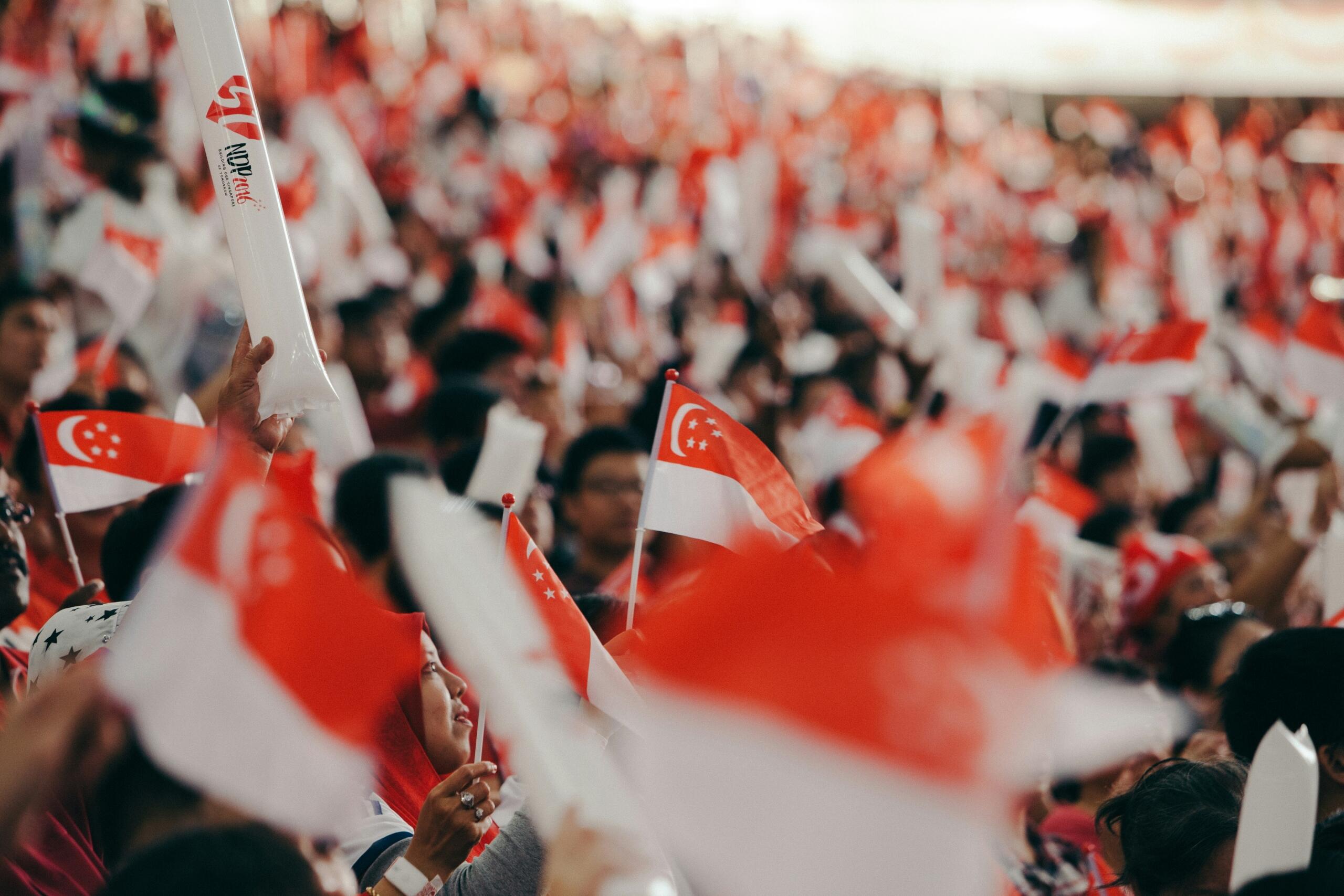

Singapore functions within a structured multi-party system, with about 20 registered main political parties in Singapore as of December 2025. However, the country has been ruled majorly by one political party--the People's Action Party (PAP) that has governed the nation-state of Singapore uninterrupted since 1959.
However, in recent years, opposition parties like the Workers’ Party. Progress Singapore Party (PSP) and Singapore Democratic Party (SDP) have managed to steadily expand their voter base.
Understanding the political dynamics in Singapore and how political parties in Singapore work is essential for grasping how governance works in the country.
Let's begin.
| Party Name | Abbreviation | Role | Description |
|---|---|---|---|
| People's Action Party | PAP | Ruling Party | Dominant party since 1959; emphasizes economic growth stability and strong governance; has governed Singapore continuously since independence |
| Workers' Party | WP | Main Opposition Party | Largest opposition party in Parliament; focuses on social safety nets accountability and a more balanced political system |
| Progress Singapore Party | PSP | Opposition Party | Founded by Tan Cheng Bock; advocates inclusive economic policies and stronger checks on government power |
| Singapore Democratic Party | SDP | Opposition Party | One of the oldest opposition parties; promotes democratic reforms civil liberties and social welfare |
| Singapore People's Party | SPP | Opposition Party | Focuses on social justice and cost-of-living concerns; previously part of opposition alliances |
| Reform Party | RP | Opposition Party | Advocates political reform transparency and reduced government control |


Overview of Singapore's Political System
🇸🇬 Historical Context
Before independence, Singapore was a British colony with limited local political participation. The founding of the People's Action Party (PAP) in 1954 was a major turning point. In 1959, Singapore achieved internal self-government, and Lee Kuan Yew became Prime Minister after the PAP became the ruling party in Singapore.
For a brief while, Singapore merged with Malaysia in 1963, but political and racial tensions between the PAP and Malaysia's Alliance Party led to its expulsion in 1965, resulting in full independence. After 1965, Singapore developed into a parliamentary republic, and Lee Kuan Yew ruled Singapore for thirty years and transformed Singapore from a resource-deficient colony to one of the most prosperous countries in Southeast Asia.
During this period, opposition presence in Parliament was minimal, and press freedom was limited. From the 1980s onward, Singapore moved towards controlled pluralism. While the PAP remained dominant, opposition parties began to gain a small but visible presence in Parliament.1
Singapore’s political parties' evolution from colonial times to the present day can be summarised as follows:
Phase
- Colonial
- 1959–65
- 1965–80s
- 1980s–2000s
- 2000s–present
System Type
- Authoritarian rule
- Emerging democracy
- Dominant-party system
- Controlled pluralism
- Hybrid democracy
Key Traits
- Limited elections
- PAP rise, self-rule
- Strong control
- Limited opposition growth
- Competitive elections
👩⚖️Current Political Framework
Singapore follows the Westminster system of democracy, where the citizens vote for candidates of their choice to represent them in Parliament. These elected representatives make laws on behalf of the citizens.
The governance system is structured around 3 separate branches:
👥Legislature: Consists of the President and Parliament. It is responsible for making and passing laws.
🏛️Executive: It comprises the Cabinet Ministers and office-holders, and is led by the Prime Minister. It is responsible for administering the laws.
⚖️Judiciary: The Judiciary consists of the courts that interpret the laws and ensure justice is served to all.
📝 List of Political Parties in Singapore
Main Opposition Parties
Here is a timeline illustrating the formation and major milestones of the main political parties.
1954
The People's Action Party (PAP) was founded
It won the 1959 general election and has won every election since.
1957
The Workers' Party was founded
In 1981, the party’s secretary-general, Joshua Benjamin Jeyaretnam, won the by-election, becoming the first opposition member of Parliament in independent Singapore.
1980
The Singapore Democratic Party (SDP) was founded
The party won its first parliamentary seat in 1984 and is committed to establishing a social system that improves the lives of Singaporeans.
2001
The Singapore Democratic Alliance (SDA) was formed
The alliance consisted of SPP, NSP, SJP and PKMS and was the first coalition to be formed post 1963.
2019
Progress Singapore Party (PSP) was formed
In the 2020 elections, two candidates from PSP were offered Non-Constituency Members of Parliament (NCMPs) seats for being the "best losers" (losing candidates with the highest number of votes).
Other Political Parties
Apart from the above main political parties, several other registered political parties in Singapore participate in the electoral process. They are:
National Solidarity Party (NSP)

The National Solidarity Party (NSP) was founded by a group of middle-class businessmen and women in 1987. One of their core beliefs is the need for a multi-political system where economic progress and nation-building are the essential prerequisites to a strong Singapore.
Reform Party (RP)
The Reform Party (RP) was founded by veteran opposition leader J.B. Jeyaretnam, former leader of the Workers’ Party. Currently, it is led by his son, Kenneth Jeyaretnam. The party has participated in several elections but has not won a seat yet. The party is often seen criticising the ruling PAP party and its policies.
Singapore People's Party (SPP)
The Singapore People's Party (SPP) was formed in 1994 by Syed Farid Wajidi and Sin Kek Tong. In December 1996, Chiam See Tong joined the party and became its leader. The party was part of the Singapore Democratic Alliance (SDA) from 2001 to 2011.
It advocates measures to ease the cost of living, such as returning budget surpluses to the public rather than widespread free benefits.
Democratic Progressive Party (DPP)
The Democratic Progressive Party (DPP) is a minor opposition party in Singapore that broke away from the Workers' Party under the leadership of Seow Khee Leng. Initially called the United Front, it was later renamed the Democratic Progressive Party in 1992.
The party has largely remained inactive for long periods, highlighting the challenges smaller parties face in Singapore.
Singapore Democratic Alliance (SDA)
Registered in 2001, the SDA was formed to unite the opposition parties of Singapore. Although not a formal merger, member parties in the alliance have to contest elections under the SDA banner.
The alliance saw success in 2001, but later disagreements led to many key parties breaking off.
Red Dot United (RDU)
Red Dot United (RDU) is a political party in Singapore that was formed in 2020 by Ravi Philemon and Michelle Lee, former members of the PSP. It projects itself as a party that is dedicated to serving Singaporeans by focusing on FAITH (Fairness, Accountability, Integrity, Transparency, Happiness, Hope and Heart (Empathy and Compassion).

Singapore Justice Party (SJP)
The Singapore Justice Party (SJP) was founded in 1972 by shipyard workers to advocate for the rights of the Indian community, though this focus was later broadened. Its founding principles emphasised justice, as reflected in the party’s name. The party reached its electoral peak of 26.2% in the 1988 general election.
Singapore Malay National Organisation (PKMS)
Pertubuhan Kebangsaan Melayu Singapura (PKMS), also known as Singapore Malay National Organisation (SMNO), was originally formed with the primary purpose of protecting the rights of the Malays in Singapore.
After Singapore became independent in 1965, it assumed its current name.
🔢 Number of Political Parties in Singapore
Singapore’s political scene is largely dominated by the People’s Action Party (PAP). However, there are several opposition parties, including the Workers’ Party, the Progress Singapore Party, and the Singapore Democratic Party. Currently, there are around 20 active political parties in Singapore.
But do you know the evolution of political parties in Singapore and how they are formed?
In Singapore, all political parties have to register under the Societies Act as “political associations.” The registration is overseen by the Registrar of Societies, which comes under the Ministry of Home Affairs (MHA).
To register as a political party in Singapore, political parties need to:
💥Submit an application that includes the Party name, details of its members and the objectives of the party
💥After the application is submitted, the Registrar checks the documents and evaluates whether the party complies with Singapore’s laws
💥After receiving approval, the party becomes a legally recognised political association, allowing it to recruit members and contest elections
active political parties in Singapore
Let us examine the various criteria for political parties in Singapore.
All members of a political party have to be Singapore citizens.
Political parties cannot have links to any foreign organisations
Political parties cannot accept anonymous donations above a certain amount
The government can refuse registration if a party is deemed to be detrimental to national security
Role of Opposition Parties in Singapore
Historical Performance
The opposition’s performance in Singapore’s general elections has evolved over time. In the decades following Independence up to the 2000s, elections were routinely swept by the PAP1. Opposition representation was minimal and restricted to just one or two seats.
It was only in the 2011 general election that the PAP experienced its lowest-ever vote share. This shift was driven by the rise of the Workers' Party that emerged as a credible and organised opposition force. It achieved its best results ever in the 2020 general election, when it secured 10 elected seats, the highest number ever won by an opposition party in Singapore’s history.
However, the progress seems to have slowed down. In the most recent 2025 general election, PAP clinched 87 of the 97 seats and secured a 5 percentage-point jump from the previous 2020 general election, while the opposition won 10 elected seats and 2 NCMP seats.
Reflecting on this win, WP chair Sylvia Lim said:
There’s an opportunity here for us, so we should not be so sad, because, I mean, politics is a long road, and every milestone that you reach, there will always be something that you can make use of.
WP chair Sylvia Lim
The Workers' Party achieved its highest peak performance in the 2020 General Elections. The results strengthened its position as a credible opposition party.
🚧Challenges Faced
Opposition parties face several structural challenges that hinder their growth.
✅A key issue is the GRC framework, where parties field teams of candidates rather than individual candidates. The opposition believes this works in PAP’s favour as “anchor ministers" lead the charge and allow inexperienced candidates to piggyback on their visibility.
✅Finance is another factor. Opposition parties, especially smaller opposition parties, struggle to pay steep deposits of S$13,500 ($10,280) per candidate, that act as a big deterrent for parties that don’t have deep pockets.
✅Mainstream media coverage in Singapore is seen to be highly skewed in favour of PAP. This limits opposition parties’ visibility and access to voters.
✅Finally, strict defamation laws and regulations like the Protection from Online Falsehoods and Manipulation Act (POFMA) raise concerns about their potential impact on political discourse.
Recent Developments in Singapore's Political Scene
Singapore’s political scene has seen some notable shifts in recent times, marked by the emergence of new party formations and a wave of deregistrations, reflecting a dynamic political environment.
🆕 New party formation
Building on this, in recent years, several new political parties have been registered.
👉The Progress Singapore Party (PSP) was established in 2019, while the Red Dot United (RDU) and Singapore United Party (SUP) were formed in 2020.
👉SUP hasn’t fared well. It contested only Ang Mo Kio GRC in the recent polls, securing just over 10 per cent of the vote, with all five candidates losing their election deposit.
👉Singapore’s newest political party, the Most Valuable Party (MVP), was formed last year by young restaurant owner Chia Yun Kai, who joined the political fray in May 2025.
®️Major deregistrations
Similarly, 2025 saw many deregistrations. In December 2025, 14 inactive political parties in Singapore were deregistered after they were unable to show proof of their continued existence and had not complied with Singapore’s Foreign Interference (Countermeasures) Act (FICA).
Under FICA, all political parties are categorised as "politically significant persons" and must meet annual reporting requirements related to donations, leadership and affiliations.
For example, they have to report single donations of $10,000 or more, and are prohibited from receiving donations from foreigners.
🤝 Alliance changes
Many opposition parties in Singapore have turned to alliances to improve their electoral prospects. A prime example is the People's Alliance for Reform, which was started in 2023 to unite smaller parties, reduce multi-cornered fights and emerge as a strong opponent to the ruling party (PAP).
However, the alliance turned out to be short-lived. Internal disagreements led to the withdrawal of key members like the People’s Power Party, weakening its cohesion.
How to Stay Informed About Political Parties in Singapore
Against this backdrop of dynamic changes, those curious about Singapore's political parties and the way Parliament functions may want to stay informed about these parties' ongoing activities. It is quite easy nowadays to stay updated about political parties in Singapore. Nowadays, most political parties have an online presence on social media platforms like Instagram, Telegram and Twitter, where they regularly post party views and campaign content.
Here is a list of political parties in Singapore, along with their respective websites for additional information, should you wish to know more about them.2
Official Party Websites and Social Media
1. People's Action Party (PAP)
- Website: pap.org.sg
- Facebook: facebook.com/pap.sg
- Telegram: @papsingapore
- Party Newspaper/Digital Platform: Petir
2. The Workers' Party (WP)
- Website: wp.sg
- Facebook: facebook.com/workersparty
- YouTube: @wpsgp
- Instagram: @wpsgp
3. Progress Singapore Party (PSP)
- Website: psp.org.sg
- Instagram: @progresssingaporeparty
- Facebook: facebook.com/progresssingaporeparty
4. Singapore Democratic Party (SDP)
- Website: yoursdp.org
- Facebook: facebook.com/yoursdp
- YouTube: @SDP1980
5. National Solidarity Party (NSP)
- Website: nsp.sg
6. Red Dot United (RDU)
- Website: reddotunited.sg
- Facebook: facebook.com/reddotunitedsg
7. People's Voice (PV)
- Website: peoplesvoice.sg
- Facebook: facebook.com/peoplesvoicesg
8. Singapore People's Party (SPP)
- Website: singaporepeoplesparty.org
9. Reform Party (RP)
- Facebook: facebook.com/thereformparty
Government Resources
Beyond the political parties' own websites, several official government resources provide reliable information on political parties and elections.
Elections Department Singapore (ELD)
The Elections Department Singapore (ELD) is responsible for managing elections in Singapore. It provides information on election candidates, voter registration and results. The Presidential elections are also managed by the Election Department.
AskGov
AskGov is a government portal that provides authentic answers to questions asked on the platform. Users can also search for information about public agencies or government policies in one place and receive accurate responses.
Some governmental agencies you can find on the platform are:
✅ActiveSG
✅Auditor-General’s Office
✅Central Provident Fund
✅Corporation Primary School
✅Gov.sg
✅Housing and Development Board
✅Ministry of Law
✅Monetary Authority of Singapore
News Outlets and Independent Media
And for those who are seeking a more traditional medium to stay in the know of political parties and current affairs, there are several reputable news organisations like The Straits Times and Channel NewsAsia that provide balanced political coverage.
International outlets like BBC and Reuters offer broader global perspectives, helping readers across the globe understand Singapore’s political parties in an international context. These outlets are also useful for those wishing to know how many opposition parties there are in Singapore and the main political parties in Singapore.
Overall, the list of political parties in Singapore, comprising the ruling party in Singapore, as well as opposition parties in Singapore, together strikes the right balance between stability and pluralism.
Although Singapore has long been ruled by a single ruling party (PAP, the main political party in Singapore) and has been providing steady governance since Independence, several Singapore political parties exist that point towards a multi-party system.
These opposition parties in Singapore present diverse ideologies and alternative policies that hold the ruling party in Singapore accountable and answerable for their actions.
References
- Tan, N. (2020). Minimal factionalism in Singapore’s People’s Action Party. Journal of Current Southeast Asian Affairs, 39(1), 124–143. https://doi.org/10.1177/1868103420932684
- Fionna, U. (2008). POLITICAL PARTIES IN SINGAPORE, MALAYSIA, AND THE PHILIPPINES: REFLECTION OF DEMOCRATIC TENDENCIES. Makara Human Behavior Studies in Asia, 12(2), 65. https://doi.org/10.7454/mssh.v12i2.149
Summarise with AI:
Did you like this article? Leave a rating!

 Loading...