
Looking for religious sites in Singapore to learn more about the different cultures and communities that have shaped the country? From Hindu temples to Chinese temples, mosques and churches, these places reflect the communities that have shaped the city over generations.
Many religious buildings in Singapore are still active places of worship, where people gather for prayers, festivals and cultural traditions. Their architecture, stories and traditions also reveal how different communities have contributed to Singapore’s history.
This guide highlights some of the most significant religious sites in Singapore, including well-known temples, mosques and churches, while offering a closer look at their architecture, history and cultural importance.
| Religious site | Area | Religious tradition | Known For |
|---|---|---|---|
| Sri Mariamman Temple | Chinatown | Hindu | Singapore’s oldest Hindu temple, known for its colourful gopuram and Tamil Hindu heritage |
| Thian Hock Keng Temple | Telok Ayer | Hokkien Chinese | Historic temple dedicated principally to Mazu, with ornate southern Chinese architecture |
| Buddha Tooth Relic Temple and Museum | Chinatown | Buddhist | Tang-style architecture, Buddhist exhibits and a rooftop garden |
| Sultan Mosque | Kampong Gelam | Muslim | Iconic golden domes and an important part of Malay-Muslim heritage |
| Masjid Abdul Gafoor | Little India | Muslim | Distinctive eclectic architecture reflecting the area’s Tamil Muslim heritage |
| Hajjah Fatimah Mosque | Kampong Gelam | Muslim | Historic mosque known for its unusual leaning minaret |
| St Andrew’s Cathedral | Civic District | Anglican | Striking white Neo-Gothic architecture and an important Anglican landmark |
| Armenian Church | Hill Street | Armenian Christian | Singapore’s oldest Christian church, with a peaceful garden and Neoclassical design |
| Cathedral of the Good Shepherd | Civic District | Roman Catholic | Singapore’s oldest Roman Catholic cathedral and an active place of worship |


🦁Singapore’s Religious Heritage: Why These Sites Matter
Singapore’s religious diversity is closely tied to its history as a busy port city. As communities from China, India, the Malay Archipelago, Europe and elsewhere settled here, they established places of worship as part of their homes, businesses and community networks.
Over time, these buildings became important parts of neighbourhood life as well as places for prayer and religious celebrations. They also form part of Singapore’s wider historical heritage, alongside other landmarks that tell the story of the city’s past.
Today, many sites are centred around areas with strong cultural identities.
Chinatown is home to Chinese temples and Sri Mariamman Temple, while Kampong Gelam is closely associated with Malay-Muslim heritage and Sultan Mosque. In Little India, Hindu temples stand alongside Masjid Abdul Gafoor, while the Civic District and city centre contain several colonial-era churches and cathedrals.
A place of worship can have heritage value because of its architecture, age, community role, festival traditions or status as a National Monument. However, not every important religious building has this official designation.
Some remain active places of worship, while others are former religious buildings or heritage landmarks with limited or different forms of public access.
The city’s religious heritage also includes smaller Sikh and Jewish communities, adding further layers to this diverse history.
Many of these religious buildings in Singapore are still part of everyday community life. Visitors may encounter prayer services, religious classes, weddings, funerals or festival preparations. Treating these places as active spaces of worship rather than simply attractions helps preserve their meaning for the communities that maintain them.
🛕Famous Temples in Singapore: Hindu, Chinese and Buddhist Landmarks
Among the famous temples in Singapore, some of the most significant are closely connected to the migrant communities that helped shape the country. Their architecture, deities and traditions reflect different faiths and cultural backgrounds.
From Tamil Hindu worship and Hokkien religious practices to Mahayana Buddhism, these temples represent a wide range of religious traditions.
Here are several religious sites in Singapore that offer a closer look at this diverse heritage.
🕉️Sri Mariamman Temple: Singapore’s Oldest Hindu Temple
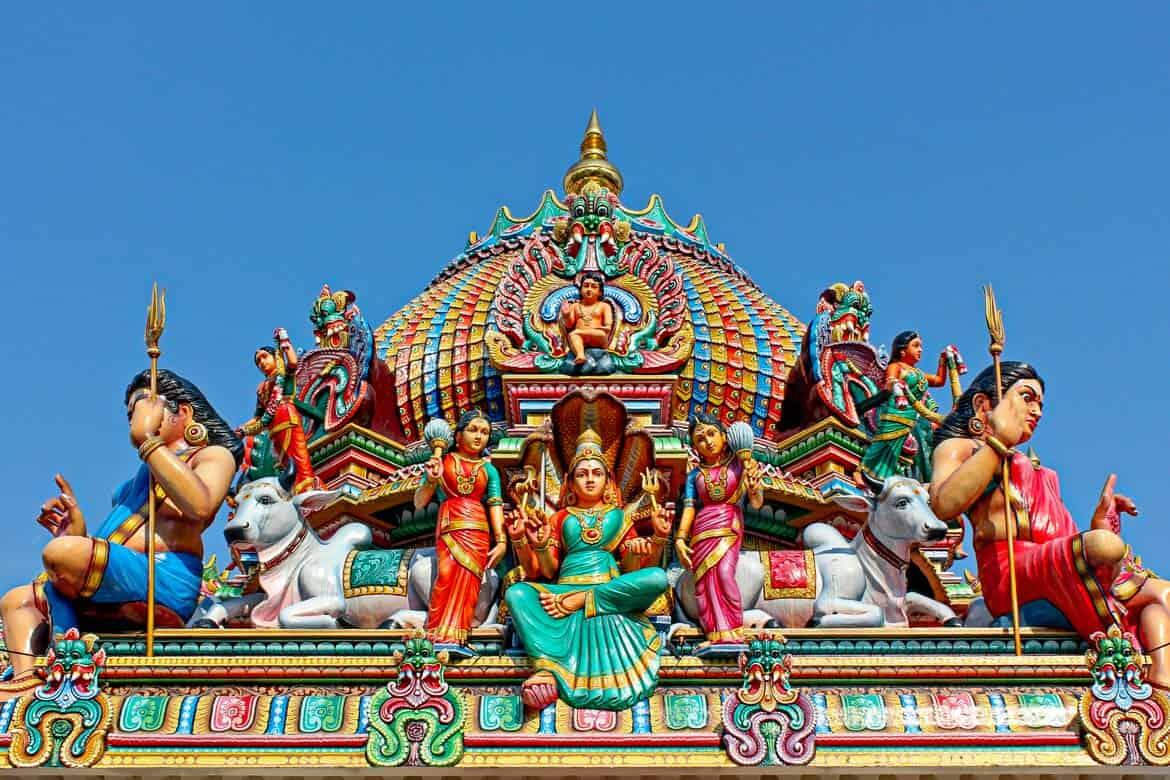
Located on South Bridge Road in Chinatown, Sri Mariamman Temple is the oldest Hindu temple in Singapore.
The original structure was built of wood and attap (thatch) in 1827. A small deity of Sri Mariamman was installed by Indian pioneer Naraina Pillai, and the temple became an important place of worship and community life for early Tamil migrants1. The deity can still be found at the main sanctum of the temple today.
Sixteen years later, in 1843, the temple was rebuilt in brick, with further additions and restoration works carried out over the following decades.
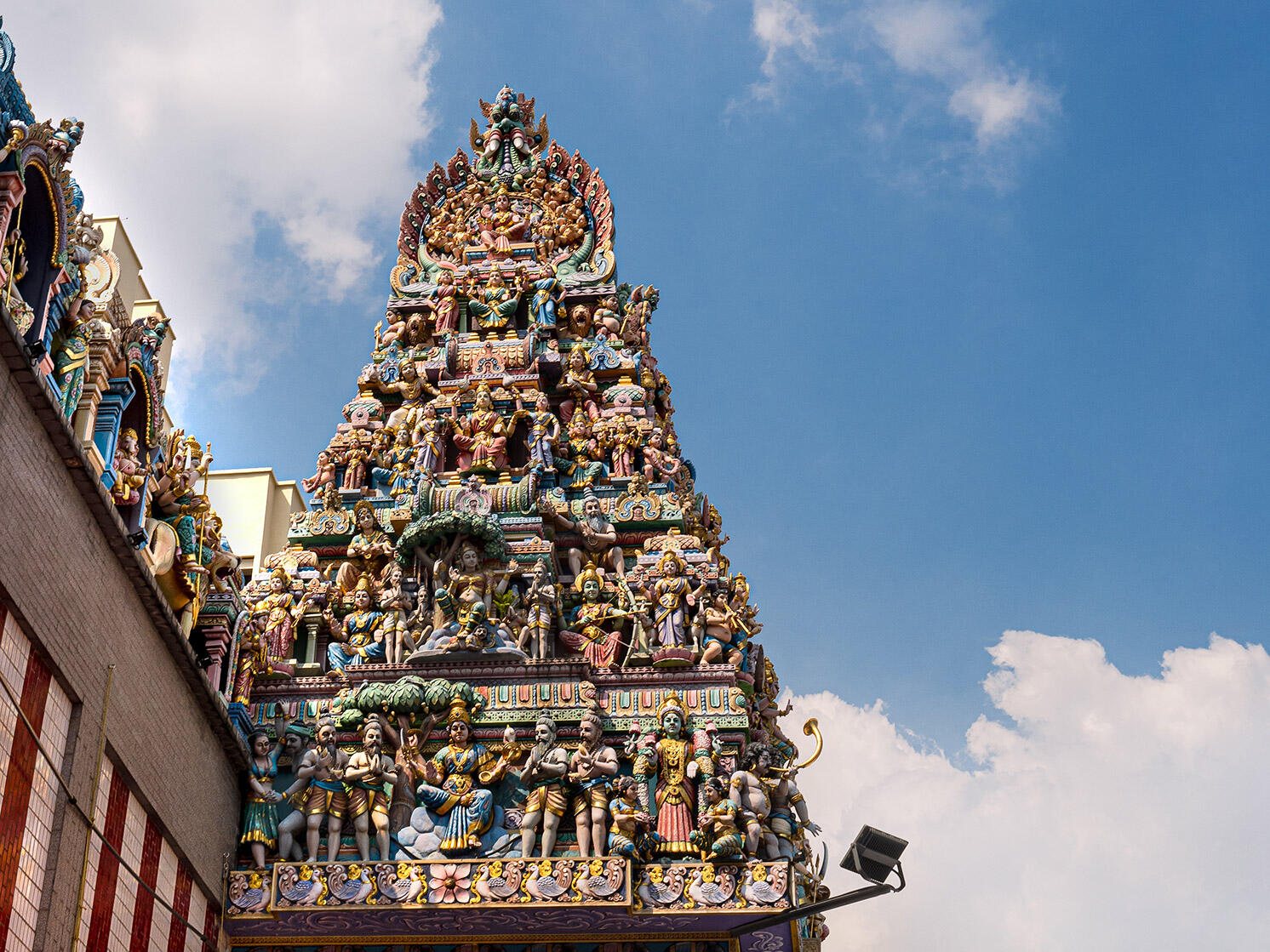
Its most recognisable feature is the elaborate gopuram (grand tower entrance) covered with colourful sculptures of Hindu deities and figures from Hindu mythology. The temple was gazetted as a National Monument in 1973 and remains an active place of worship, including the annual Theemithi, a fire-walking festival2.
During this festival, Hindus from across Singapore take part, while visitors can also observe the event.
The temple also hosts Tamil festivals and celebrations, including Tamil New Year, Navarathri, and Aadi celebrations.
Its location is significant, too. Standing in Chinatown alongside other historic places of worship, it reflects the diverse communities that lived and worshipped in the area during Singapore’s early development.
Visitors should dress modestly, remove footwear where required and ask before photographing worshippers or religious rituals. Always follow any instructions given by temple staff or signs on site.
About an eight-minute walk southwest of the temple, at 73 Keong Saik Road, you’ll find another Hindu temple, Sri Layan Sithi Vinayagar Temple, dedicated to Lord Ganesha, the remover of obstacles. If you’re exploring the area, you can add it to your heritage itinerary.
🪷Thian Hock Keng Temple: A Hokkien Maritime Heritage Landmark
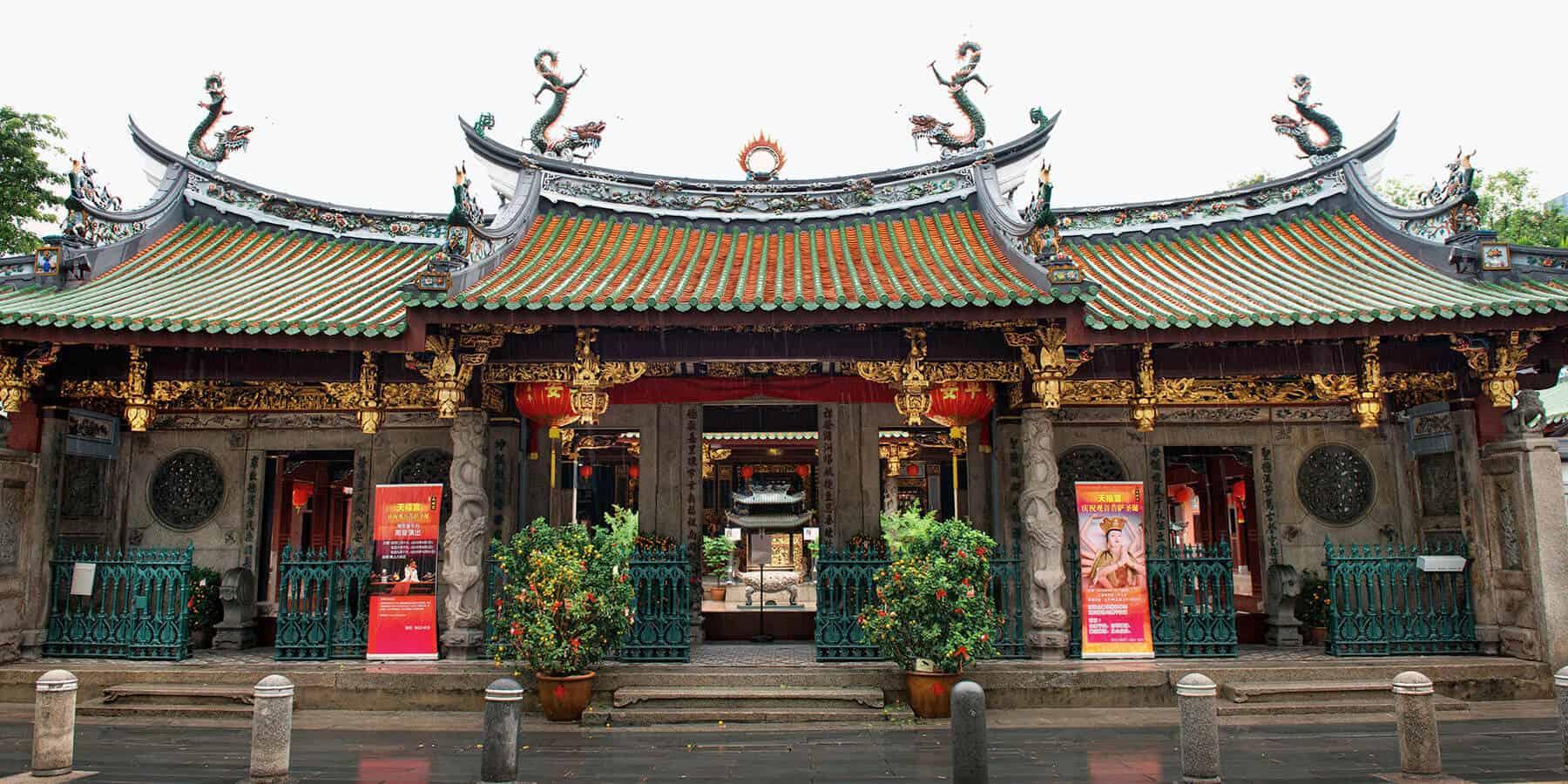
On Telok Ayer Street, Thian Hock Keng Temple stands on land that was once beside the shoreline of Telok Ayer Basin. Early Chinese migrants arriving by sea visited a small shrine there to give thanks to Ma Zu (or Tian Hou), a deity associated with the sea and the protection of seafarers. The present temple was built between 1839 and 1842 by members of the Hokkien community3.
Thian Hock Keng means “Temple of Heavenly Happiness”. The temple was gazetted as a National Monument in 1973, recognising its historical and cultural importance.
The temple was originally constructed using interlocking timber beams and brackets without nails. Now fully restored, the roof features Minnan (Southern Fujian) “swallow tail” sweeps decorated with intricate porcelain shard work.
As one of the famous temples in Singapore, Thian Hock Keng fits naturally into a heritage walk around Telok Ayer and Chinatown, where several historic places of worship can be explored within a relatively small area.
Guided tours are also available for visitors who want to learn more about the temple’s history and its connections to the early Chinese community.
🏛️Other Temples Worth Adding to a Heritage Itinerary
Buddha Tooth Relic Temple and Museum, Chinatown
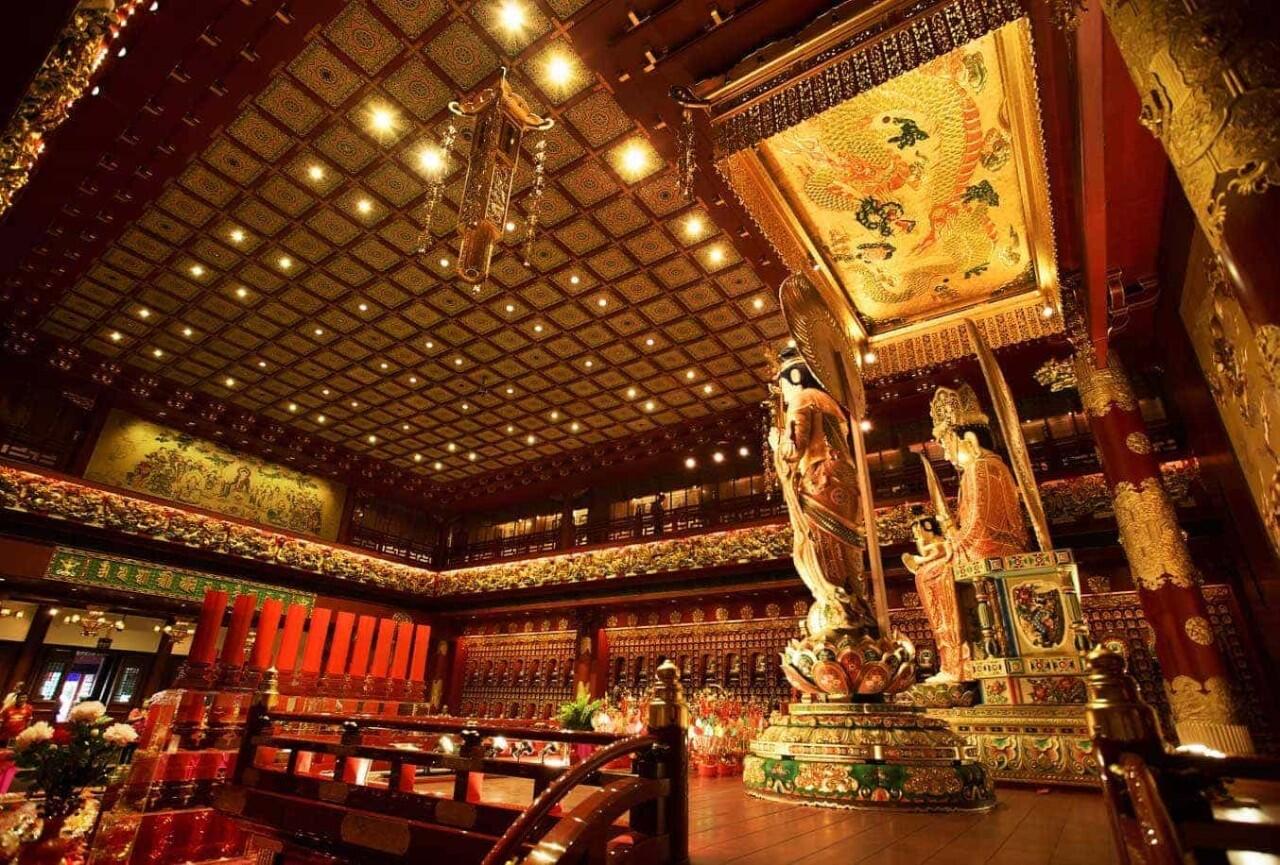
Located in the heart of Chinatown, this prominent Buddhist temple is a much newer landmark than the 19th-century temples above. Its Tang-style architecture, museum displays and rooftop garden make it a distinctive addition to a Chinatown visit.
The temple also houses what is believed to be a tooth relic of the Buddha, which is central to its religious and cultural role.
Kwan Im Thong Hood Cho Temple, Waterloo Street
Built in 1884, this Chinese Buddhist temple is dedicated to Guan Yin, the bodhisattva of great compassion. Its central location near Bugis and Bras Basah makes it easy to combine with a wider heritage walk.
During the Japanese Occupation, the temple also provided refuge for the sick, wounded and homeless.
Lian Shan Shuang Lin Monastery, Toa Payoh
For a quieter setting away from the central heritage districts, head to Toa Payoh. Founded in 1898 and completed in 1909, Lian Shan Shuang Lin Monastery is Singapore’s oldest Buddhist monastery.
Its traditional architecture stands in striking contrast to the surrounding HDB blocks, while its Hall of Celestial Kings and Mahavira Hall were collectively gazetted as a National Monument in 1980.
🕌Famous Mosques in Singapore: Islamic Architecture and Malay-Muslim Heritage
The famous mosques in Singapore reflect the history of Malay, Arab, Tamil Muslim and other communities that helped shape the country. Their architecture also adds another layer to the heritage of neighbourhoods such as Kampong Gelam and Little India.
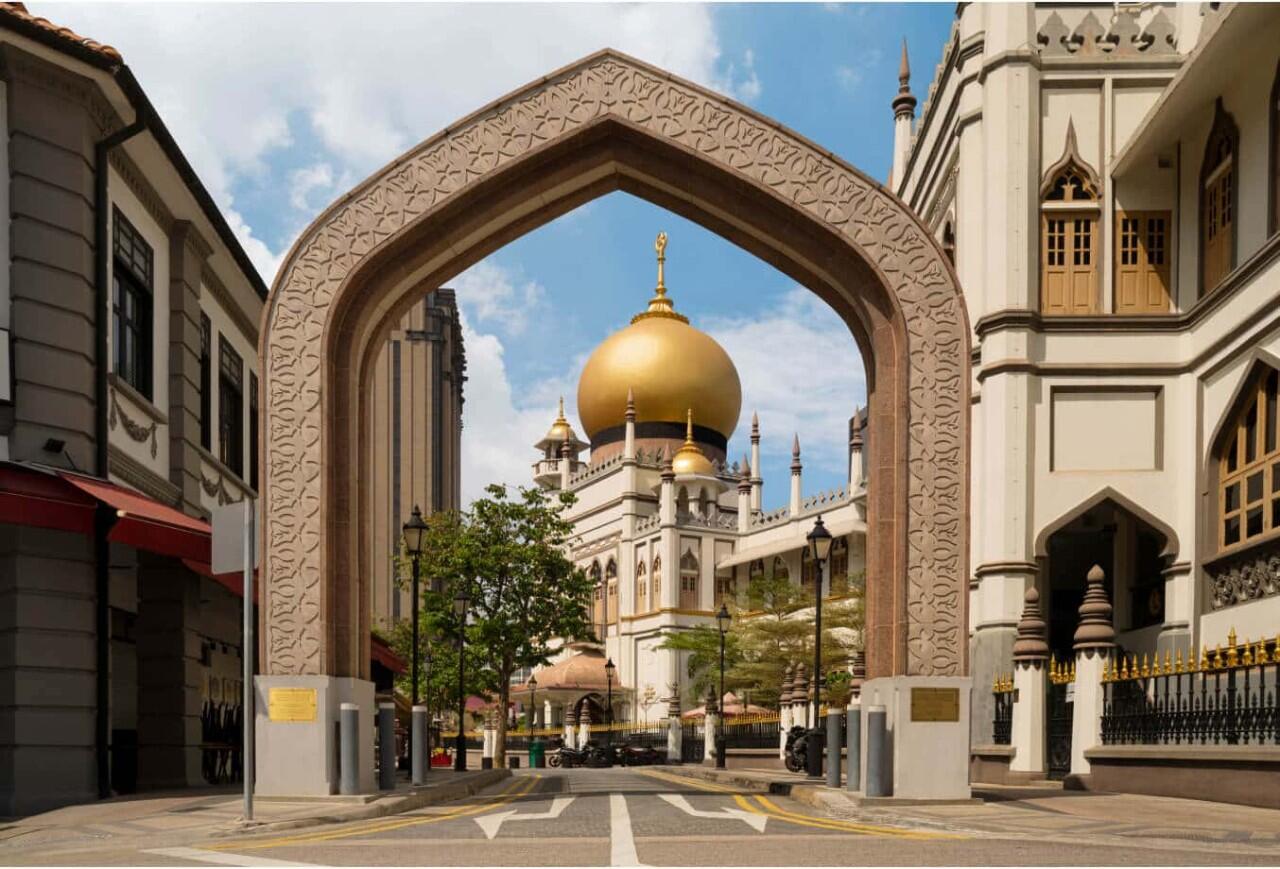
☪️Sultan Mosque: The Landmark of Kampong Gelam
Located on Muscat Street, Sultan Mosque is one of the most recognisable religious buildings in Singapore, with its large golden domes and grand prayer hall that can hold up to 5,000 worshippers4.
The present building was completed in 1932 and was designed in the Indo-Saracenic style, blending Islamic and Indian influences with European architectural features.
The mosque continues to serve the Muslim community while remaining an important part of Kampong Gelam’s cultural and historical identity. The surrounding area has links to Malay royalty, Arab and Muslim communities and the textile trade.
The streets, especially Haji Lane and Bali Lane, are today lined with restaurants, cafés and independent shops.
The former Istana Kampong Glam, once the residence of the Sultan, is just a short walk from the mosque and now houses the Malay Heritage Centre.
🌙Masjid Abdul Gafoor: Little India’s Distinctive Mosque
On Dunlop Street in Little India, Masjid Abdul Gafoor was built in 1907 to serve South Indian Muslim and Baweanese communities living and working in the area. It was named after its founder, Shaik Abdul Gaffoor bin Shaik Hyder5.
Its architecture features a striking mix of southern Indian, Moghul, Moorish, and European Neoclassical styles with ornate arches, decorative motifs and a distinctive glass cupola.
Its presence also shows that Little India has long been home to diverse Indian communities, including South Indian Muslims.
🕌Other Notable Mosques
Hajjah Fatimah Mosque near Kampong Gelam is one of the oldest mosques in the country. Built between 1845 and 1846, it was named after a wealthy businesswoman, Hajjah Fatimah6.
The building combines Indo-Islamic and European influences and is particularly known for its distinctive minaret, which leans slightly. This earned it the local nickname “Singapore’s Leaning Tower”.
⛪Famous Churches in Singapore: Colonial, Armenian and Catholic Heritage
The famous churches in Singapore reflect the city’s colonial history as well as the communities that established Christian congregations here. From grand Gothic architecture in the Civic District to the quieter Armenian Church on Hill Street, these buildings offer another perspective on the city’s religious heritage.
Beyond places of worship, historical war sites in Singapore also tell the story of how the city changed through periods of conflict and occupation.
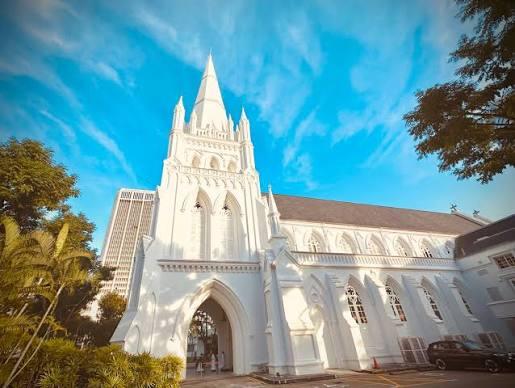
🔔St Andrew’s Cathedral: A Civic District Icon
St Andrew’s Cathedral is Singapore’s largest cathedral and oldest Anglican house of worship, situated next to the City Hall MRT station. Its bright white Neo-Gothic architecture, tall spires, and pristine white exterior make it one of the most recognisable buildings in the Civic District7.
The cathedral was built between 1856 and 1864 and elevated to cathedral status in 1870. It remains an active place of worship and continues to serve the Anglican community. In June 1973, the cathedral was gazetted as a national monument.
✝️Armenian Church: Singapore’s Oldest Christian Church
The Armenian Apostolic Church of Saint Gregory the Illuminator, commonly known as the Armenian Church, stands on Hill Street. Completed in 1835, it is Singapore’s oldest Christian church and was built for the city’s small but influential Armenian community8.
The elegant neoclassical building features large Doric columns, a pitched roof, and a tall spire.
It is surrounded by a peaceful garden, offering a quieter heritage experience close to the Civic District. In June 1973, the building was gazetted as a national monument.
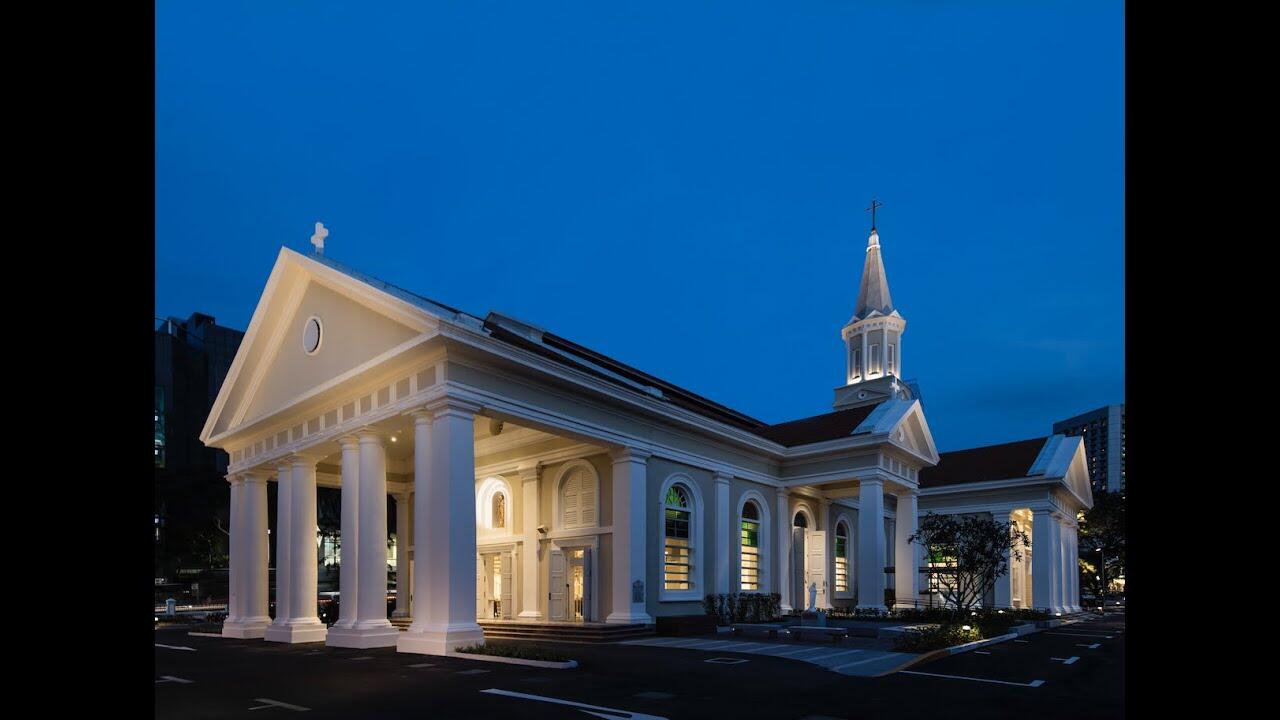
⛪Cathedral of the Good Shepherd and CHIJMES
The Cathedral of the Good Shepherd is Singapore’s oldest Roman Catholic house of worship, with its foundation stone laid in 1843. Today, it remains an active cathedral and continues to serve both local and migrant Catholic communities9.
During World War II, the cathedral was used as an emergency hospital. The cathedral was gazetted as a National Monument in 1973.
During World War II, the cathedral was used as an emergency hospital. The cathedral was gazetted as a National Monument in 1973.
It began as the Town Convent, pioneering education for girls in Singapore at a time when schooling for women was largely overlooked. The Gothic Chapel and Caldwell House were central parts of the school campus.
The Singapore government gazetted the main chapel and Caldwell House as National Monuments in 1990.
Today, CHIJMES is a lifestyle and events destination filled with casual cafes, bustling bars and high-end international restaurants.
The stunning 19th-century Gothic chapel at CHIJMES was used as the wedding venue for Colin Khoo and Araminta Lee in the 2018 film Crazy Rich Asians.
📅Planning Your Visit to Religious Sites in Singapore
Choose a Neighbourhood-Based Route
Rather than trying to see everything in one day, group religious sites in Singapore by neighbourhood. This makes it easier to explore the surrounding heritage streets and gives you more time at each place.
Chinatown heritage route
- Sri Mariamman Temple
- Thian Hock Keng Temple
- Buddha Tooth Relic Temple and Museum
- Optional food stop at Chinatown Complex or around Telok Ayer
Kampong Gelam route
- Sultan Mosque
- Arab Street and Haji Lane
- Hajjah Fatimah Mosque, where accessible
- Malay Heritage Centre area and the Istana Kampong Gelam precinct
Civic District route
- Armenian Church
- Cathedral of the Good Shepherd
- St Andrew’s Cathedral
- National Gallery Singapore or Fort Canning as nearby cultural additions
If you have extra time, extend your walk along the Singapore River and explore some of the city’s famous bridges along the way.
☑️Respectful Visiting Checklist
These are active places of worship as well as heritage sites, so a little consideration goes a long way:
- Check opening hours: Services, prayers, festivals and maintenance may affect access. Some areas may be closed to the public during Friday prayers, Ramadan activities or special occasions.
- Dress modestly: Wear clothing that covers your shoulders and knees. At some mosques, women may be asked to wear a head covering. Follow the dress code and instructions provided at each site.
- Remove your shoes when requested, particularly before entering prayer spaces.
- Keep noise to a minimum: Speak quietly and silence your phone, especially during prayers or ceremonies.
- Ask before taking photographs of worshippers, ceremonies, prayer spaces or sacred objects.
- Respect prayer spaces: Avoid walking in front of someone praying, blocking entrances or interrupting religious processions. Do not enter restricted areas without permission.
- Follow on-site guidance: Pay attention to signs and instructions from staff, volunteers or religious leaders.
- Check entry fees: Many places of worship are free to enter, but guided tours, special activities or items purchased on site may incur charges. Donations are generally voluntary unless otherwise stated.
🗺️Exploring Singapore’s Religious Heritage
Religious sites in Singapore offer a way to understand the country’s diverse communities, cultural traditions and history of religious harmony. Choose one neighbourhood, slow down and take time to appreciate the architecture, traditions and history.
Whether you visit a Sri Mariamman Temple, Chinese temple, mosque or church, remember that these are more than historic buildings. They remain meaningful places of worship, so follow the site rules and always be respectful.
It is not uncommon for temples, mosques and churches to be located side by side.
George Yeo, former Singapore Minister for Foreign Affairs, speaking at the Youth for Peace Interfaith Symposium in 2008
References
- Temple History. (n.d.-b). https://smt.org.sg/HEB/Template3/history
- Nast, C. (n.d.). Sri Mariamman Temple — Landmark Review | Condé Nast Traveler. Condé Nast Traveler. https://www.cntraveler.com/activities/singapore/sri-mariamman-temple
- National Library Board Singapore. (n.d.-q). Retrieved October 7, 2026, from https://www.nlb.gov.sg/main/article-detail?cmsuuid=91fb75a2-78de-479b-802d-916245c9be52
- Roots.sg. (n.d.-b). Retrieved October 7, 2026, from https://www.roots.gov.sg/places/places-landing/places/national-monuments/sultan-mosque
- National Library Board Singapore. (n.d.-r). Retrieved October 7, 2026, from https://www.nlb.gov.sg/main/article-detail?cmsuuid=0c573cbb-5059-4e69-a406-a806875fafc8
- Masjid Hajjah Fatimah. (n.d.). https://www.masjidhajjahfatimah.sg/aboutus
- National Library Board Singapore. (n.d.-s). Retrieved October 7, 2026, from https://www.nlb.gov.sg/main/article-detail?cmsuuid=69d540ff-b1a1-4a62-8a5a-800404326ace
- National Library Board Singapore. (n.d.-t). Retrieved October 7, 2026, from https://www.nlb.gov.sg/main/article-detail?cmsuuid=7948f862-350b-4a34-96ff-f13bc97e4cfc
- Cathedral of the Good Shepherd. (n.d.). Retrieved October 7, 2026, from https://cathedral.catholic.sg/heritage/
Summarise with AI:
Did you like this article? Leave a rating!

 Loading...