
What can you discover when exploring historical places in Singapore? From former trading areas and temples to colonial buildings, wartime sites and conserved neighbourhoods, these places show that Singapore is beyond its modern skyline and attractions.
Singapore is more than the Merlion, Marina Bay Sands and Gardens by the Bay. Its historical places offer a closer look at how Singapore developed, from its early trading days and diverse cultural influences to important events that shaped the nation.
This guide covers historical sites in Singapore that are meaningful for different reasons, including architecture, national events, cultural heritage, community memory and UNESCO recognition.
Whether you are planning a visit or simply want to understand Singapore's history, these places offer a different way to see the city.
| Historical place or area | Why it is worth visiting | Best for |
|---|---|---|
| Civic District | Explore colonial-era landmarks, including the National Gallery Singapore, Victoria Theatre and Concert Hall, and The Arts House | Architecture and national history |
| Fort Canning Park | Discover Singapore’s early history, colonial past and wartime connections | History and outdoor walks |
| Chinatown | Visit Thian Hock Keng Temple and Sri Mariamman Temple, and learn about the history of Chinese migration and Hindu worship | Religious and cultural heritage |
| Kampong Gelam | See Sultan Mosque, explore historic streets and discover the area’s Malay and Muslim heritage | Architecture and cultural heritage |
| Little India | Visit Sri Veeramakaliamman Temple and see Tan Teng Niah, a rare surviving Chinese villa in the area | Religious heritage and historic architecture |
| Joo Chiat and Katong | Admire conserved shophouses and learn about Peranakan architectural influences | Heritage walks and photography |
| Former Ford Factory | Learn about the British surrender in 1942 and Singapore’s experience during the Japanese Occupation | Second World War history |
| Fort Siloso | Explore a preserved coastal fort and learn about Singapore’s military defences | Military history |
| Kranji War Memorial and Reflections at Bukit Chandu | Remember those who served during the war and learn about the Battle of Pasir Panjang and the Malay Regiment | Wartime history and remembrance |
| Singapore Botanic Gardens | Explore Singapore’s only UNESCO World Heritage Site and its legacy in tropical botany and rubber research | Nature, science and heritage |
| CHIJMES | See a former convent and school complex adapted for modern dining and events while retaining historic architecture | Conservation and photography |
| Raffles Hotel | Discover a landmark associated with Singapore’s colonial-era hospitality and tourism history | Architecture and social history |
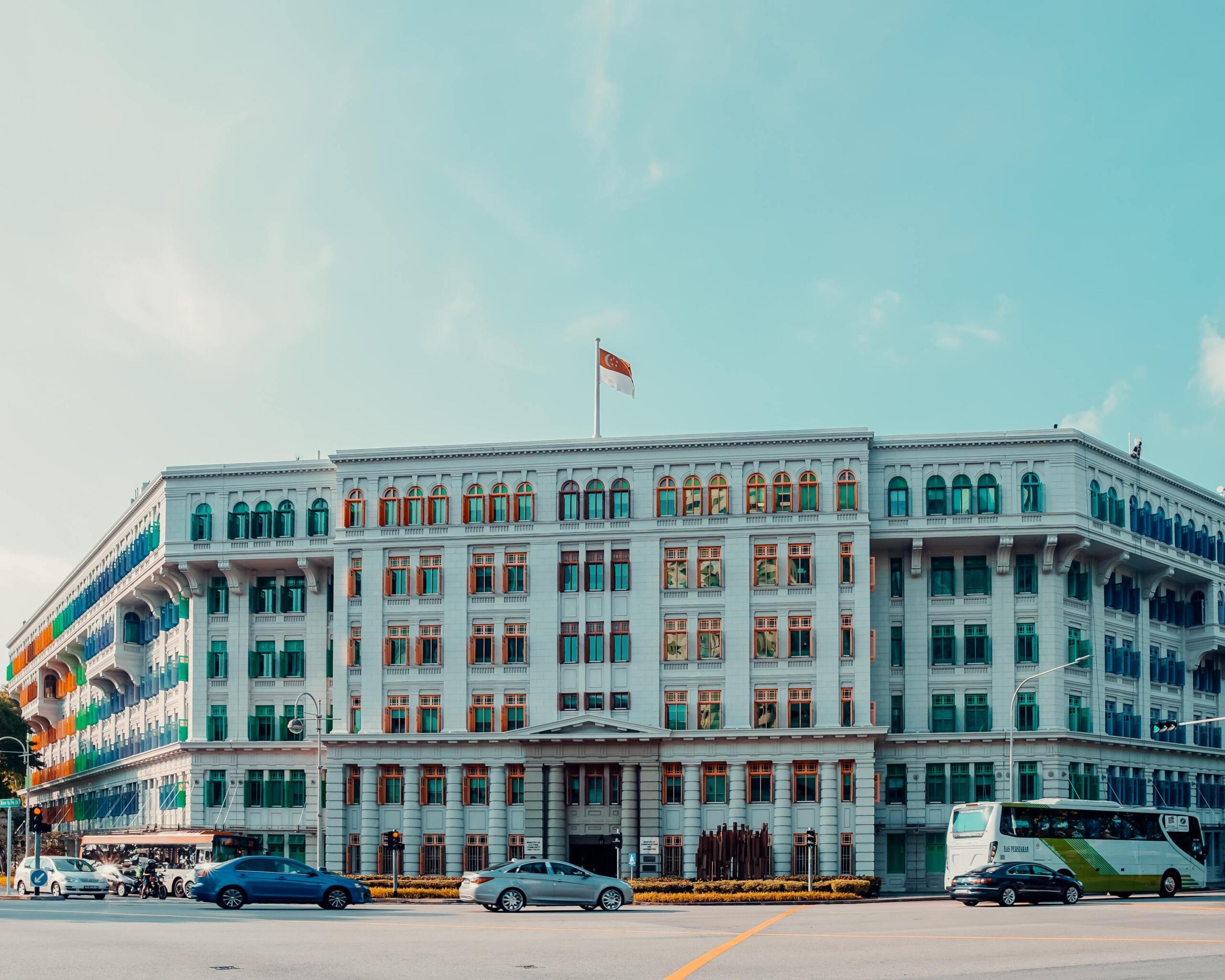
| Old Hill Street Police Station | Photograph the distinctive façade and colourful shutters of this former police station | Historic architecture and photography |
| The Fullerton Building | See the former General Post Office building near the Singapore River and learn about the area’s trading history | Architecture and waterfront history |
| National Museum of Singapore | Get an introduction to Singapore’s history through its exhibitions and collections | National history and museum visits |


🧳Explore Singapore’s Civic District and Colonial-Era Landmarks
The Civic District is located near the Singapore River in the Central Area of Singapore. It is packed with historical, architectural and cultural gems, with famous bridges in Singapore adding to the surrounding riverfront’s historic character. Many of the buildings here are closely linked to the country’s colonial administration, wartime history and early years of self-government.
Let’s take a look at some of the historic buildings, national monuments and cultural institutions that offer a glimpse into the colonial past and Singapore’s development as a modern city.
🖼️National Museum of Singapore
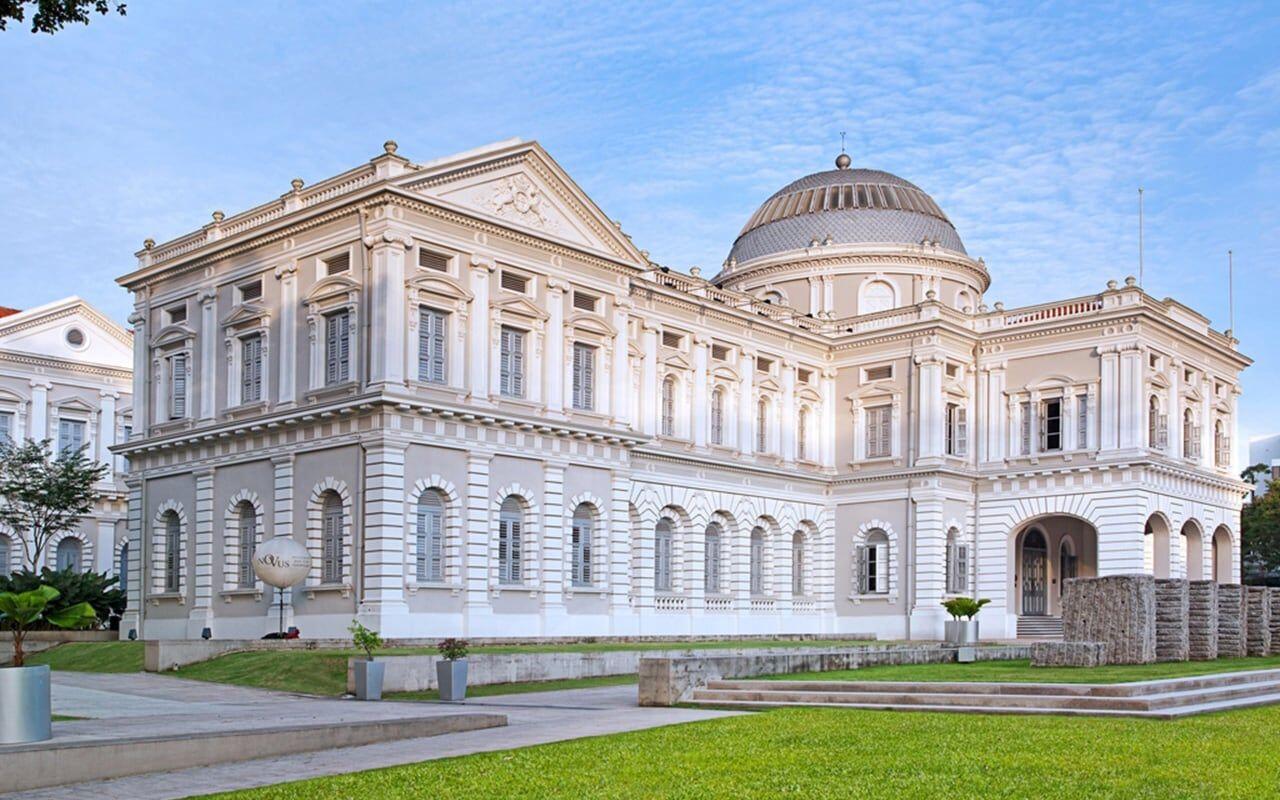
Opened on 12 October 1887, at 93 Stamford Road, this stunning Neo-Palladian landmark combines 19th-century colonial architecture with a modern glass dome. It is the country's oldest museum and explores the nation's heritage1.
The museum traces the country’s history over more than 700 years, from its early 14th-century origins and colonial era through World War II, the Japanese Occupation, and independence into a modern global metropolis.
The museum is on Stamford Road, near Bras Basah and Dhoby Ghaut, so it is also a convenient choice on a rainy day. Exhibitions and programmes can change, so check the current listings before your visit.
🎨National Gallery Singapore: Former City Hall and Supreme Court
The National Gallery Singapore is an art museum housed in two iconic national monuments – the former City Hall and the former Supreme Court, opposite this famous historic field, the Padang2.
The buildings were restored and joined together to create National Gallery Singapore, which opened in 2015. It holds the world's largest public collection of modern and contemporary Southeast Asian and Singaporean art, with more than 8,0003 individual artworks.
City Hall witnessed several major events, including the Japanese surrender on 12 September 1945 and the swearing-in of Singapore’s first Cabinet in 1959. The gallery is a good choice if you want to explore architecture, art and national history in one visit.
🎭Victoria Theatre and Concert Hall, The Arts House and the Padang
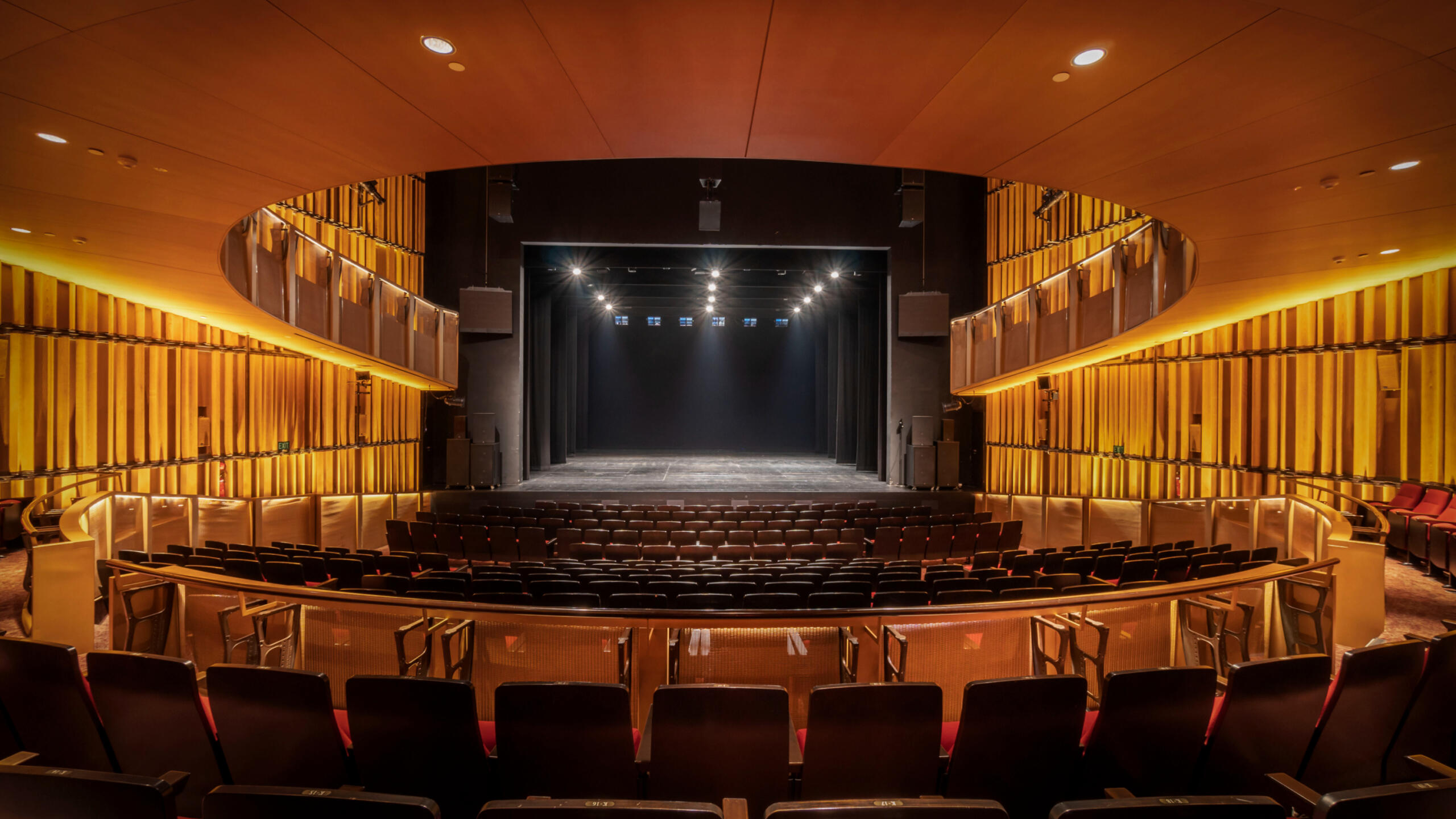
Victoria Theatre and Concert Hall is Singapore’s oldest performing arts venue and a gazetted National Monument. It was originally built in 1862 as the Town Hall4.
Originally, these two structures were entirely separate buildings built more than 40 years apart. In 1906, a striking 54-metre-high clock tower was erected between the two buildings, joining them into one landmark.
Historically, these buildings were a hub for Singapore’s early civic governance, wartime medical relief, and monumental political milestones. Today, this meticulously restored heritage landmark overlooks the Padang, serves as a home for the local arts scene and is the home of the Singapore Symphony Orchestra.
A simple walking route is National Gallery → Padang → Victoria Theatre → The Arts House → Singapore River.
🏞️Fort Canning Park
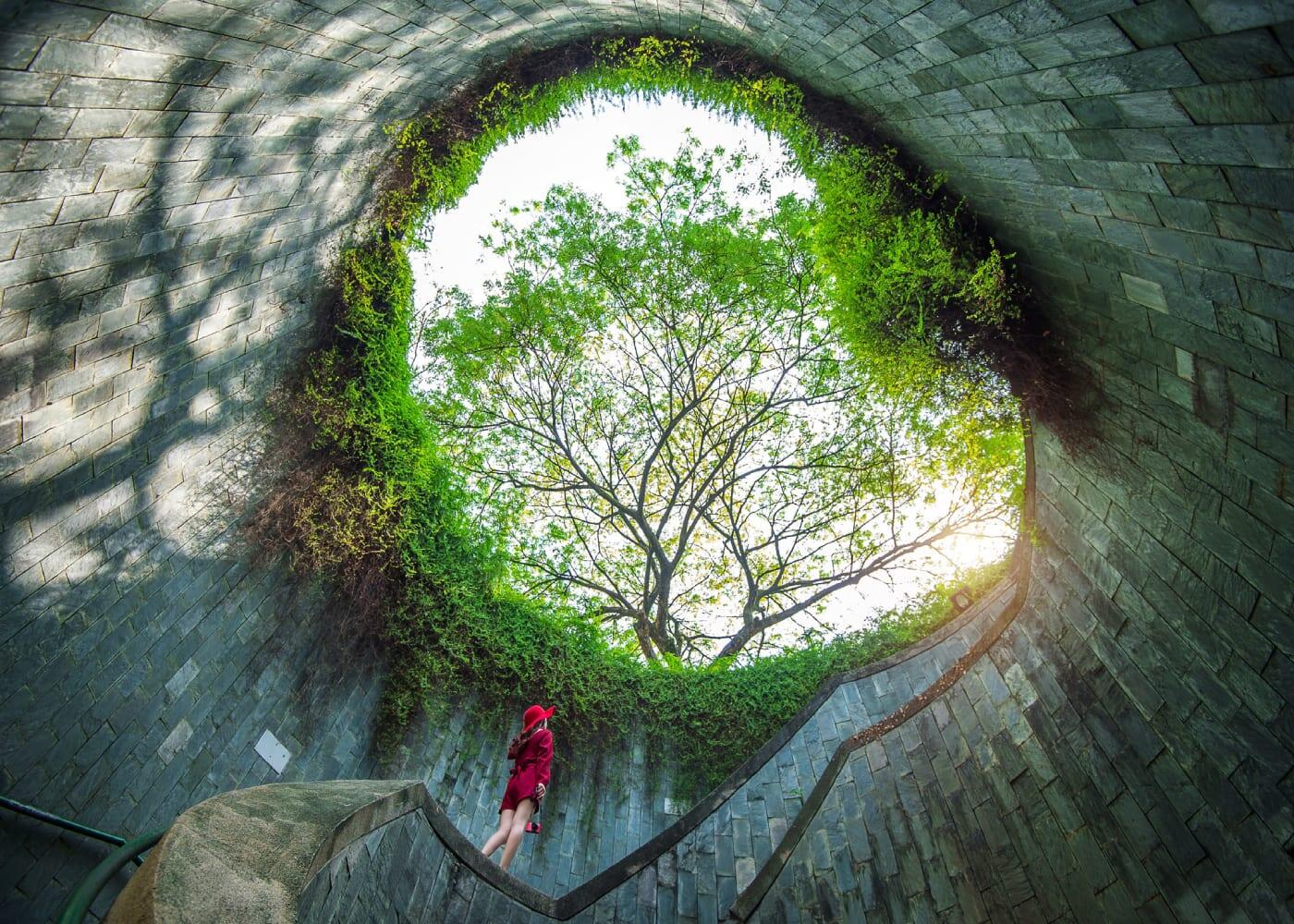
Fort Canning adds another layer to the area’s history, with links to early Malay royalty, the colonial period and the Second World War. The hill was once known as Forbidden Hill, while the underground Battlebox later served as part of Malaya Command’s headquarters during the war5.
Today, Fort Canning Park brings together these layers of history with its greenery, walking trails and archaeological remains. The Fort Canning Tree Tunnel, with its spiral staircase opening onto a view of the greenery below, has also become a popular photography spot. Together, these features allow visitors to explore the site’s history while enjoying its natural surroundings.
🏨Visit Heritage Sites in Singapore: Chinatown, Kampong Gelam and Little India
Some of the most meaningful heritage sites in Singapore remain part of everyday life. Temples, conserved shophouses and cultural districts continue to serve local communities, preserving the city’s religious and cultural heritage beyond museums and monuments.
🥡🛕Chinatown: Thian Hock Keng Temple and Sri Mariamman Temple
Thian Hock Keng Temple is one of the oldest and most important Hokkien temples in the country6. It was a place of worship for early Chinese immigrants, particularly those arriving by sea. The temple was built between 1839 and 1842, and its entire structure was assembled without nails.
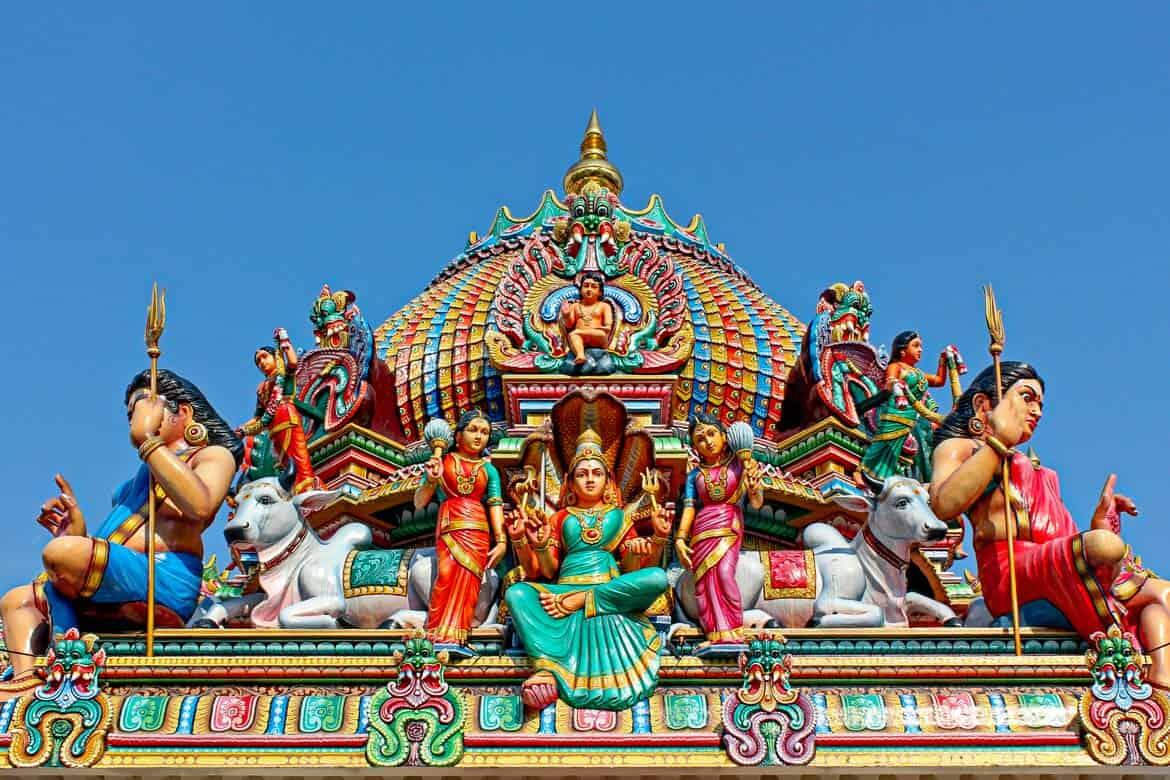
Sri Mariamman Temple is the oldest Hindu temple in Singapore and has served the Hindu community since 18277. The temple is dedicated to Goddess Mariamman, who is traditionally associated with protection from disease.
Its colourful gopuram, covered with figures of Hindu deities, is one of the most recognisable sites along South Bridge Road.
Both remain active places of worship. Dress respectfully, follow any photography rules and remove your shoes where required. Be mindful of worshippers and avoid interrupting services or religious activities during your visit.
🕌Kampong Gelam: Sultan Mosque, Arab Street and Malay Heritage
Sultan Mosque is one of Kampong Gelam's main landmarks and remains an important place of worship for the Muslim community8.
Kampong Gelam is a historic neighbourhood and cultural district with links to the Malay royal court, Arab traders, textile merchants and other Muslim communities who settled and traded here.
Bussorah Street, Arab Street and Haji Lane are now popular with visitors, but Kampong Gelam is more than its cafés and shops. The former Istana Kampong Gelam, which once belonged to the Malay royal family, is now preserved as the Malay Heritage Centre.
🪷Little India: Sri Veeramakaliamman Temple and Tan Teng Niah
Sri Veeramakaliamman Temple, located on Serangoon Road, is Singapore’s first temple dedicated to the goddess Kali. It is one of the oldest temples in the country, with its origins dating back to 18559.
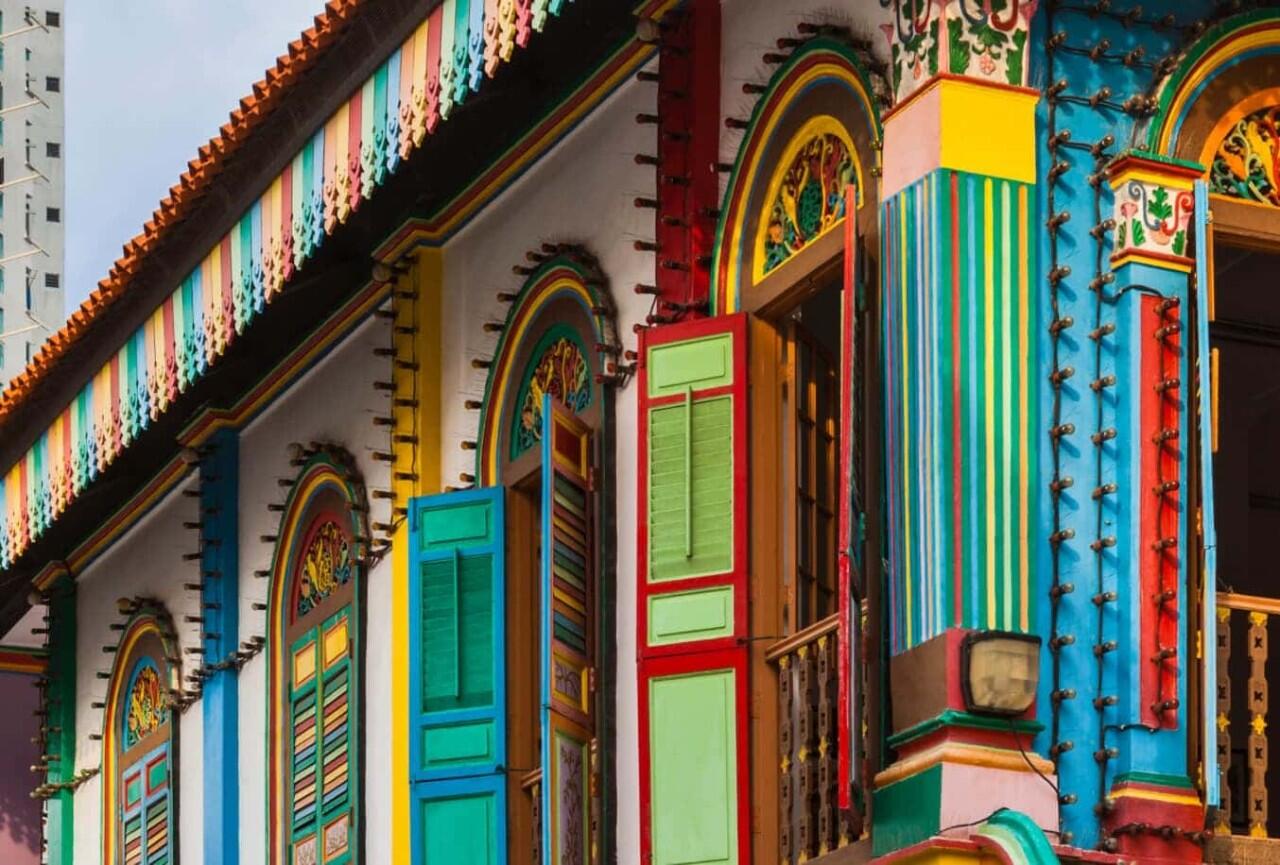
Less than a five-minute walk from this temple is the former house of Tan Teng Niah10, the last remaining Chinese villa in Little India. The exterior walls of the villa are painted in bright colours, with each section featuring a different shade.
Together, these places reflect the area’s connections to Indian migration, trade, religious life and Chinese entrepreneurship. A self-guided walk around Serangoon Road is a simple way to explore the area’s history.
🏪Joo Chiat and Katong: Peranakan Shophouse Heritage
The conserved shophouses around Joo Chiat and Koon Seng Road are another important part of Singapore’s architectural heritage10. The façades showcase pastel colours, ornate ceramic wall tiles with floral and geometric motifs, carved timber shutters, and swinging wooden half-doors.
These shophouses blend Chinese, Malay, and European architectural elements. Many of these buildings are private homes and businesses, so it is best to admire them from the street rather than treating them as tourist attractions.
🪖Understand Wartime History at These Historical Sites in Singapore
The Second World War is an important part of Singapore’s history, particularly the Japanese Occupation from 1942 to 1945. Today, several historic spots across the island tell the stories of how the war arrived, how the city was captured, and how local people lived through those difficult years.
🏭Former Ford Factory
The Former Ford Factory is one of the most significant historical sites in Singapore for understanding the fall of Singapore. On 15 February 1942, British Lieutenant-General Arthur Percival formally surrendered to Japanese Lieutenant-General Tomoyuki Yamashita at the factory, marking the fall of Singapore and the beginning of the Japanese Occupation11.
The site was later restored by the National Archives of Singapore. It now houses a permanent exhibition about the Second World War and its lasting effects.
🥷🏽Fort Siloso, Sentosa
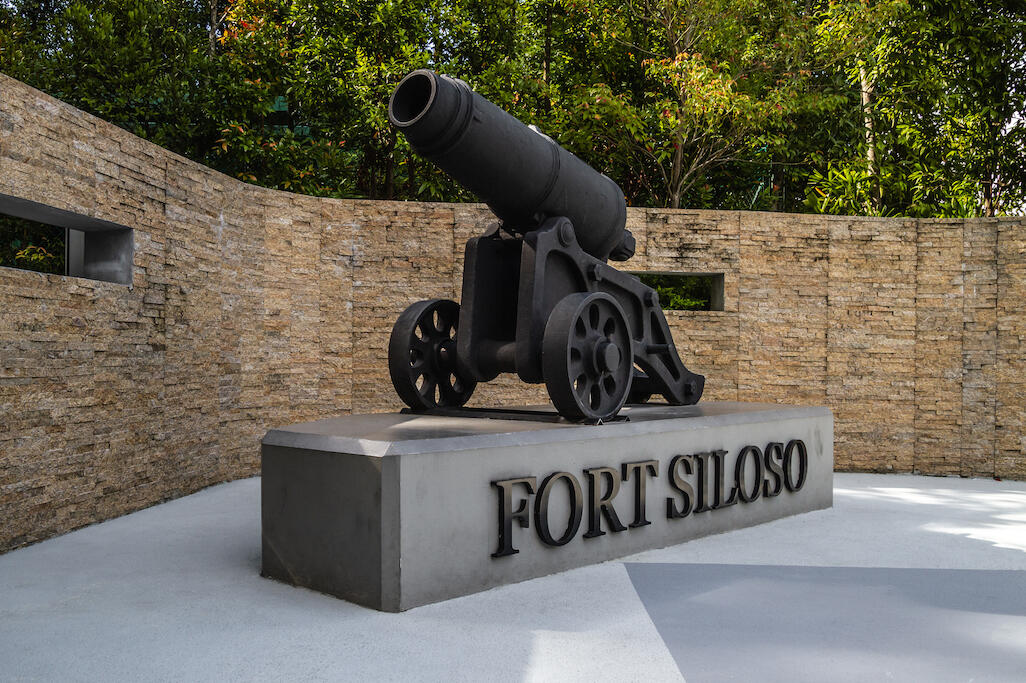
Fort Siloso is the only preserved coastal fort in the country, with artillery pieces, tunnels and military structures that show how the British defended Singapore’s coastline. Its location also reflects the island’s strategic importance as a major trading port and military base12.
If you’re already visiting Sentosa, Fort Siloso can be included in your itinerary. However, it is worth setting aside enough time to explore the fort and its history rather than treating it as just another stop between tourist attractions.
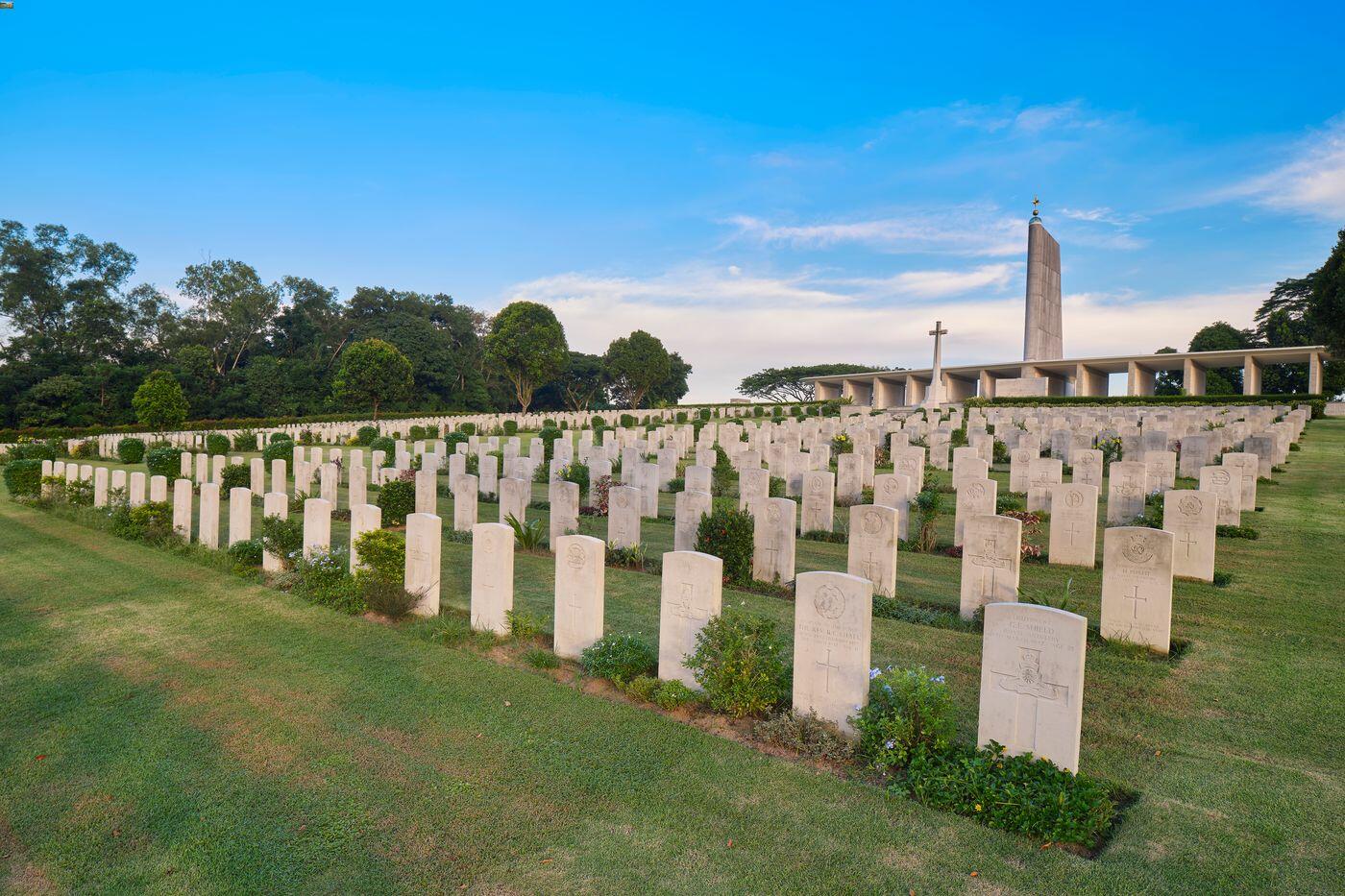
🪦Kranji War Memorial and Reflections at Bukit Chandu
Kranji War Memorial is a cemetery and memorial honouring Allied soldiers who lost their lives during the Second World Wa13r. The rows of white limestone headstones and Memorial Walls are engraved with the names of more than 24,000 missing servicemen whose bodies were never found.
Reflections at Bukit Chandu is a World War II interpretative centre14. It commemorates the historic Battle of Pasir Panjang and the Malay Regiment’s defence of the area in February 1942.
Together, these places offer different perspectives on the war and should be approached as sites of remembrance rather than tourist attractions.
📜UNESCO World Heritage Sites Singapore and Historic Buildings
Singapore has just one property on the UNESCO World Heritage List. But its wider collection of historic colonial buildings in Singapore shows how much of the city’s past has been retained alongside modern development.
From a world-recognised botanical garden to former schools, hotels and government buildings, these places show how conservation can keep history visible in a changing city.
Before the present-day Singapore Botanic Gardens was established in 1859, Singapore’s first botanic garden was set up on the slopes of Fort Canning Hill in 1822. It focused on growing spices and other valuable crops, including nutmeg and cloves.
Singapore Botanic Gardens: Singapore’s Only UNESCO World Heritage Site
The Singapore Botanic Gardens is currently Singapore’s only UNESCO World Heritage Site, having been inscribed in 201515. Established at the Tanglin site in 1859, the Gardens developed from a public garden into an important centre for tropical botany, horticulture, and scientific research.
For visitors interested in UNESCO World Heritage Sites in Singapore, the Gardens offer more than greenery. Historic features include the Tanglin Gate and main entrance, Swan Lake and the Bandstand, while the National Orchid Garden reflects the Gardens’ long history of orchid research and cultivation.
This 82-hectare garden also played an important role in the development of plantation rubber in Southeast Asia. Research and cultivation work there helped support the growth of the regional rubber industry from the late 19th century.
For a more comfortable visit, go in the morning or late afternoon when the heat and humidity are generally easier to manage.
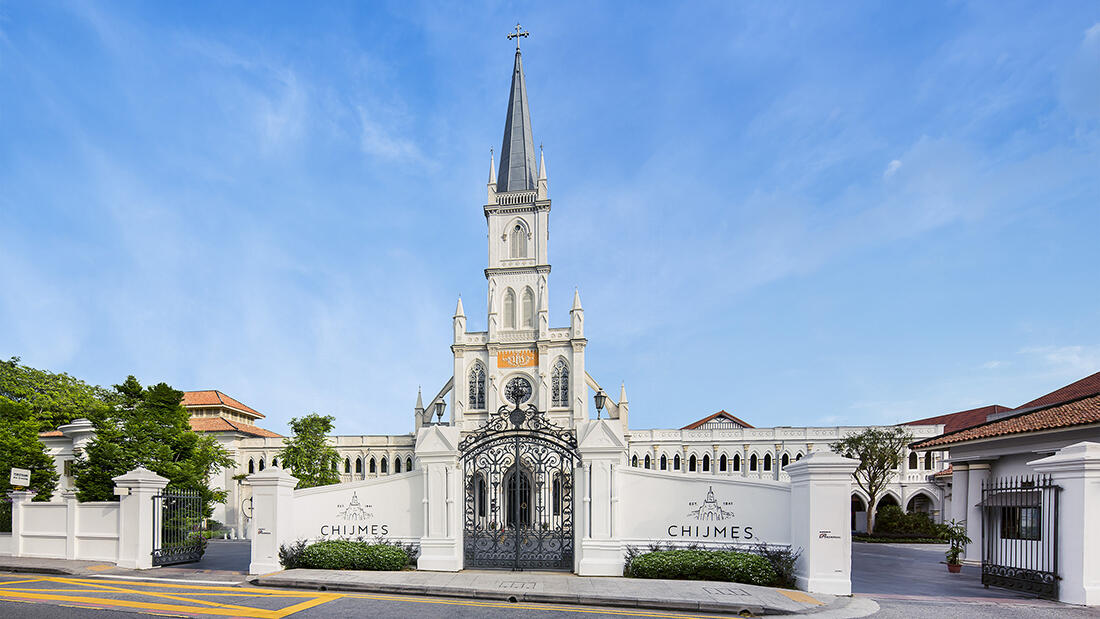
⛪CHIJMES
CHIJMES (pronounced chimes) began as the Convent of the Holy Infant Jesus, established in 1854 as Singapore’s oldest Catholic girls’ school16. The former convent complex included schools, an orphanage, the nuns’ quarters and a chapel.
Today, the conserved complex has been turned into a lively dining and events destination while retaining important historic buildings, including Caldwell House and the former chapel. The chapel, now known as CHIJMES Hall, is especially striking for its Gothic architecture, stained glass and decorative details.
CHIJMES is a good example of how conservation can give an old complex a new role without removing its connection to the past.
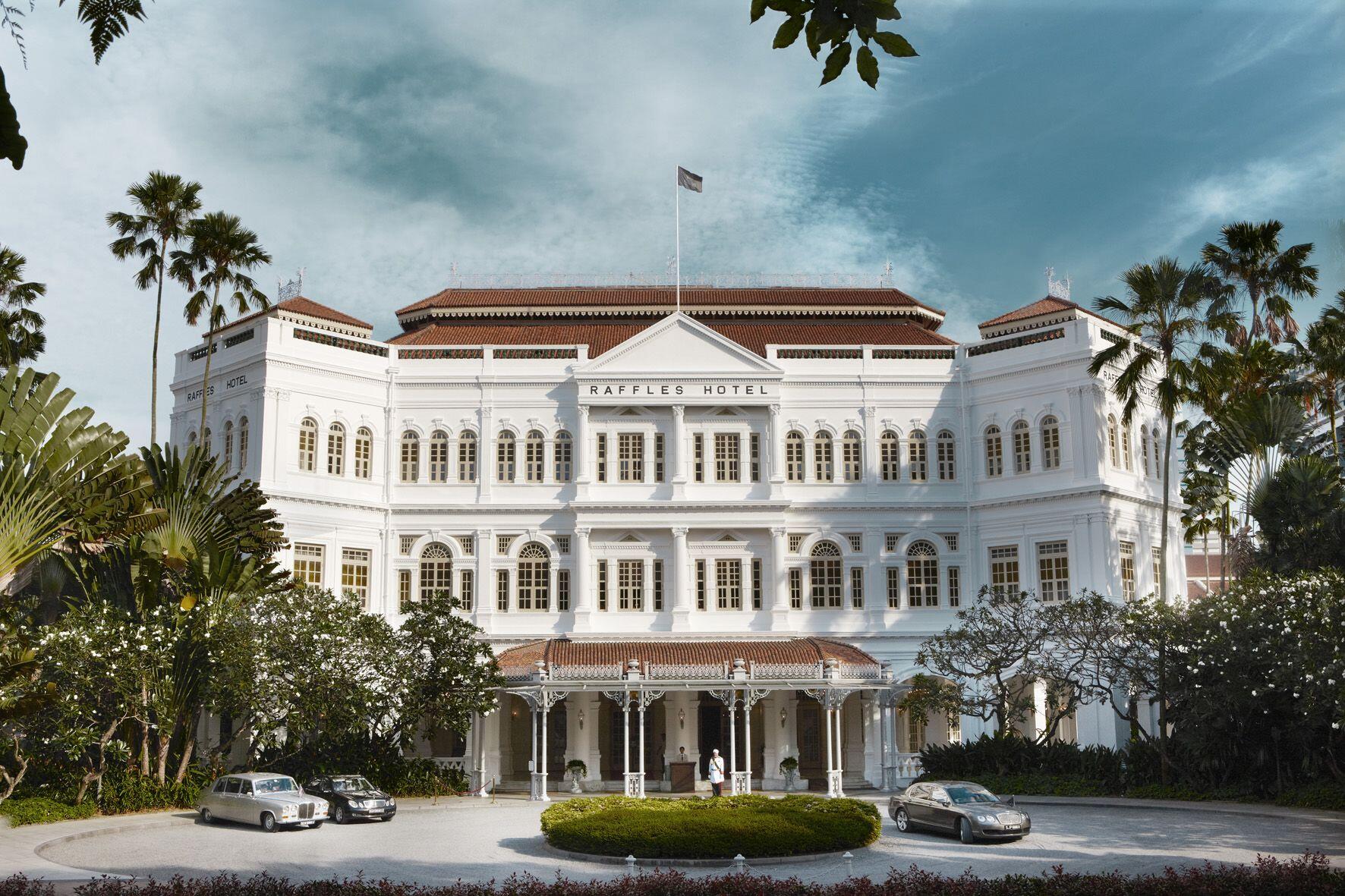
🏩Raffles Hotel, Old Hill Street Police Station and The Fullerton Building
You can come across some of the most recognisable landmarks in Singapore simply by walking past them.
Raffles Hotel, founded in 1887, is the oldest surviving luxury hotel of its kind on the island and has strong links to Singapore’s early tourism and Armenian community17. Its history goes far beyond the famous Singapore Sling.
The Old Hill Street Police Station was completed in 1934 and was originally known as the Hill Street Police Station and Barracks18. Today, it houses the Ministry of Culture, Community and Youth (MCCY) and the Ministry of Digital Development and Information (MDDI). The building is also recognised for its distinctive rows of colourful windows.
Situated at the mouth of the Singapore River, the former Fullerton Building once housed the General Post Office (GPO) and several government departments before being transformed into The Fullerton Hotel19.
Its location by the river also shows how important the river was to Singapore's growth as a trading port.
You do not have to enter every building to appreciate them – their façades, locations and surrounding streets already offer a glimpse into the city’s past.
We must ensure that Singaporeans and indeed all visitors also understand why the Gardens deserve to be on the world map.
Ministry of Culture, Community and Youth, Singapore
📝How to Plan a Historical Landmarks in Singapore Itinerary
Planning an itinerary to visit the historic buildings in Singapore is easier when you plan your day carefully and cover nearby sites together. This can help you avoid missing nearby places that you could visit on the same day.
🔎Choose a Route by Interest and Time Available
Start at the National Museum of Singapore, then walk through Fort Canning Park before continuing to the National Gallery Singapore. End at the Padang and Singapore River.
Explore the temples and historic streets of Chinatown, then continue to Kampong Gelam and Sultan Mosque. Finish in Little India, where temples and conserved shophouses offer another side of the city’s cultural history.
Visit the Former Ford Factory or Reflections at Bukit Chandu in the morning, followed by the Singapore Botanic Gardens. Return to the Civic District in the evening for a relaxed walk around its historic buildings.
These are not necessarily the only ways to visit historic destinations in the country. They are simply examples of how you can plan your day and group nearby sites together, so you can avoid missing a place and having to return to the same area again unless, of course, you wanted to!
💡Practical Visiting Tips
Use the MRT and walk where possible, as many central heritage areas are close together. Check official opening hours, ticketing, guided tours and temporary closures before travelling.
Carry water and sun protection, and plan indoor museums around the midday heat. At religious sites, follow the dress code and always ask for permission before taking any photographs.
You should also check for museum concession rates, community tours and school-holiday programmes. Check the payment methods accepted at the places you plan to visit and carry some cash for emergencies.
We hope this article has given you some useful insights into the historical sites in Singapore. With these facts and practical tips, you can explore the city’s historic destinations with a better understanding of what you are seeing!
References
- Roots.sg. (n.d.). https://www.roots.gov.sg/places/places-landing/Places/national-monuments/national-museum-of-singapore
- National Library Board Singapore. (n.d.). Retrieved October 5, 2026, from https://www.nlb.gov.sg/main/article-detail?cmsuuid=a310ec1d-fd39-4fd2-bdc9-e530178f00a6
- NATIONAL GALLERY SINGAPORE. (n.d.). Leading art museum in SEA | National Gallery Singapore. National Gallery Singapore. https://www.nationalgallery.sg/
- National Library Board Singapore. (n.d.-b). Retrieved October 5, 2026, from https://www.nlb.gov.sg/main/article-detail?cmsuuid=8472b2d8-5549-4858-912b-f6150b4bcae6
- National Library Board Singapore. (n.d.-c). Retrieved October 5, 2026, from https://www.nlb.gov.sg/main/article-detail?cmsuuid=8cdf199f-6771-4997-9d54-c94acf989442
- About us – THIAN HOCK KENG. (n.d.). https://thianhockkeng.com.sg/site/about/
- Temple History. (n.d.). https://smt.org.sg/HEB/Template3/history
- National Library Board Singapore. (n.d.-d). Retrieved October 5, 2026, from https://www.nlb.gov.sg/main/article-detail?cmsuuid=36750cb4-e1df-45ed-90e4-db07e0e96365
- National Library Board Singapore. (n.d.-e). Retrieved October 5, 2026, from https://www.nlb.gov.sg/main/article-detail?cmsuuid=3f5c93e9-b6b3-44d2-aad0-c59c4a66532d
- Former House of Tan Teng Niah. (n.d.). https://www.roots.gov.sg/places/places-landing/Places/landmarks/little-india-heritage-trail-serangoon-in-the-1900s/former-house-of-tan-teng-niah
- National Library Board Singapore. (n.d.-f). Retrieved October 5, 2026, from https://www.nlb.gov.sg/main/article-detail?cmsuuid=e84d96e6-53d3-4cb6-a0fc-63d9e0f1dca5
- Fort Siloso | WWII Coastal Fort & Skywalk | Sentosa. (n.d.). https://www.sentosa.com.sg/en/things-to-do/attractions/fort-siloso/
- They Died for All Free Men: Stories from Kranji War Cemetery. (2026, July 30). BiblioAsia. https://biblioasia.nlb.gov.sg/all-sections/vol-18-issue-2-jul-sep-2022-kranji-war-cemetery/
- National Heritage Board. (n.d.). Retrieved October 5, 2026, from https://www.nhb.gov.sg/what-we-do/our-work/preserve-our-stories-treasures-and-places/museums-and-institutions/reflections-at-bukit-chandu
- National Library Board Singapore. (n.d.-g). Retrieved October 5, 2026, from https://www.nlb.gov.sg/main/article-detail?cmsuuid=a8ceea4c-1c8b-4c9a-885c-b85038b39e4c
- National Library Board Singapore. (n.d.-h). Retrieved October 1, 2026, from https://www.nlb.gov.sg/main/article-detail?cmsuuid=a1145bd1-7c99-4dce-ba0b-2626122ebdbd
- National Library Board Singapore. (n.d.-i). Retrieved October 5, 2026, from https://www.nlb.gov.sg/main/article-detail?cmsuuid=626de813-59c0-47a3-8f5d-b4e8bdea2196
- National Library Board Singapore. (n.d.-j). Retrieved October 5, 2026, from https://www.nlb.gov.sg/main/article-detail?cmsuuid=cf4118c4-088b-4a20-922c-6a64c90e8dbe
- About us | The Fullerton Heritage. (n.d.). The Fullerton Heritage. https://www.fullertonhotels.com/the-fullerton-heritage-singapore/about-us
Summarise with AI:
Did you like this article? Leave a rating!

 Loading...